
Noise-Reducing Acoustic Fencing for Busy Brunswick Roads

Living in Brunswick has plenty of perks - vibrant cafés, tram access, character homes, etc. But if your property backs onto Sydney Road or another busy arterial route, traffic noise can become part of everyday life. They could come from early-morning deliveries to late-night traffic. Constant noise can disrupt sleep, compromise privacy, and reduce overall comfort.
That’s where acoustic fencing comes in. Designed to reduce traffic noise, an acoustic fence in Brunswick can dramatically improve the liveability of homes on busy Brunswick roads - without compromising street appeal. Let’s explore how it works, what to expect in terms of performance, and why it’s becoming an increasingly popular upgrade across Melbourne’s inner north.
Keep reading!
What Is an Acoustic Fence and How Does It Work?
At first glance, an acoustic fence may look similar to a standard timber boundary fence. The real difference lies in how it’s constructed. Unlike typical fencing designed for privacy or security, acoustic fencing is engineered to block and reduce sound transmission.
To understand why it works, let’s get to know how sound behaves - and how fencing materials can influence it.
Sound Absorption vs Sound Reflection
When sound waves hit a surface, three things can happen: they can be blocked, absorbed, or deflected. Standard fencing often deflects sound, meaning noise simply bounces off the surface and continues travelling. That’s why a thin timber fence with small gaps doesn’t noticeably reduce road noise.
Acoustic fencing focuses on blocking and absorbing sound instead. The key principle is mass and density. Heavier, denser materials make it harder for sound waves to pass through. Think of the difference between hearing someone through a hollow internal door versus a solid brick wall - mass makes a huge difference.
Absorption also plays a role. Some upgraded systems include specialised acoustic infill or layered materials that dampen vibrations, reducing the amount of sound energy transmitted through the fence structure.
Key Construction Features
The performance of an acoustic fence depends on careful construction. Even small gaps can significantly reduce its effectiveness.
Key features typically include:
Solid overlapping boards with no gaps
Tongue-and-groove or interlocking systems
Acoustic infill or composite cores
Capped and sealed panels to prevent sound leakage
Increased fence height for improved performance
Unlike standard fencing, acoustic panels must be tightly sealed along the ground and between posts. Any space beneath or between boards allows sound to pass through.

Understanding Decibel (dB) Ratings for Acoustic Fencing
When researching noise-reducing fencing, you’ll often see references to decibel (dB) reduction. But what does that actually mean in real life?
Understanding how sound is measured helps set realistic expectations.
What Do Decibel Reductions Really Mean?
The decibel scale is logarithmic, not linear. That means a 10 dB reduction doesn’t equal “10 per cent quieter” - it’s far more significant than that.
Typical residential traffic noise levels on busy roads range between 60–80 dB, depending on traffic flow, vehicle type and proximity.
A 10 dB reduction is generally perceived as roughly halving perceived loudness. If ambient noise is 70 dB, reducing it to 60 dB can feel like a significant improvement in everyday comfort.
Greater reductions deliver more noticeable lifestyle benefits, especially in outdoor entertaining areas or front living rooms that face the street.
Typical Fence Performance Levels
Performance varies significantly between fence types:
Standard timber fence: minimal measurable noise reduction
Upgraded acoustic fence: typically 10–25 dB reduction (depending on height and materials)
However, several factors influence real-world results:
Gaps between panels or underneath the fence
Insufficient fence height
Breaks in continuity along the boundary
Open driveways without acoustic gates
In Brunswick, where many properties sit close to the footpath, fence continuity and proper sealing are important for effective sound control.
Best Acoustic Fence Materials for Busy Roads
Choosing the right material is essential for both performance and long-term durability. Brunswick’s climate - with its mix of heat, rain and fluctuating temperatures - also plays a role in material selection.
Timber with Acoustic Upgrades
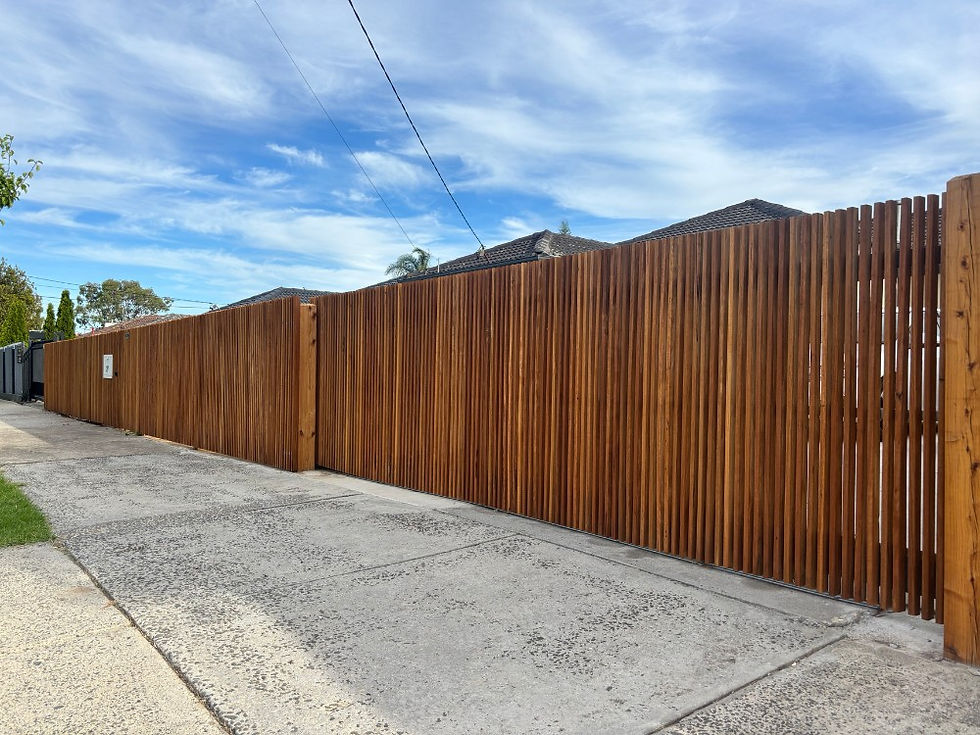
Timber remains a popular option for residential streets because it blends naturally with Brunswick’s period homes and contemporary renovations.
For acoustic performance, standard paling fences are upgraded through:
Layered or double-board construction
Overlapping or tongue-and-groove boards
Mass-loaded vinyl or composite cores
Increased thickness and structural reinforcement
This approach combines the warmth of timber with improved density and sound-blocking ability. When professionally installed, upgraded timber fencing can deliver significant reductions. Meanwhile, it still maintains a natural street presence.
Composite & Engineered Acoustic Panels
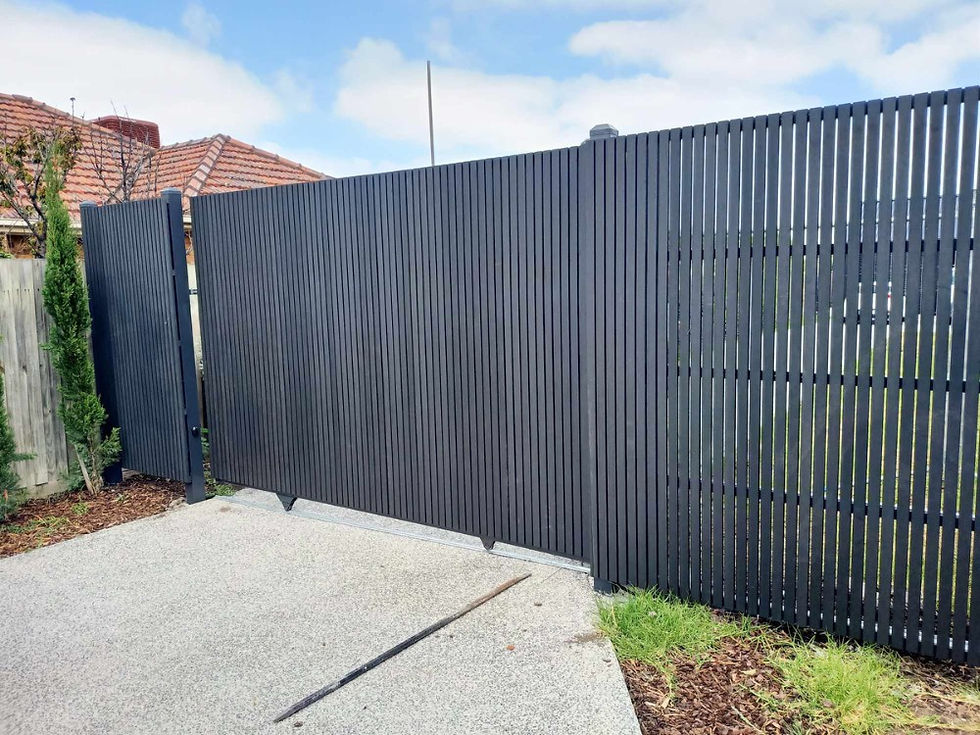
Composite fencing systems are gaining popularity for noise reduction projects. These panels are manufactured from high-density materials specifically designed to reduce sound transmission.
Benefits include:
Strong, uniform density
Minimal gaps or warping over time
Low maintenance
Excellent durability in Melbourne’s changing weather conditions
For homeowners wanting a sleek, modern finish with long-term stability, engineered acoustic panels offer a practical and attractive solution.
Steel or Modular Acoustic Systems
For properties facing heavy-traffic corridors such as Sydney Road, more robust systems may be appropriate.
Steel or modular acoustic panels, often used in commercial applications, can be adapted for residential use. These systems are designed for higher decibel reduction and superior structural strength.
They’re particularly suitable for:
Homes exposed to constant traffic flow
Corner blocks with dual road exposure
Properties near transport corridors
When integrated thoughtfully into residential designs, these systems can provide serious noise reduction without appearing industrial.

Ideal Homes for an Acoustic Fence in Brunswick
While any property near a busy road can benefit, certain Brunswick homes see the greatest improvement from acoustic fencing.
Properties facing Sydney Road or other arterial routes often experience steady vehicle noise throughout the day. Corner blocks can be even more exposed due to dual traffic flow.
Homes near tram corridors also face unique noise challenges - not just engine noise, but braking and vibration noise. An acoustic fence in Brunswick can noticeably reduce this impact, especially in front yards and living areas.
Renovated Victorian and Edwardian homes seeking improved privacy and resale value also benefit. Reducing traffic noise makes these character properties far more appealing to future buyers.
Investment properties can also see increased tenant demand. Quiet, private outdoor spaces are a strong selling point in Brunswick’s competitive rental market.
Design Considerations for Street-Facing Acoustic Fences
Noise reduction is critical, but street-facing fences must still look good. In Brunswick, where streetscapes often feature heritage façades and creative architectural styles, design matters.
Balancing Noise Reduction with Street Appeal
An acoustic fence in Brunswick doesn’t need to feel bulky or unattractive. Thoughtful design elements can elevate its appearance while maintaining performance.
Feature posts or rendered columns
Decorative capping for a refined finish
Horizontal slat detailing (where acoustically appropriate)
Painted or stained finishes to suit the façade
Maintaining neighbourhood character is particularly important in Brunswick’s heritage streets. The goal is to enhance comfort without overwhelming the home’s architectural style.
Height & Council Compliance
Fence height significantly affects acoustic performance. Taller fences block more direct sound waves, especially from passing trucks and buses.
However, residential height limits typically apply to front and boundary fencing. Local council regulations may restrict height, particularly on street-facing boundaries or corner blocks.
That’s why it’s essential to check local planning requirements before installation. Working with experienced installers ensures your fence complies with applicable standards while delivering meaningful noise reduction.

Cost Factors & Long-Term Value
Acoustic fencing is generally more expensive than standard boundary fencing, but the long-term return on lifestyle can be substantial.
Installation complexity is one factor. Many Brunswick properties sit on narrow or slightly sloping blocks, which can require additional groundwork and structural support.
Material choice and panel thickness also influence pricing. High-density composite systems or steel acoustic panels typically cost more upfront than upgraded timber options.
However, when comparing costs and benefits, consider the lifestyle impact. Reduced noise can improve sleep quality, outdoor entertaining comfort and overall property enjoyment.
There’s also the potential boost to property value. Buyers are often willing to pay more for homes that feel quieter and more private - especially in busy inner-city suburbs.
Professional Installation for Maximum Noise Reduction
Even the best materials won’t perform properly without precise installation. Acoustic fencing relies on eliminating weak points and ensuring structural integrity.
Professional installation ensures:
No gaps or sound leaks between panels
Proper footing depth and post stability
Continuous fence lines without breaks
Tight ground clearance to prevent sound escape
Seamless integration with the driveway and side gates
Custom-built solutions consistently outperform off-the-shelf panels. Every Brunswick block is different - from heritage setbacks to uneven ground levels - and acoustic performance depends on tailoring the fence to suit the specific site.
That’s why many homeowners turn to experienced specialists like LATITUDE Fencing & Gates. With extensive experience designing and installing fencing solutions across Melbourne, LATITUDE understands how to balance noise reduction, compliance, durability and street appeal. Our team focuses on quality materials, precise construction and long-term performance.

Final Thoughts
Living on a busy Brunswick road doesn’t mean you have to live with constant noise. A professionally designed acoustic fence in Brunswick can dramatically reduce traffic sound and improve privacy - both indoors and out.
If you’re ready to explore noise-reducing fencing options tailored to your property, speak with the team at LATITUDE Fencing & Gates. With expert guidance, quality workmanship and solutions built for Melbourne conditions, you can enjoy a quieter, more comfortable home.
Get in touch today for a free, no-obligation consultation for your ideal acoustic fencing in Brunswick!


Comments