
Front Fence Design Mistakes That Can Make a Home Look Smaller

Updated: Aug 26
A front fence is not only the boundary of your property, but also helps shape first impressions and influences how large or small your home appears from the street. Some front fence design mistakes create a closed-in appearance, making even generous properties feel narrower or less welcoming. When selecting a fence, homeowners often focus solely on privacy, security, or style.
In this guide, we explore the most common front fence design errors that can make a home look smaller and explain how to avoid them.
Front Fence Design Mistakes - Why Front Fence Design Has a Big Impact on Perceived Space
The way people perceive space is influenced by what they can see. When approaching a property, the eye naturally looks beyond the fence line to the home, garden, driveway, and surrounding landscape. If those views are restricted, the property can feel confined regardless of its actual size.
Good residential fencing design helps establish a visual connection between the street and the property. Rather than creating a solid barrier, an effective fence frames the home and guides attention towards attractive architectural features and landscaping. It creates a feeling of depth and openness.
This is why thoughtful front fence planning is so important. A fence should work with the home. Elements such as spacing, transparency, material selection, and overall scale all contribute to how spacious the property feels.
The same principle applies to front yard fencing. Whether the property is a compact suburban block or a larger family home, the design should support visibility and balance. Even on larger blocks, an overly dominant fence can create the enclosed impression.
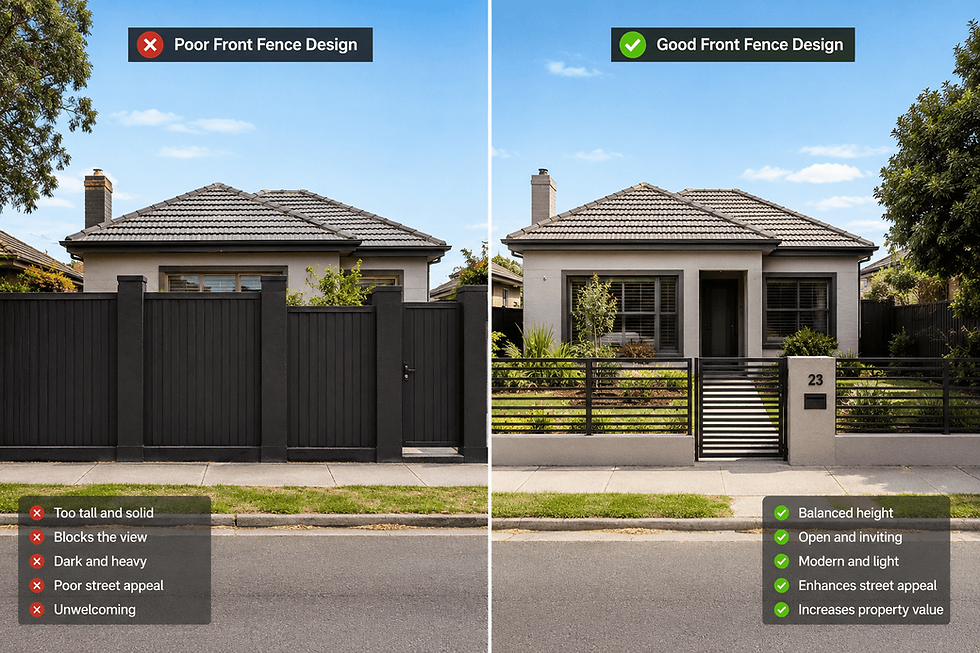
Choosing a Fence That's Too Tall for the Property
One of the most common mistakes homeowners make is selecting a fence that is simply too tall for the scale of their property.
While privacy and security are important considerations, excessive fence height can make a home feel hidden behind a wall. When a fence dominates the frontage, it can visually shrink the house and reduce the perceived size of the block.
A high fence often blocks views of entryways, windows, verandahs, and landscaping. This removes visual interest and creates a heavy appearance from the street.
Finding the right front fence height involves balancing privacy with openness. In many cases, a slightly lower fence with carefully designed spacing achieves both objectives.
Consider these common scenarios:
Small suburban homes. A tall solid fence can overpower the building and make the property appear cramped.
Narrow frontage properties. Excessive height can emphasise the block's narrowness and create a tunnel-like effect.
Corner blocks. Visibility is particularly important on corner sites, where an oversized fence can make the property feel boxed in from multiple angles.
Homeowners should also consider local council requirements, which may restrict front fence heights depending on the location and streetscape. Read more: Fence Height Regulations in Melbourne Suburbs: What Homeowners Should Know

Blocking Natural Sightlines and Views
Another major mistake is obstructing natural sightlines between the street and the home.
When visitors can see portions of the garden, pathway, or façade, the property feels deeper and more inviting. By contrast, solid barriers prevent the eye from travelling beyond the fence line, creating the impression that there is little space behind it.
This issue commonly occurs when homeowners prioritise privacy without considering how the fence affects overall visual flow. Common sightline mistakes include:
Installing solid panels across the entire frontage
Removing visual connections to the front garden
Positioning gates in ways that interrupt natural viewing angles
Using fence designs with no transparency or spacing
These choices often create a visual dead end, causing the property to feel smaller and less welcoming.
Fortunately, there are several attractive alternatives that maintain security while improving openness.
Aluminium slat fencing allows filtered visibility while delivering a modern appearance.
Tubular steel fencing provides security without creating a visual barrier.
Hampton-style fencing combines traditional elegance with an open, spacious feel.
Timber batten fencing with spacing introduces warmth while preserving sightlines.
These styles help create visual depth and encourage the eye to move naturally through the property. The result is a home that feels larger, brighter, and more connected to its surroundings.
Using Fence Materials That Feel Too Heavy or Bulky
Material selection has a significant impact on how large or small a property appears.
Every fencing material carries a certain visual weight. Some materials feel light and open, while others create a stronger and more imposing presence. Problems arise when heavy materials are used on properties that would benefit from a softer, more balanced appearance.
The following comparison highlights the difference:
Heavy Appearance | More Open Appearance |
Solid brick walls | Aluminium slats |
Dense timber screens | Timber batten fencing |
Fully enclosed panels | Tubular steel fencing |
Thick masonry structures | Hampton-style fencing |
Heavy materials often absorb visual space. They create strong horizontal and vertical masses that can dominate the frontage, making the home seem smaller.
Lighter materials, on the other hand, allow more visual movement. Gaps, slats, and open sections help maintain depth and visibility, preventing the property from feeling enclosed.
Material selection should also reflect the home's architectural style. A contemporary home may suit aluminium slats or sleek steel fencing, while a traditional property may benefit from Hampton-style or carefully detailed timber designs.
Proportion is equally important. Even premium materials can feel overwhelming if used excessively. A balanced combination of materials often produces the best outcome, allowing homeowners to achieve privacy and security without sacrificing openness.

Ignoring Proportion Between Fence, House, and Front Yard
Among all front fence design mistakes, poor proportion is arguably the most damaging.
A fence should never be designed in isolation. It must relate to the house, the front garden, the frontage width, and the property's overall scale. When these elements are out of balance, the property can feel visually compressed.
A small single-storey home paired with a large, imposing fence often appears overwhelmed. Conversely, a substantial double-storey home may look unfinished if paired with a fence that is too small or understated.
The most successful designs establish harmony between all elements of the property.
For homes with small front yards, maintaining visual openness is particularly important. Large fence structures can quickly consume the limited available space, making the area feel crowded.
Larger front gardens generally provide more flexibility, but proportion still matters. Oversized fences can dominate the streetscape and reduce the sense of openness.
Single-storey homes typically benefit from lighter fencing designs that preserve visibility and avoid creating a top-heavy appearance.
Double-storey homes can often accommodate slightly taller or more substantial fencing because the building itself provides greater visual balance.
When considering proportions, several design strategies can help:
Consider setback distance. The further the home sits from the street, the more flexibility there may be in fence design. Properties with minimal setbacks often require lighter fencing solutions.
Use layered landscaping. Strategic planting between the fence and the house creates depth and softens visual boundaries. Layers naturally draw the eye inward and enhance the perception of space.
Create visual depth. Combining open fencing with pathways, gardens, and feature planting encourages visual movement throughout the property.
Balance height with frontage width. A wider frontage can generally accommodate a stronger fence presence. Narrow properties often benefit from lighter, more transparent designs.
When homeowners focus on proportion rather than individual features, they create a cohesive design that enhances both the property and its surroundings. This is where many front fence design mistakes can be avoided before construction even begins.
Overlooking Colour and Finish Selection
Fencing colour plays a powerful role in how spacious a property feels. Just as interior designers use colour to make rooms appear larger, fence colours can influence how expansive a home's frontage appears from the street.
Dark colours tend to create stronger visual boundaries. While they can look sophisticated, they may also make smaller frontages feel more enclosed. Similarly, highly contrasting colours can visually shorten sightlines and draw attention to the fence itself rather than the property beyond.
Common colour mistakes include:
Using very dark colours on narrow frontages
Choosing colours that strongly contrast with the home's exterior
Selecting finishes that clash with landscaping elements
Creating a fence that visually dominates the façade
A more effective approach is to select colours that complement the home's architecture and surrounding landscape. Recommended strategies include:
Using neutral tones that blend naturally into the environment
Choosing complementary colour palettes that connect the fence and home
Selecting materials and finishes that work with existing landscaping
Maintaining consistency across gates, fencing, and architectural elements
When colour is thoughtfully integrated into the overall design, the property feels more cohesive and visually expansive.

Forgetting the Role of Gates and Landscaping
A front fence does not exist on its own. Gates and landscaping play a crucial role in determining how the entire frontage is perceived. Oversized driveway gates can create an imposing appearance that dominates the property. This is particularly true when the gate design is solid and visually heavy.
Similarly, poorly positioned pedestrian gates can interrupt sightlines and make movement through the frontage feel awkward.
Whether choosing sliding, swing, or pedestrian gates, the design should harmonise with the fence and surrounding landscape.
Landscaping is equally important. Without greenery, fences can appear harsher and more imposing than intended. Plants soften boundaries and introduce depth, colour, and texture. Strategic planting along the fence line helps break up large surfaces while guiding the eye through the space.
Layered garden beds, feature trees, and carefully positioned shrubs can all contribute to a more spacious appearance.
When gates and landscaping are integrated into the overall design, the property feels balanced, welcoming, and significantly larger than it would with fencing alone.
How to Design a Front Fence That Makes Your Property Feel Larger
If your goal is to maximise street appeal and create a greater sense of space, consider the following practical recommendations:
Choose fence heights that suit the scale of your home.
Maintain visual openness wherever possible.
Use slatted, spaced, or partially transparent fencing designs.
Select materials that complement the property's architecture.
Avoid overly bulky or dominant structures.
Incorporate landscaping to soften boundaries.
Create depth through layered planting and pathways.
Use colours that integrate with the home's exterior palette.
Match fence proportions to the width and scale of the property.
Consider modern aluminium slat designs for a contemporary appearance.
Ensure gates support rather than dominate the frontage.
Work with experienced fencing professionals who understand design balance and council requirements.

Frequently Asked Questions
Does a tall front fence make a house look smaller?
Yes. An excessively tall front fence can block architectural features, reduce visibility into the property, and create a more enclosed appearance. In many cases, a lower or more open design helps the home feel larger and more welcoming.
What is the best front fence height for street appeal?
The ideal height depends on the property's size, architecture, and privacy requirements. Generally, the best designs balance security and privacy while maintaining street-level visibility and openness.
Which fencing styles make a front yard look bigger?
Aluminium slat fencing, tubular steel fencing, Hampton-style fencing, and timber batten fencing with spacing are all effective options. These designs maintain sightlines and create a greater sense of depth.
Can landscaping help a front fence look less imposing?
Absolutely. Landscaping softens hard edges, introduces visual layers, and creates depth throughout the frontage. Strategic planting can significantly reduce the visual impact of a fence and make the property feel more spacious.
In Conclusion
Many front fence design mistakes occur because homeowners focus only on privacy or security, without considering the overall visual appearance. By carefully considering height, materials, proportion, colour, gates, and landscaping, you can create a front fence that makes your property feel larger and more inviting. Thoughtful design choices allow the fence to complement the home rather than dominate it.
If you're planning a new front fence or upgrading an existing one, the team at LATITUDE Fencing & Gates can help. We specialise in custom-designed fencing and gate solutions across Melbourne, delivering high-quality workmanship, premium materials, and tailored designs that enhance both functionality and aesthetics.
Contact LATITUDE Fencing & Gates today for an obligation-free consultation and discover how the right fence design can transform the appearance of your home.


Comments