
Narrow Side Gate Ideas for Passages Between the House and Boundary

Key Takeaways:
Use a slim swing gate where there is enough opening room, reconsider the swing direction where obstacles interfere, or use sliding and split-leaf designs when space is particularly restricted.
Vertical battens and aluminium slats can provide privacy without making the passage feel excessively enclosed.
Compact locks and handles also help preserve usable width.
Measure the entire passage, identify services and obstacles, and size the final opening around the largest item that regularly needs access.
Side passages are often treated as leftover space, but in many Melbourne homes they provide important everyday access for wheelie bins, bicycles, garden equipment, pets and people. Choosing a narrow side gate therefore requires more thought than simply selecting a gate style.
The main challenge is that the distance between the house and boundary is not the same as the usable gate opening. Posts, hinges, handles, downpipes, eaves, retaining walls and the gate's movement can all reduce available space. The best solution starts with the layout and how the passage will actually be used.

What a Narrow Side Gate Works Best Between the House and Boundary?
The best design is generally the one that preserves as much usable width as possible while allowing the gate to open, close and lock without obstructing the path. In a tight side area, relatively small decisions, such as hinge position, swing direction or hardware size, can make a noticeable difference.
Rather than choosing a side gate based on appearance alone, consider how each design uses the limited space available.
Use a Slim Single Swing Gate When There Is Enough Opening Arc
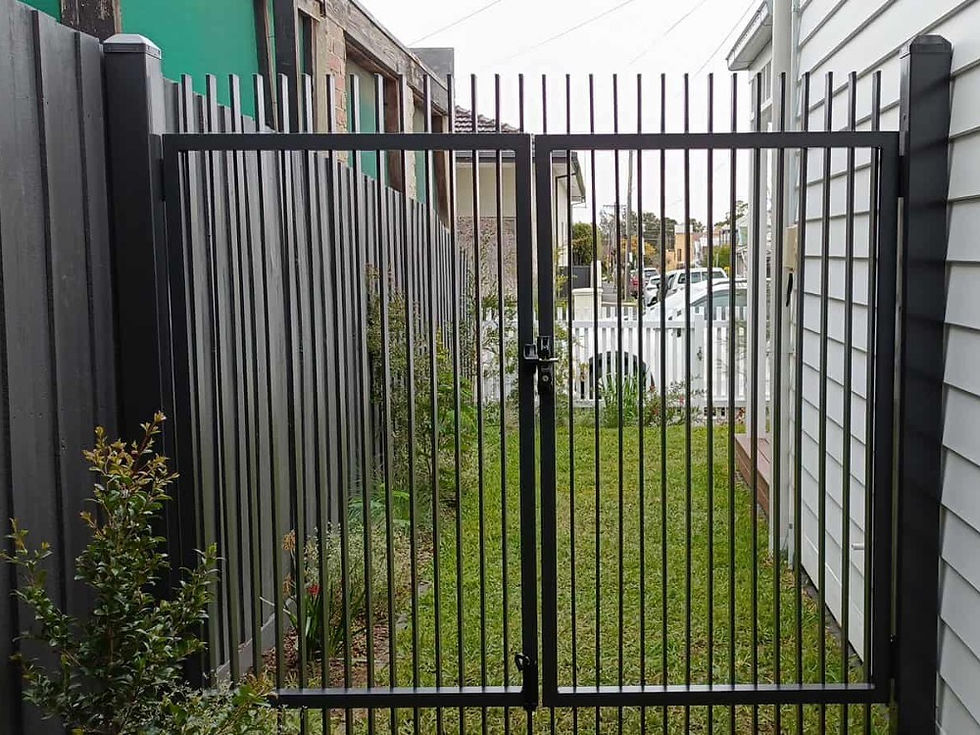
A single hinged pedestrian gate is often the simplest solution when there is enough depth for the gate leaf to open fully. For a narrow passage, a streamlined design may include:
A slim aluminium frame.
Vertical battens or narrow slats.
Hinges positioned to maximise usable width.
Compact latch hardware.
A width designed around the clear opening, rather than the outside dimensions of the frame.
This last point is particularly important. A gate described as 900 mm wide does not necessarily provide 900 mm of space to walk through. Posts, hinge clearances, stops and latch components all reduce the final opening.
For a passage mainly used by pedestrians, wheelie bins and ordinary garden equipment, a simple aluminium swing gate can provide an effective balance between access, security and appearance.

Make the Gate Swing Towards the Side With More Free Space
Swing direction becomes much more important when every centimetre of the passage matters. Depending on the layout, the gate might work better when it:
Opens towards the backyard rather than the front.
Opens against the boundary fence.
Opens towards a relatively blank house wall.
Is hinged so the open leaf sits outside the main walking line.
The goal is to prevent the open gate from becoming another obstacle.
Before deciding on the hinge side, check whether the leaf could hit a downpipe, tap, air-conditioning unit, meter box or other wall-mounted equipment. Also consider whether a wheelie bin can turn through the opening while the gate is fully open.
Swing direction should be decided during site measurement, rather than after the gate has already been fabricated.
Local requirements can also influence the decision. For example, the City of Monash states that permitted pedestrian gates opening onto council reserves must open back into the private property. Requirements can vary depending on where the property is located and what land adjoins the gate.

Consider an Outward-Opening Gate Only Where the Surrounding Space Allows It
An outward-opening arrangement can sometimes preserve more usable space inside a very tight side passage.
This may be helpful where bins, bicycles or equipment are stored immediately behind the gate and an inward-opening leaf would constantly interfere with them.
However, an outward-opening gate is highly site dependent. It should not swing across a public footpath, obstruct neighbouring access, interfere with shared land or create a collision risk for people passing outside the property.
Where outward opening is suitable, it can be an effective solution. Where the gate adjoins a footpath or council-controlled space, other arrangements are usually worth considering first.

Choose Vertical Battens to Make a Very Narrow Passage Feel Less Enclosed
Once the operating layout has been resolved, the gate design can help the passage feel visually lighter.
Slim vertical aluminium battens work particularly well because their lines emphasise height rather than the narrow width of the space. Popular finishes can include:
Monument.
Satin black.
Woodland Grey.
White or Surfmist.
Timber-look powder coat.
Narrow passages beside Melbourne homes can receive limited daylight, particularly where they sit under wide eaves. A completely solid dark gate may make the space appear more enclosed.
Small gaps between vertical battens can allow filtered light and airflow while still limiting direct views into the backyard. The amount of spacing can be adjusted according to the privacy required.

Use Horizontal Slats When You Want Privacy Without a Heavy Solid Gate
Horizontal aluminium slats offer another good option for contemporary homes.
The final appearance can be adjusted through the slat width, gap size, frame profile and colour. Where the gate connects to adjoining aluminium fencing, aligning the slats can also make the whole side boundary appear more considered.
In a very small area, simple designs generally work better than excessive decorative detail. Clean horizontal lines and a slim frame keep the entrance visually organised without making it feel busy.
LATITUDE can also customise aluminium side gates so the gate proportions, slat spacing and finish coordinate with existing fencing and the architecture of the home.

Consider a Full-Privacy Gate Where Bins and Utilities Sit Behind It
Side passages are often used to hide practical items that homeowners do not want visible from the street, including:
Wheelie bins.
Garden tools.
Hot-water equipment.
Pool equipment.
Utility areas.
General outdoor storage.
In these situations, a higher-privacy design may make sense. Options include closely spaced aluminium battens, horizontal slats, timber battens, solid metal panels or Colorbond-style screening.
Remember that sheltered side passages receive less natural rain washing than exposed fences. BlueScope advises that Colorbond steel areas not regularly washed by rain, including surfaces under eaves, should be hosed at least every six months and more frequently in coastal environments.
This is particularly relevant to side gates positioned underneath deep roof eaves.

Use a Gate With an Integrated Flush Handle or Compact Latch
Gate hardware is easy to overlook when planning a narrow opening.
Large handles, bulky lock housings and projecting latch components can take up valuable space and may catch on clothing, bicycle handlebars, wheelie-bin handles or garden equipment. More compact options may include:
Slim lever hardware.
Magnetic latches.
Flush pulls on suitable gate types.
Compact keyed locks.
Digital access hardware where required.
For households with carers, contractors or multiple regular users, keypad, intercom or smart access can also be incorporated into the gate design rather than added later in an awkward position.

Position the Gate Where the Passage Is Widest
The gate does not always need to sit at the very front corner of the house. Moving it further down the side passage may help avoid a projecting brick pier, downpipe, meter box, wide eave, boundary change or particularly tight section of paving.
On irregular older properties, moving the gate even a relatively short distance can sometimes create a much better clear opening.
The trade-off is that moving the gate backwards may expose bins, services or other items to street view. Privacy, security and the appearance of the frontage should therefore be considered along with the available width.

How Wide Should a Side Gate Be in a Narrow Passage?
The correct width depends on what regularly needs to pass through the gate. Instead of starting with a standard gate size, measure the passage and then design around the largest everyday object.
There are three different measurements to consider:
Overall passage width: the physical distance between the house and boundary.
Gate frame width: the total installed width of the gate structure.
Clear opening width: the unobstructed space actually available when the gate is open.
The last measurement usually matters most. For example, SULO lists its Australian 240 L wheelie bin at approximately 585 mm wide. Designing a gate with only around 600 mm of clear space would therefore leave almost no useful tolerance for steering the bin through.
For bicycles, consider handlebar width rather than tyre width. For wheelbarrows or lawn mowers, measure the widest fixed part of the equipment.
This is why a side gate for narrow passages should be sized around real movement through the opening rather than an arbitrary nominal gate dimension.
Accessibility requires additional consideration. Where a gate forms part of a regulated accessible route, the complete access path, manoeuvring space and relevant requirements need to be assessed.
For more detailed measurements, see our guide to How Wide Is a Side Gate for Bins, Bikes and Garden Equipment?

What Should You Check Before Installing a Side Gate in a Tight Side Passage?
Before fabrication begins, inspect the complete passage rather than measuring the width at only one location. Narrow access areas often contain services, slopes and structural features that can change which gate layout will work. Important checks include:
Downpipes and services: Locate water and gas meters, taps, electrical boxes, conduits and air-conditioning equipment before deciding where the posts and hinges will go.
Drainage: Do not position posts, tracks or new paving in a way that interferes with drainage. Victorian building guidance recommends considering whether proposed works may affect or redirect existing water flow.
Ground slope: A swing gate that clears the paving when closed may scrape against rising ground as it opens.
Eaves and overhead obstacles: Check whether a tall gate could collide with rooflines, pipes or other overhead structures.
Gate stops: Allow a practical location for the gate to stop without reducing passage access.
Maintenance access: Avoid blocking equipment that plumbers, electricians, air-conditioning technicians or other trades may need to reach later.
Property boundary: Do not automatically assume the existing fence line or paving edge represents the exact title boundary.
Future use: A path currently used only by pedestrians may later need to accommodate bins, bicycles, prams or mobility equipment.
Most importantly, measure the passage at several different points. Older Melbourne houses, paths and boundary fences are not always perfectly parallel, so one measurement may not represent the narrowest part of the route.

Which Materials Work Best for Narrow Side Gates?
The best material depends on the layout, required privacy, architectural style and amount of maintenance the homeowner is comfortable with. In tight spaces, however, the ability to create a slim and accurately fitted gate becomes particularly important.
Aluminium is one of the strongest all-round choices. Slim framing and battens can create a clean contemporary design without excessive visual bulk. Powder coating also provides considerable flexibility in colour and finish.
Timber adds warmth and suits many traditional and renovated Melbourne homes. However, allowances should be made for natural timber movement and ongoing maintenance, especially where operating clearances are already tight.
Steel is useful when strength or a fine custom frame is required. It can work particularly well for bespoke designs and narrow gates requiring a rigid structure.
Colorbond-style screening provides excellent visual separation where privacy is the priority, although an entirely solid gate can make a narrow space appear smaller.
PVC can provide a lighter-looking, low-maintenance solution for suitable residential architecture.
Ultimately, the materials should follow the layout rather than dictate it. A beautiful gate that unnecessarily turns a usable passage into an inconvenient opening is not a successful design.
In Conclusion
A tight space between the house and boundary does not automatically mean installing an inconveniently small gate. A well-designed side gate for narrow passages considers the usable opening, swing or sliding movement, everyday equipment, surrounding services and future access requirements together.
Slim aluminium swing gates, sliding gates, compact bi-fold arrangements, vertical battens and carefully positioned hardware can all make better use of restricted side access.
LATITUDE Fencing & Gates can measure your Melbourne side passage, identify potential obstructions and design a custom aluminium, steel, timber, PVC or other gate solution to suit your home and the way you use the space.
Contact the LATITUDE Fencing & Gates team today for an obligation-free consultation and customised side-gate quote.
FAQs
What is the best gate type for a very narrow side passage?
Where there is enough opening depth, a slim single swing gate is usually the simplest solution. If there is almost no room for the gate to swing, a custom sliding gate may work better, provided there is sufficient space beside the opening for the leaf to travel.
Should a side gate swing inwards or outwards?
The best direction depends on the site. Ideally, the open leaf should not block the walking path or hit downpipes, equipment or stored items. Outward opening may work on some private layouts, but it should not obstruct public or shared access, and local requirements should be checked where council land is involved.
Is aluminium a good material for a narrow side gate?
Yes. Aluminium is particularly suitable because relatively slim frames and battens can create a durable gate without excessive visual bulk. It is also available in vertical batten, horizontal slat, picket and other custom designs with a wide range of powder-coated finishes.
Can a narrow side gate still provide full privacy?
Yes. Closely spaced aluminium battens, horizontal slats, solid panels, timber or Colorbond-style screening can all increase privacy. However, consider light, airflow and the visual effect of a solid gate, especially where the passage is already shaded and enclosed.


Comments