
Upgrading Outdated Commercial Front Fencing: What to Consider

Commercial front fencing is often one of the first things customers and visitors notice when they arrive at a property. A clean, well-designed frontage can suggest professionalism, while an outdated or damaged fence can make the property look neglected.
Old fencing can also create practical problems, such as rusted panels, unstable posts, poor gate movement and awkward access points, which may affect security and everyday site operations. For many businesses, a commercial fence upgrade is an opportunity to improve presentation, protect assets, and modernise the property frontage. In some cases, replacing commercial fencing can also make the site easier to use every day.
Why Outdated Commercial Fencing Can Become a Problem
Older commercial fencing can affect much more than a property's appearance. A rusted, leaning, damaged fence can make a business look less professional from the street. For customer-facing sites, this can undermine confidence before visitors even set foot on the premises. For warehouses, industrial facilities and storage areas, worn fencing can make the site appear easier to target.
Security is another major concern. Damaged posts, loose panels, broken locks or sagging gates can create weak points along the boundary. Even small gaps may allow unauthorised access. A fence that was suitable years ago may no longer align with current risks.
Commercial properties also change over time. A business may add more staff, expand operations or welcome more visitors. If the front fence has not been updated to reflect the site, it can impede smooth operations. The property may now need better vehicle access, improved visibility, stronger screening or integration with gate automation and access control.

Signs It May Be Time to Replace Your Existing Commercial Fence
Not every older fence needs to be completely removed. In some cases, selected repairs, repainting, gate adjustment, or panel replacement may be enough. However, when problems keep recurring or the existing layout no longer suits the property, a more comprehensive upgrade can deliver long-term results.
Common signs that your commercial front fence may need major attention include:
Rust, corrosion, timber rot or cracked posts. These issues can weaken the fence's structure and affect both safety and appearance.
Gates that drag, sag or no longer close properly. Poor gate operation can make the site difficult to secure, especially after business hours.
Poor street appeal or an outdated visual style. A tired frontage can make the whole property look older, even if the building itself is well maintained.
Gaps that affect privacy or security. Openings under panels, between posts or around gates can reduce protection and make the boundary less effective.
Fence height no longer matches security needs. A low or decorative fence may not suit a site that now holds valuable stock, vehicles, tools or equipment.
Difficulty managing staff, visitor or delivery access. If everyone uses the same awkward entry point, the site may feel congested, unsafe or hard to control.
No suitable space for intercoms, CCTV or access control. Older layouts were often not designed with modern automation, smart access, or surveillance systems in mind.
Repeated repair costs becoming inefficient. When repairs keep adding up, a planned replacement may provide better value than repeatedly patching the same problems.
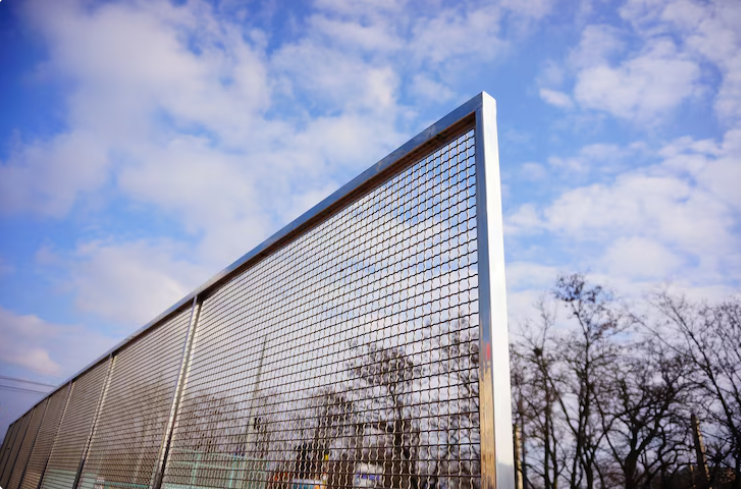
Planning a Commercial Fence Upgrade Around Your Whole Frontage
Before choosing materials or approving a new fence style, it is worth considering the full commercial frontage as a single connected system. A better result usually comes from planning around how the property is used, not simply replacing the old fence in the same position.
Start with the Purpose of the Site
A warehouse will not need the same type of front fencing as a medical centre, childcare centre, office building, or multi-tenant commercial property. Each site has a different balance of security, privacy, visibility and presentation.
For example, a childcare centre may need a secure, controlled entry point that still feels welcoming to families. A warehouse may prioritise vehicle movement, stock protection and after-hours security. An office building may need a more refined frontage to support the business's brand image.
Review Vehicle and Pedestrian Access
Access requirements should be reviewed early in the planning stage. Consider how vehicles enter and leave the site and how pedestrians move from the street to the entrance. A fence upgrade should make access safer and more organised, not more complicated.
Some sites benefit from separating pedestrian gates from driveway gates. Clear access planning can reduce confusion and help the property function more smoothly during busy periods.
Match the Fence to the Required Security Level
Not every business needs a high-security appearance, but every commercial site should understand its risk profile. Sites with valuable tools, stock, or confidential operations may need stronger boundary protection.
Other properties may need a fence that controls access without making the business look closed off. Good design is about finding the right balance between protection and presentation. The fence should discourage unauthorised access while still supporting the day-to-day experience.
Consider Street Appeal and Business Image
The new fence should suit the building style, landscaping and overall business image. A modern aluminium batten fence can create a clean and professional frontage, while solid screening may be more suitable where privacy is important.
For customer-facing properties, the fence should guide people in without making the entrance feel harsh or confusing. A well-designed commercial front fence can help the business look established and trustworthy from the street.
Plan for Future Automation and Technology
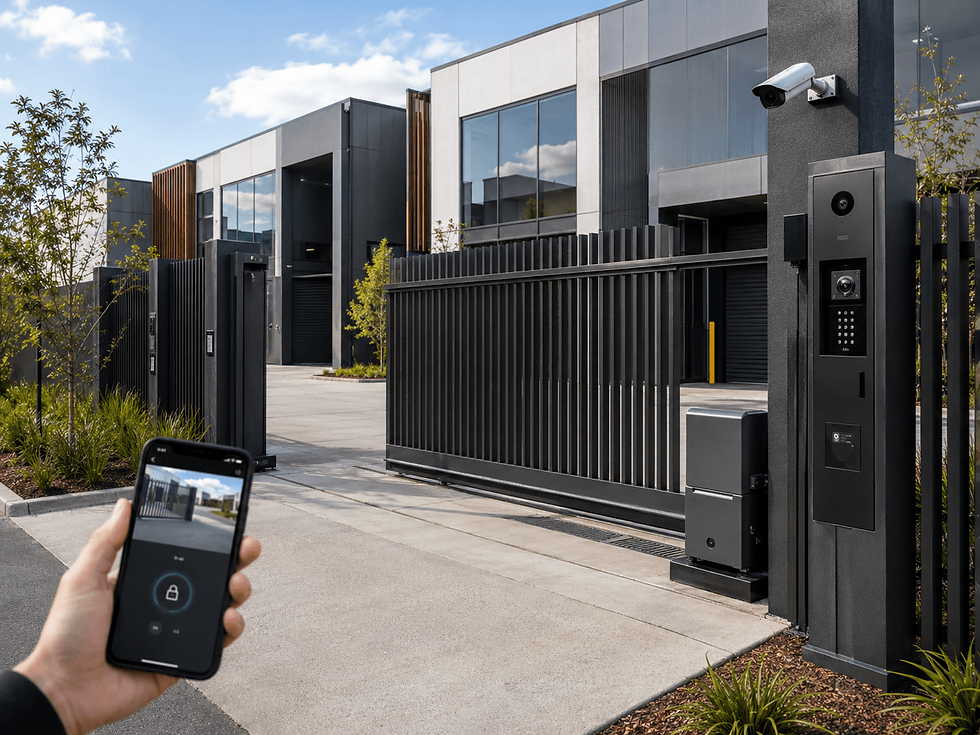
It is also wise to consider future automation and technology. Even if the business does not install every system immediately, the fence and gate layout should allow for possible future additions such as intercoms, smart app control, CCTV, keypads, smart locks or automated sliding gates.
Planning ahead can save money and reduce disruption later. It can also help avoid exposed wiring or the need to modify newly installed fencing when technology is added in the future.
Think About Long-Term Maintenance
A fence that looks impressive on day one but needs constant attention may not be the best choice for a busy business. Materials, finishes, hardware and gate systems should be selected with long-term use in mind.
Low-maintenance materials such as aluminium or properly finished steel may suit many commercial sites, while timber may require more ongoing care. The right choice depends on the property’s exposure, usage, budget and desired appearance.
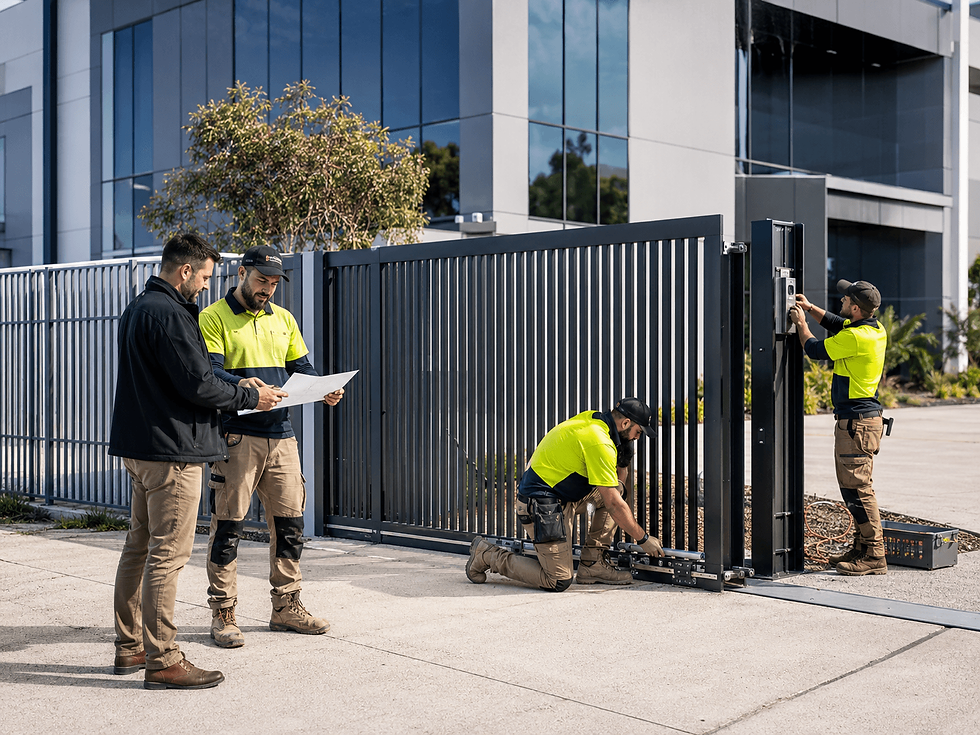
Choosing Modern Materials and Fence Styles
Material selection has a major impact on durability, maintenance, appearance and long-term performance. The right choice will depend on the type of business, the level of security required and the amount of privacy needed from the street.
Aluminium slat and aluminium batten fencing are popular for modern commercial frontages because they offer a clean, professional appearance with lower maintenance requirements. They can provide partial screening while still allowing airflow and visibility for offices, medical centres, retail sites and many mixed-use commercial properties.
Steel tubular fencing can be a strong option for sites that need greater durability and a more secure boundary. It is often suitable for warehouses, industrial premises, storage facilities and commercial yards. Colorbond fencing may suit properties that need greater privacy along boundaries.
Timber feature fencing can add warmth and character, particularly for customer-facing sites, but it may require more maintenance over time. PVC fencing, wrought iron, ModularWalls and custom material combinations can also be considered depending on the desired style and site requirements.
There is no single best material for every commercial property. The right fence should match the building, withstand local conditions, suit the owner's maintenance expectations, and create the right first impression.
Integrating Gates, Intercoms, CCTV, and Smart Automation
For commercial properties, the front boundary often needs to work with driveway gates, pedestrian gates, automation, intercom systems, CCTV, smart locks and app-based access control. This is where a simple fence replacement can become a broader improvement to the entire site entrance.
Automated sliding gates are a practical choice for many commercial driveways. Swing gates, telescopic sliding gates, bi-fold swing gates, and custom commercial gates may also be suitable, depending on the available space, traffic flow, and design requirements. Pedestrian gates should be planned separately where possible.
Planning is especially important when technology is involved. Power supply, underground conduits, motor location, intercom position, safety devices, CCTV placement and access control hardware should be considered before installation begins. This helps avoid messy retrofitting, exposed wiring or awkward equipment placement later.
Upgrading commercial fencing is a good time to modernise the whole entrance. With the right planning, the new frontage can improve security and create a smoother experience for everyone using the property.
Planning Installation Around Business Operations
Commercial sites often need to remain operational while fencing work is completed. This means the installation plan should consider customer access, staff parking, delivery schedules, and after-hours work where required.
For offices and medical clinics, the main concern may be maintaining visitor access and a professional appearance during the works. For warehouses and industrial sites, vehicle movement and delivery access may be more important.
Childcare centres and schools require extra care around safety and timing. Multi-tenant commercial properties may need staged works so different businesses can continue operating with minimal disruption.
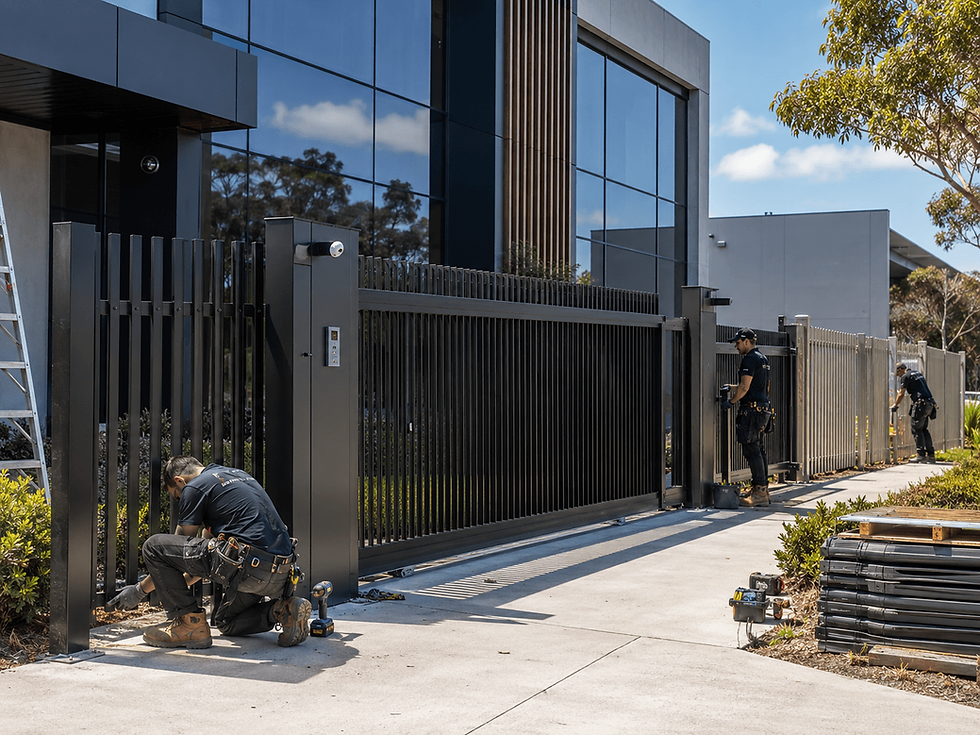
A professional fencing contractor can help stage the work so the property remains functional and secure throughout the process. This may include completing sections in stages, coordinating gate installation around quieter periods or using temporary fencing where needed.
Why Professional Design and Installation Matter
Commercial fencing needs to perform well for years, not just look good when it is first installed. Professional design and installation help ensure the fence is structurally sound and suitable for the site's demands. Their work covers all post depth, footing preparation, gate clearances, hardware selection and ground conditions, all of which affect how well the fence and gates function over time.
This becomes even more important when automation, access control or uneven ground is involved. A gate that is not properly aligned can place extra strain on motors and hardware. Or poorly planned access points can create safety issues.
Experienced fencing specialists can assess the site, recommend suitable materials, design a practical layout and coordinate the installation process from start to finish. LATITUDE Fencing & Gates offers consultations, tailored design, quality materials, on-site construction and after-completion support for workmanship issues. With a workmanship guarantee for constructed fencing and gates, property owners can feel more confident about the long-term results.
A professionally installed commercial front fence should improve security, access, appearance and everyday site function at the same time.
In Conclusion
An outdated commercial front fence can affect far more than street appeal. It can reduce security and create the wrong impression for customers, staff and visitors. A commercial fence upgrade gives you the chance to improve how your property looks, feels and functions every day.
The best result comes from planning the whole frontage, including fence style, gates, pedestrian access, automation, privacy, visibility and long-term maintenance. With the right design and installation team, your new fence can protect your property while projecting a more professional business image.
If you are ready to update your commercial front fencing in Melbourne, contact us today. Our LATITUDE Fencing & Gates team can help with an obligation-free consultation, tailored design, quality materials, professional installation and reliable after-completion support.
FAQs
How do I know whether to repair or fully replace commercial fencing?
Minor damage may only need repair. However, if the fence has major structural issues, recurring maintenance problems, poor security, or an outdated access layout, a full replacement may offer better long-term value.
Can I upgrade my commercial fence without changing the whole frontage?
Yes. Some sites may only need selected sections, gates or access points upgraded. A site assessment can help identify which parts should stay, be modified or be replaced.
Can automation be added during a fencing upgrade?
Yes. A fencing upgrade is an ideal time to plan automated gates, intercoms, CCTV, smart locks, keypads and app-based access systems.
What is the best material for commercial front fencing?
The best material depends on the site’s security needs, design style, maintenance expectations and budget. Aluminium, steel, Colorbond, timber, PVC, wrought iron and ModularWalls can all suit different commercial applications.


Comments