
Choosing the Right Driveway Gate Width for Modern Vehicles

Melbourne households now use a wide range of vehicles, such as a compact car, a large SUV, a dual-cab ute, a work van, an electric vehicle, or a car towing a trailer. Each vehicle has different dimensions, turning characteristics and clearance requirements that a typical driveway may need to accommodate.
Choosing the correct driveway gate width involves more than just checking the vehicle's body measurements. Rather, drivers need comfortable clearance around mirrors and enough room to approach at a natural angle.
An opening that appears generous on a plan can feel restrictive after posts, hinges, motors, guide equipment and landscaping have been installed. Careful planning before manufacturing begins can create a safer and easier entrance.
Understand the Difference Between Driveway Gate Width and Clear Opening Width
When discussing gate dimensions, it is important to distinguish between the overall gate structure and the actual space available for a vehicle to pass through. These measurements are not always the same.
The clear opening is the unobstructed passage available when the gate is fully open. It is this finished measurement, not simply the distance between two boundary points, that determines whether vehicles can enter and exit comfortably.
Several structural and mechanical components may reduce the usable opening, including:
Gate posts and brick piers
Hinges and mounting brackets
Sliding gate overlaps
Motor housings and automation arms
Guide posts, rollers and safety equipment
Angled boundaries or uneven driveway edges
For example, a sliding gate may need to overlap a post or receiving point when closed. A swing gate may have hinges or automation arms projecting into the opening. Brick piers can also occupy more space than slim steel posts, reducing the passage available to the vehicle.
There is also room outside the clear opening for posts, foundations, brackets, motors and control equipment. For this reason, homeowners should avoid ordering a gate based solely on an approximate fence line measurement.
The most reliable approach is to first identify the required clear passage, then design the gate structure and supporting components.

How Much Clearance Does a Driveway Gate Need?
The ideal size depends on the vehicle, the position of its mirrors, the driveway approach, surrounding obstacles and how much space the driver has to straighten before passing through the gate.
The first step is to measure the vehicle's widest operating point. In many cases, this will be the distance between the outer edges of the side mirrors rather than the width of the vehicle body.
Moreover, both sides should have additional clearance. A gate that is only slightly wider than the vehicle may be technically passable, but it can require the driver to line up perfectly on every entry.
Compact and Standard Passenger Cars
Smaller passenger vehicles may suit a relatively modest single-car opening where the street and driveway are aligned. When the approach is straight, drivers can normally centre the vehicle before reaching the gate.
However, even compact vehicles need practical mirror clearance. Landscaping, bins, letterboxes or posts positioned close to the entrance can make a modest opening feel tighter.
Large SUVs and Dual-Cab Utes
SUVs and dual-cab utes often have wider bodies, larger mirrors and longer wheelbases. In these cases, extra side clearance is valuable, particularly when entering from a narrow street or turning across an angled crossover.
Owners should also consider accessories such as tow mirrors, side steps, bull bars and roof equipment. Although these additions may not all directly affect the gate opening, they can influence the driver’s perception of space and manoeuvrability.
Vans, Caravans and Trailers
Vans, caravans, boat trailers and trade vehicles can require substantially more room. Trailer wheels follow a different path from the towing vehicle, especially during a turn, and may pass closer to a gate post than expected.
The driver may also need space to correct the vehicle’s position without reversing into traffic or blocking the footpath.
Two-Car Driveways
A double driveway may use one broad opening or two separate vehicle entrances. The most suitable arrangement depends on the frontage, parking layout, residential fence design and how the household uses the driveway.
One broad entrance can offer flexible positioning, while separate openings may provide greater control and visual structure. The decision should be based on vehicle movements rather than appearance alone.
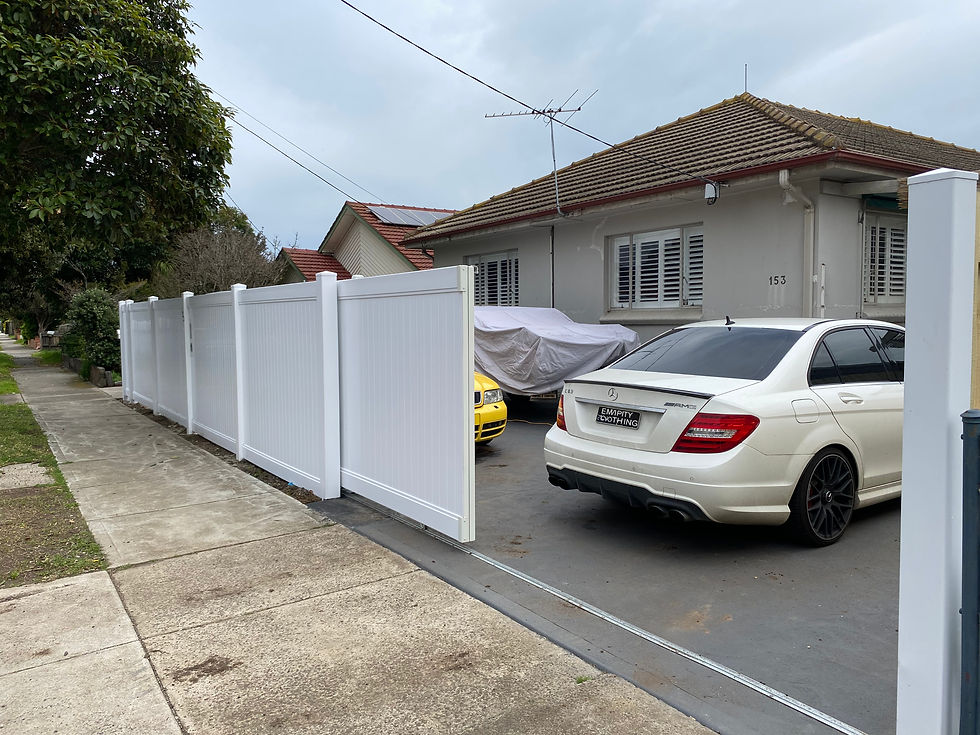
Consider the Vehicle’s Turning Angle and Driveway Approach
Vehicle width is only one part of the calculation. The angle at which a car approaches the gate also significantly affects the required opening. A vehicle entering from a wide street with ample space to straighten up may pass comfortably through a moderate opening. The same vehicle may need more clearance when entering from a narrow road.
Important site conditions to consider include:
Narrow residential streets
Vehicles parked close to the driveway crossover
Offset or angled driveway entrances
Curved internal driveways
Sloping or steep access points
Limited space to straighten the vehicle
Nearby trees, pillars or retaining walls
During a turn, the rear wheels follow a tighter path than the front wheels. This effect is important for long-wheelbase utes, vans and vehicles towing trailers. The front of the vehicle may clear the first post while the rear wheel, body or trailer tracks closer to the opposite side.
Steep driveways can create additional challenges. Drivers may have reduced visibility over the bonnet, while low vehicles can be more difficult to position as they cross changes in gradient.
In short, where the approach is difficult, increasing the clear opening may deliver a more practical long-term result.

Match the Gate Style to the Available Opening
The chosen driveway gate configuration affects how much usable passage is available. Frontage width, driveway depth, boundary conditions and nearby structures all influence which system will work most effectively.
Sliding Gates
Sliding gates are commonly used where the driveway does not have enough depth for gate leaves to swing inward. The gate travels parallel to the fence, keeping the main driveway area clear during operation.
However, a conventional sliding gate requires sufficient clearance on the side. The moving leaf generally needs to be longer than the clear opening because it must include an additional section for balance, support or overlap.

Swing Gates
Swing gates may consist of one large leaf or two smaller leaves. They can create a traditional or architectural appearance and suit properties with adequate space in front of or behind the gate.
For wider entrances, a double-swing configuration can reduce the size and weight of each leaf. This may place less load on hinges, posts, and automation equipment than a single, very large panel would.
The swing path must remain clear of parked vehicles, sloping ground and landscaping. Local requirements and site safety must also be considered before planning an outward-opening gate.
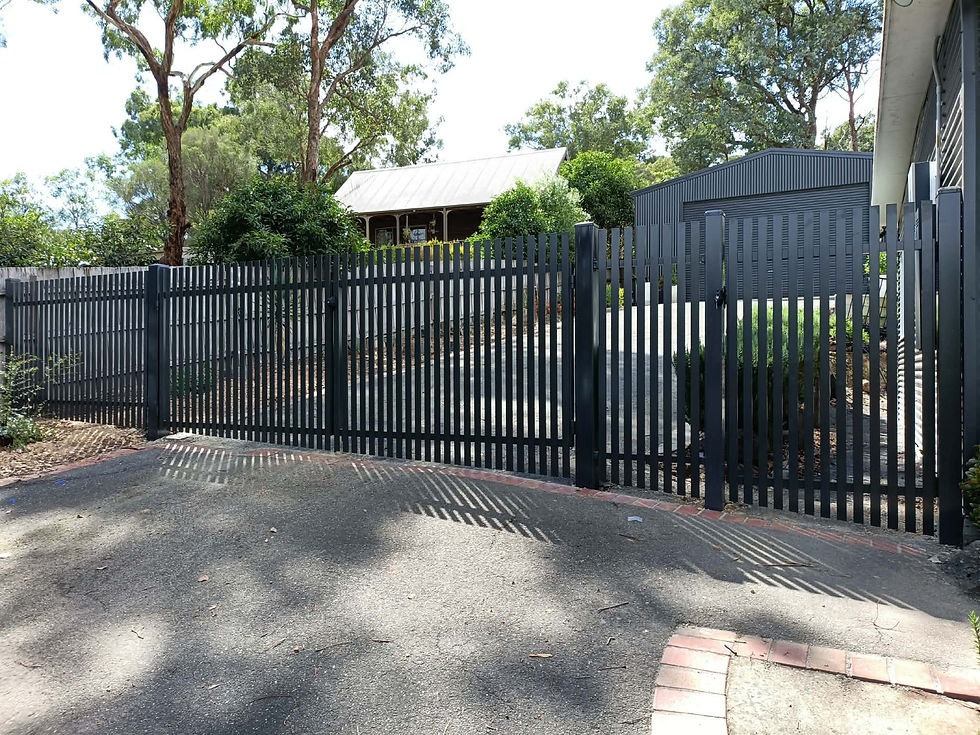
Telescopic Sliding Gates
Telescopic sliding systems use multiple gate panels that move together and stack behind one another. They can provide generous vehicle access where there is insufficient side-return space for a single conventional sliding leaf.
Because the system involves additional tracks, cables, guides or synchronised components, accurate design and professional installation are particularly important.
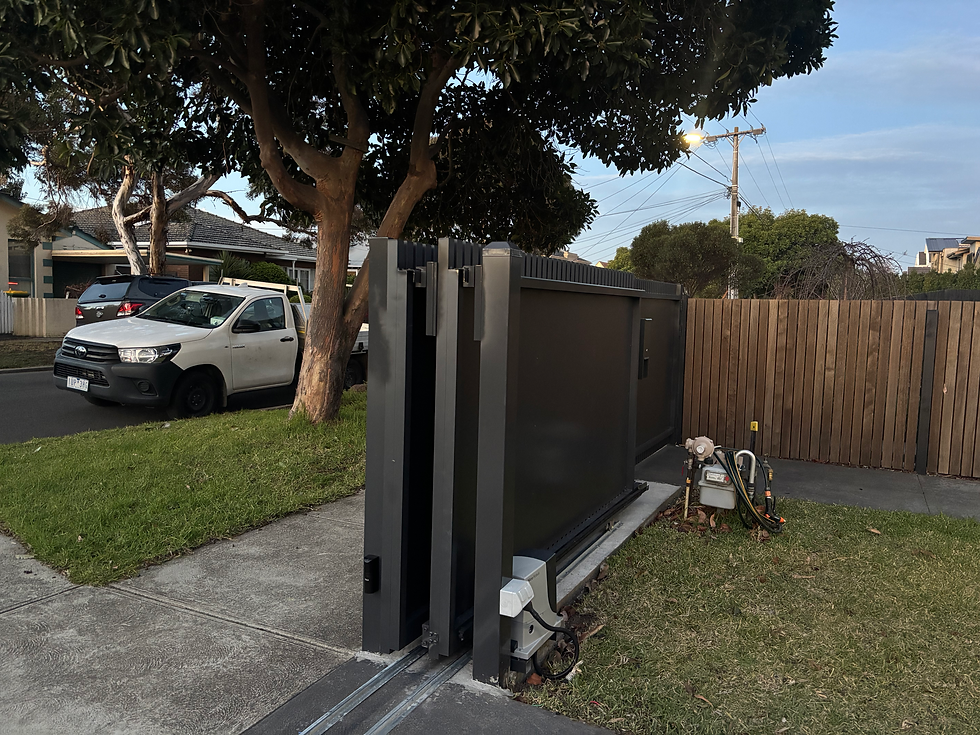
Bi-Fold Swing Gates
Bi-fold gates divide each side into folding sections. The leaves fold as they open, reducing the distance they project into the driveway.
This configuration can suit properties that need a generous opening but have limited internal swing space. It can also provide faster opening than some conventional swing arrangements, depending on the operator and gate design.
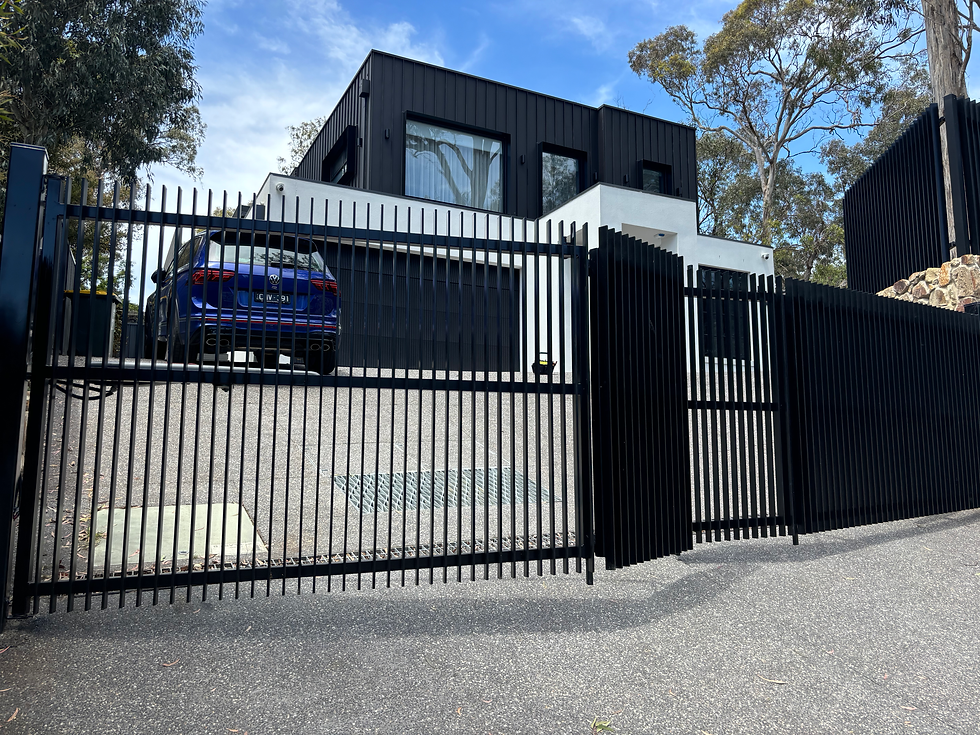
Plan for SUVs, Utes, Trailers and Future Vehicles
A gate is a long-term part of the property, while household vehicles can change every few years. Designing the entrance around a single small car may create problems when the family later purchases a larger vehicle.
Future transport needs may include an SUV, an electric vehicle, a work ute, a caravan, a boat, or a box trailer. Teenage drivers may add another household vehicle, while home renovations may require access for trade vans or equipment deliveries.
Visitors and service providers should also be considered. Couriers, gardeners, maintenance contractors and emergency services may use vehicles that are wider or longer than the homeowner’s everyday car.
A properly designed wide vehicle gate can provide flexibility for households with larger vehicles or changing access requirements. This does not mean the gate should be made unnecessarily large. Its dimensions should remain visually proportional to the frontage and suitable for the fence structure.
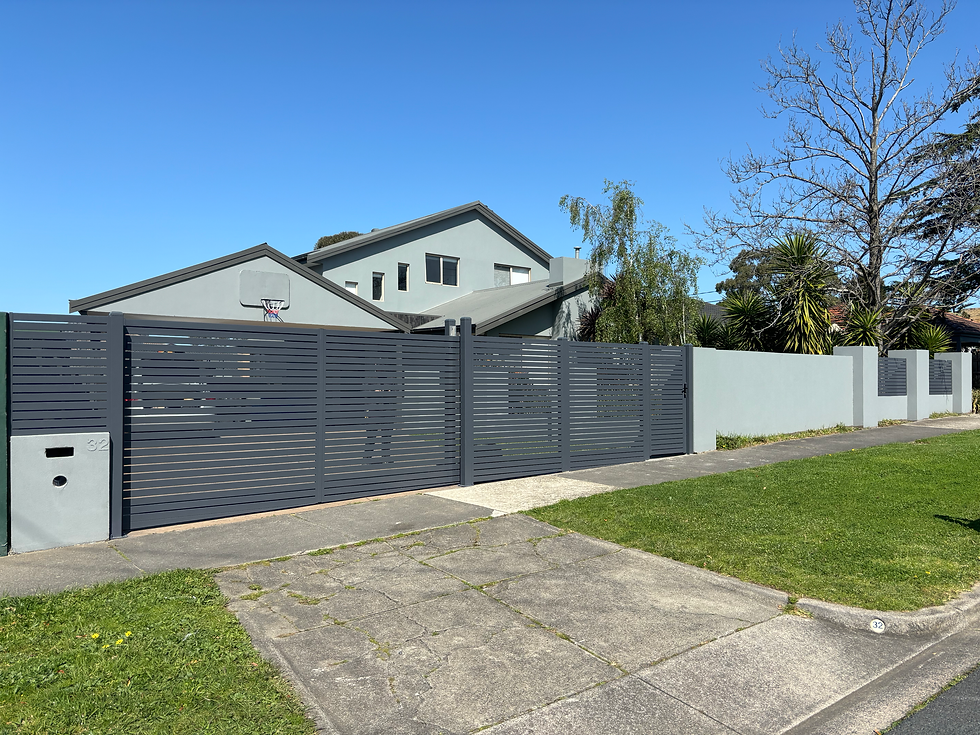
Integrate Automation and Safety into the Width Planning
Automatic gates should be considered alongside the opening dimensions. Adding a motor after the gate has already been designed can reduce usable space or create awkward equipment placement.
Sliding gate motors normally require a stable mounting area beside the gate. Swing systems may use articulated arms, linear actuators or underground operators, each with different space and structural requirements. Guide rollers, stops, control cabinets and manual release mechanisms must also remain accessible.
Safety sensors should be positioned to reliably monitor the gate area without being vulnerable to vehicle impacts. Intercoms and keypads should be reachable from the driver’s window where possible, without forcing the vehicle too close to a post or moving gate leaf.
Drivers should also have a safe place to stop while requesting access. Where possible, the waiting vehicle should not block the traffic lane or sit across a busy footpath.
A separate pedestrian gate can significantly improve the overall layout. It allows residents, visitors and delivery personnel to enter without walking through the vehicle passage or activating the main gate. This improves convenience, reduces unnecessary operating cycles and helps separate people from moving vehicles.
A concise safety review should confirm that:
The gate does not create obvious trapping or crushing points
Sensors cover relevant vehicle and pedestrian areas
Automation equipment does not obstruct the finished opening
Manual release equipment remains accessible
Vehicles can wait safely during operation
Pedestrians have a clear and practical route

Why Professional Measurement and Custom Gate Design Matter
Online dimension guides can provide a useful starting point, but they cannot account for every property condition. Each site has different boundaries, gradients, crossover angles, fence structures and vehicle movements.
A professional site consultation allows the entrance to be assessed as a complete system. The installer can review the driveway crossover, available frontage, gate return space, turning path, surrounding obstacles and preferred automation method before the gate is manufactured.
This process can identify issues that are easy to miss on a basic plan, such as inadequate sliding return space, an automation arm projecting into the passage or a post position that makes a turning approach unnecessarily tight.
LATITUDE Fencing & Gates provides obligation-free consultations for Melbourne homeowners seeking custom fencing, gates and access solutions. Once the requirements have been assessed, our team can prepare a suitable design or sketch, provide a detailed quote and arrange professional manufacturing and installation.
Clients are kept informed throughout the construction process and receive a post-completion warranty for workmanship-related issues.
Custom measurement helps ensure the finished gate looks balanced with the property while delivering comfortable access, dependable operation and long-term durability.
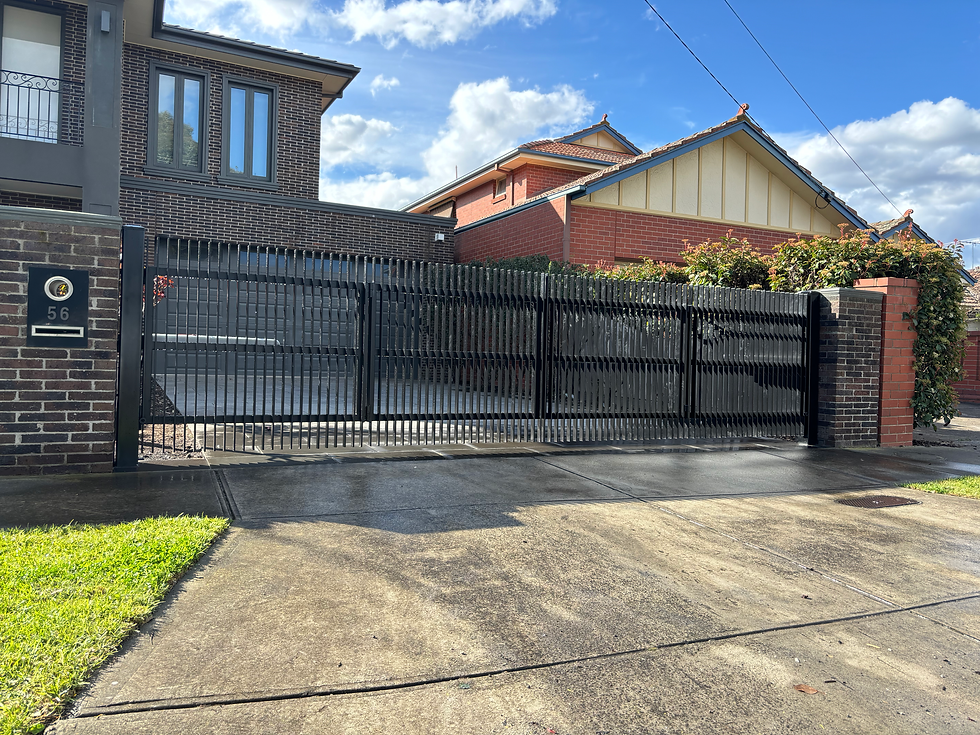
Frequently Asked Questions
How wide should a residential driveway gate be?
The ideal opening depends on the vehicle’s widest point, mirror clearance, turning approach, driveway alignment and surrounding site conditions. There is no single measurement suitable for every home.
Should I measure the vehicle with the mirrors extended?
Yes. The vehicle’s widest normal operating dimension should be considered. Measuring with mirrors extended helps provide a realistic sense of clearance for everyday entry and exit.
Do SUVs and utes need a wider gate opening?
They often benefit from extra clearance because they may have wider bodies, larger mirrors, and longer turning paths than compact passenger vehicles.
Can a gate opening be widened later?
It may be possible, but the work may require new foundations, relocated posts, fence alterations, and the modification or replacement of the existing gate and automation system.
Which gate type is best for a wide driveway?
Sliding, double-swing, telescopic and bi-fold systems can all suit broad entrances. The best option depends on side return space, driveway depth, gradients and surrounding structures.
Create an Entrance That Works for Everyday Driving
The right entrance should make arriving home feel simple. Accurate planning allows enough room for mirrors, turning movements, larger vehicles and everyday variations in driver positioning.
Selecting the right driveway gate width also means considering gate movement, structural posts, automation equipment, pedestrian access and possible future vehicles before construction begins. A custom design can provide practical clearance without making the entrance look oversized or out of proportion with the property.
LATITUDE Fencing & Gates designs, manufactures and installs custom driveway gates throughout Melbourne. From sliding and swing gates to telescopic, bi-fold and smart automation systems, we can create a solution suited to your frontage, vehicles and daily access needs.
Contact us today to arrange an obligation-free consultation and start planning a safer, more convenient and professionally designed driveway entrance.


Comments