
Fence Material Comparison: Timber vs Aluminium vs Steel

For builders, choosing the right fencing material directly affects the durability of the build and client satisfaction. A fence may seem like a straightforward part of a project, but it can turn out to be a hard one, with multiple choices available. This article will make a comprehensive fencing materials comparison among the three most popular ones: timber, aluminium and steel.
Melbourne’s diverse site conditions make this decision even more critical. Each environment places different demands on a fence. Builders often need a solution that balances performance, aesthetics, budget, and long-term resilience.
At LATITUDE Fencing & Gate, we design, manufacture and install fencing and gate solutions, offering builders a complete end-to-end service. Whether your goal is affordability, natural appeal, ultra-low maintenance or superior strength, let’s figure out the right materials for your projects.
Timber vs Aluminium vs Steel - Quick Fencing Materials Comparison Table
Before diving deeper into each material, here’s a quick summary of how timber, aluminium and steel compare across the key criteria builders care about.
Factor | Timber | Aluminium | Steel |
Durability | Moderate | High (excellent corrosion resistance) | Very high |
Longevity | 10–15+ years with maintenance | 20–30+ years | 20–40+ years |
Appearance | Warm, natural, customisable | Modern, sleek, architectural | Strong, industrial, secure |
Cost | Lowest upfront cost | Moderate to high | Higher but long-lasting |
Maintenance | Requires regular sealing/painting | Very low | Low to moderate (depending on coating) |
Installation Complexity | Moderate; heavier build; requires accurate carpentry | Light and easy to handle | Heavier; may need reinforced posts or concrete |
Best For | Residential/front fences | Residential, coastal areas, gates | Commercial, industrial, high-security |
Residential applications often favour timber or aluminium, while commercial and industrial sites usually require steel for enhanced strength and security.
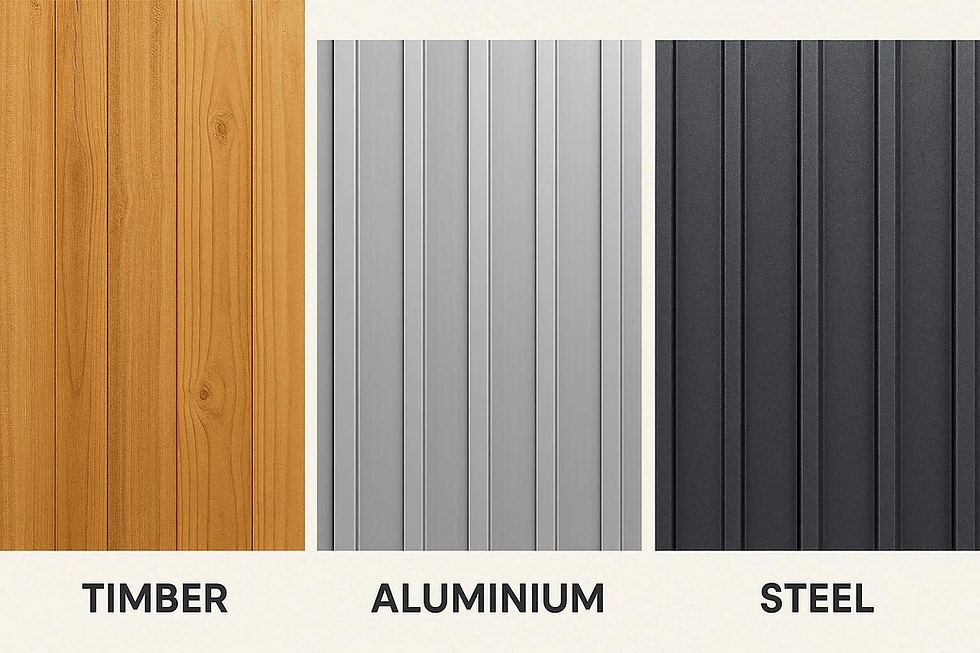
Timber Fencing - Natural Appeal with Flexible Design Options
Timber has long been a favourite among Melbourne homebuilders thanks to its natural look and cost-effectiveness. It suits both contemporary facades and traditional weatherboard homes. The material remains one of the most commonly specified for front and boundary fences.
Pros and Ideal Applications
Timber fencing remains popular for several reasons:
Warm, classic look that blends beautifully with suburban streetscapes.
Easy to customise through staining, painting, different slat widths and decorative capping.
Repairs are simple and cost-effective: sections can be replaced without removing the entire fence.
Excellent for privacy fencing, acoustic buffering and softer street appeal.
Ideal for front fences, boundary fences, budget-friendly projects, and builds aiming for a natural aesthetic.
Builders typically specify timber where clients want affordability and versatility. A timber fence can fit seamlessly with gardens, landscapes or heritage home styles.
Cons and Maintenance Considerations
Although timber is appealing, it does come with maintenance responsibilities:
Requires regular sealing or painting to stay protected from weather and moisture.
It can be susceptible to rot, termites, moisture swelling, or warping if not properly treated.
Some species require more upkeep than others, adding to long-term costs.
For long-term performance, moisture protection and correct installation are critical.
Typical Costs and Installation Notes
Timber remains the most cost-effective material overall. Pricing depends on timber type (e.g. treated pine, hardwood, cypress), fence height, slat style, and access.
Typical costs include:
Materials: Lower than aluminium or steel
Labour: Moderate, due to carpentry and precise alignment
Extras: Staining, heavy-duty posts, and gate framing can increase cost
At LATITUDE, we ensure timber fences are built for long-term structural integrity by:
Using properly treated timber suitable for Melbourne conditions
Installing reinforced posts and high-quality fixings
Adding engineered gate frames to prevent sagging or misalignment
This ensures builders deliver a fence that remains strong and stable for years.

Aluminium Fencing - Lightweight, Stylish and Low-Maintenance
Aluminium has become a favourite for modern builds thanks to its clean lines, strong street presence, and minimal maintenance. Its corrosion resistance makes it ideal for Melbourne’s many coastal areas, and its lightweight nature allows for fast, smooth installation.
Pros and Ideal Applications
Builders choose aluminium for several key advantages:
Corrosion-resistant, making it perfect for coastal suburbs like Brighton, Rosebud or Altona.
Suitable for modern slat designs, offering sleek, contemporary aesthetics.
Very low maintenance, no rusting, flaking or rotting.
Long lifespan, providing great long-term value.
Excellent for front fences, side gates, driveway gates, privacy screens and architectural projects.
Because it’s easy to work with and performs well in almost any setting, aluminium fencing fits both residential and light commercial applications.
Cons and Limitations
While aluminium is a standout material, it’s not the right choice for every project:
Higher upfront cost compared with timber.
Not as strong as steel for high-security sites or heavy industrial applications.
For most suburban homes or mid-range builds, aluminium offers an excellent balance of cost, appearance and durability.
Costs, Finishes and Manufacturing Options
Aluminium sits comfortably in the mid-price range and offers strong long-term value due to its low maintenance requirements.
Builders can choose from:
Powder-coated finishes in a wide range of modern colours
Different slat profiles, including privacy screens, horizontal slats, vertical battens or louvre styles
Fully custom gate builds, including: sliding gates, swing gates, bifold gates, and telescopic gates.

Steel Fencing - Maximum Strength and Security
Steel is the top choice for environments where strength, impact resistance and security are the highest priorities. From industrial estates to commercial buildings and high-traffic areas, steel provides unmatched durability and is the most robust option on the market.
Pros and Ideal Applications
Steel fencing excels in demanding environments and builder projects requiring:
Superior strength and resistance to impacts or forced entry
Longevity on commercial or industrial sites
Compatibility with security gates, automation systems and access control
Solutions for warehouses, factories, loading zones, car parks and high-traffic areas
Many builders specify steel for locations requiring stricter security or where heavy-duty durability is essential.
Cons and Maintenance Considerations
Steel comes with a few considerations:
It can rust if not properly coated or maintained, especially near the coast.
Its weight means fences and gates may require reinforced foundations, stronger posts and specialised installation.
However, with galvanising and powder-coating, steel can provide exceptional long-term performance.
Prices, Coatings and Fabrication Choices
Steel generally has a higher upfront cost but offers unmatched security and longevity.
Builders can choose from:
Galvanised steel, ideal for corrosion resistance
Powder-coated steel, available in various modern colours
Security upgrades, such as spear tops or spikes, mesh infills, automated access control, and commercial-grade locking systems
Steel can be fully customised to meet project requirements, especially for industrial or commercial environments.

Which Material Should Builders Choose? (Project-Based Guidelines)
Choosing the right fencing material often comes down to understanding the site's specific needs and the client’s expectations. No single material is universally “best” - each one excels under certain conditions. Below is a more comprehensive fencing materials comparison breakdown of residential, commercial and architectural builds.
1. Budget Considerations
Budget is usually the first filter builders use when planning a fencing solution.
Timber
Timber remains the most cost-effective option upfront. For clients wanting a visually appealing fence without a high price tag, especially in suburban areas, timber provides excellent value. It also suits larger boundary-line runs where cost per metre matters.
Aluminium
Aluminium sits in the mid-range. It’s ideal for clients who want a modern architectural look but don’t want to commit to the higher price of steel. Its low maintenance over time also gives it great lifecycle value, particularly in coastal suburbs.
Steel
Steel is the premium choice and best suited for commercial budgets or clients wanting maximum strength and security. Although the upfront cost is higher, its lifespan and performance in demanding environments justify the investment.
2. Aesthetic Preferences
Different clients have different expectations for how their fence contributes to the overall streetscape.
Timber for Warm and Natural Appeal
If the goal is to complement gardens, period homes, weatherboard cottages or leafy streets, timber delivers a softer, more organic look. It’s also easier to stain or paint to match other elements of the property.
Aluminium for Modern, Clean Lines
Builders working on new townhouses, architect-designed homes or contemporary facades often choose aluminium. Slim slats, battens, louvres, and powder-coated finishes create sharp, minimalist lines that elevate the property's overall look.
Steel for Strong, Industrial Character
Steel suits commercial sites, industrial developments and modern builds with a bold architectural edge. Vertical bars, welded frames and powder-coated finishes create a visually strong and highly secure presence.
3. Security Requirements
Security level is one of the main factors separating aluminium from steel.
Low to Moderate Security: Timber
Timber provides privacy and reasonable strength, making it ideal for suburban homes. While it’s not designed for high-security environments, it works well where the priority is screening rather than impact resistance.
Moderate Security: Aluminium
Aluminium is tougher than timber and offers better long-term stability. It’s suitable for protecting front yards, side entrances and residential driveways without looking bulky or industrial.
High Security: Steel
Steel is the clear choice for industrial estates, warehouses, commercial loading docks, utility sites and locations that require controlled access. It handles forced-entry attempts far better and can be integrated with mesh panels, spikes and commercial-grade locking systems.
4. Automation Requirements
Automation places very specific demands on the gate material.
Timber gates look great, but their weight requires careful engineering. LATITUDE typically reinforces timber gates with steel frames to ensure automation motors operate smoothly. Best suited for light to medium-duty automation.
Aluminium is ideal for automated gates because it’s lightweight, reducing stress on motors and hinges. It’s the preferred option for sliding, swing, bifold, and telescopic gates. Builders often choose aluminium when clients want long-term reliability with minimal maintenance.
Steel gates are heavier and require stronger motors, deeper footings and commercial-grade tracks. They’re perfect for high-traffic commercial entrances, industrial sites, security perimeters, and large sliding gates requiring rigidity.
5. Exposure to Moisture or Coastal Air
Melbourne’s varied environments mean durability is heavily influenced by location. Coastal suburbs like Brighton, Altona, St Kilda and Portsea require corrosion-proof materials. Aluminium is the standout here because it won’t rust, and powder-coating enhances protection.
Most suburban areas suit both timber and aluminium. Timber requires regular maintenance, while aluminium offers a set-and-forget option. Meanwhile, steel, especially galvanised or powder-coated steel, is best for industrial areas, sites with machinery or heavy traffic, and security-sensitive properties.
6. Project Type: Residential vs Commercial
Different project categories naturally pair with different materials.
Residential Builds
Most residential fences in Melbourne use timber or aluminium because they match suburban aesthetics, provide privacy, and offer design flexibility. Aluminium is increasingly popular among builders due to its durability and low maintenance.
Light Commercial
Aluminium or steel can be used depending on the site’s aesthetic requirements and security needs. Aluminium is common for small business frontages, schools, childcare centres, and multi-unit developments. Steel is chosen for areas needing higher protection.
Heavy Commercial and Industrial
Steel is the standard for factories, warehouses, car parks, logistics centres, and government or utility sites. Its strength, rigidity and compatibility with access control systems make it the safest choice.

How LATITUDE Fencing & Gate Supports Material Selection
At LATITUDE Fencing & Gate, we help builders streamline their projects.
We fabricate timber, aluminium and steel solutions locally, ensuring consistent quality and fast turnaround times.
Our team helps builders assess soil conditions, slope, access points, prevailing weather and security needs to determine the best fit.
We design and install automatic driveway gates, including sliding, swing, bifold, and telescopic gates.
Builders often need quick, accurate quotes, so we offer fast response times and detailed breakdowns to keep your project moving.
Whether it’s a residential entrance or a high-traffic commercial site, our systems are built for longevity and smooth operation.
Conclusion: The Right Material Ensures Long-Term Performance
Choosing the right fencing material influences the outcome of a build. Timber offers natural beauty and affordability. Aluminium provides a sleek, modern look with excellent corrosion resistance and minimal upkeep. Steel delivers unmatched strength for commercial and industrial environments.
By understanding the strengths and limitations of each option in the fencing materials comparison, builders can make informed decisions. For tailored advice, custom fabrication and expert installation, contact LATITUDE Fencing & Gate. Our team is here to help you select the right material and design the perfect fence for every Melbourne project.


Comments