
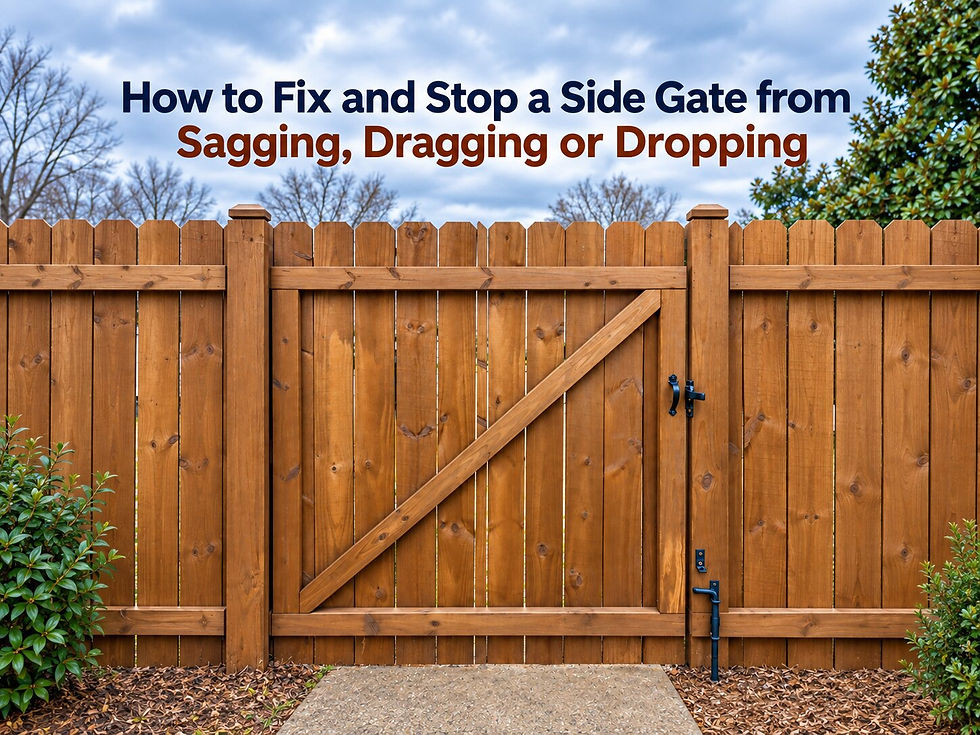
How to Fix and Stop a Side Gate from Sagging, Dragging or Dropping

Key Takeaways:
First check whether the hinge post is plumb, the gate frame is square, the hinges are secure and the side gaps remain even.
Tightening or adjusting hinges can solve minor alignment problems, but leaning posts and distorted frames require structural attention.
Check clearance through the gate's full opening arc, especially where paving slopes or ground levels have changed.
Long-term prevention comes from correctly sized posts and hinges, sufficient clearance, rigid framing and addressing small alignment changes before they become larger problems.
A side gate that starts scraping the paving, missing the latch or hanging lower on one side usually has an alignment problem somewhere in the gate system. The temptation is to adjust the latch or trim the bottom edge, but those quick fixes may not address what has actually moved. To fix a sagging side gate properly, first work out whether the problem comes from the hinges, gate frame, supporting post, timber movement or insufficient ground clearance.
The good news is that many side-gate problems can be repaired without replacing the entire gate. The right solution depends on identifying the cause before making adjustments.
Why Is My Side Gate Sagging, Dragging or Dropping?
A dropped latch-side corner can look much the same whether the hinge has loosened, the post has moved or the gate itself has gone out of square. Before choosing a repair, check which component has actually changed position.
The Gate Hinges Have Loosened or Moved
Every time a side gate opens, its weight creates leverage through the hinges and into the supporting post. This becomes more significant with wide, tall or heavily clad gates.
Common signs of hinge problems include:
Loose screws or bolts around the hinge plates.
Visible movement between the hinge and post.
A gate that drops slightly as soon as it opens.
Excessive movement around the hinge pins.
A latch that has gradually stopped lining up with its striker.
Some aluminium and steel gates use adjustable hinges that can correct small alignment changes. However, adjustment should not be used to hide loose fasteners, damaged fixing points or an unstable post.
The Hinge Post Has Leaned or Shifted
A gate can remain perfectly square and still drag on the ground if the post supporting it has moved.
The hinge post transfers the weight of the gate into the footing, so it needs to remain secure and plumb. Gate installation guidance from Stratco, for example, recommends setting supporting posts square and level in concrete before the gate is installed.
Instead of judging the post visually, check it with a spirit level. A post may move because of:
An inadequate original footing.
Soil or ground movement.
Persistently wet or unstable soil.
Rot around the base of a timber post.
Corrosion around a steel post.
A gate that is heavier than the post was designed to support.
If the post is leaning, repeatedly adjusting the hinges or latch is unlikely to provide a lasting solution.
The Gate Frame Has Gone Out of Square
Another common pattern is a gate where the hinge side remains in approximately the right place but the bottom latch-side corner drops. This may be caused by:
Insufficient frame rigidity.
Failed welds or joints.
Poor or incorrect diagonal bracing.
A gate that is too wide for its frame.
Heavy screening or cladding added after installation.
Bracing helps transfer load from the unsupported latch side back towards the hinged side. If the frame itself has distorted, simply moving the latch will not restore the gate's geometry.

Timber Movement Has Changed the Shape of the Gate
Timber side gates can move even when the hardware remains secure.
WoodSolutions explains that timber absorbs and releases moisture according to surrounding environmental conditions. As moisture levels change, timber can shrink, swell or distort. This can result in:
Swollen boards.
Twisted rails.
Loose joints.
Seasonal latch misalignment.
Rubbing after prolonged wet weather.
That does not mean every moving timber gate needs replacement. Check whether the main frame and joints are still structurally sound before deciding what to do.
There Was Never Enough Clearance Below the Gate
Sometimes the gate has moved very little. The original installation may simply have left insufficient clearance for the actual site. This is particularly noticeable where concrete or paving slopes upwards through the gate's opening arc.
Gate installation guidance commonly recommends allowing for both ground level and slope when determining gate position. A gate that looks perfectly aligned while closed can still scrape the ground halfway through its swing.
How Do You Fix a Sagging Side Gate and Stop It Dragging?
The most effective repair is a process of elimination. Start with the supporting structure, then inspect the hinges and gate frame before changing the latch or removing material from the gate itself.
First Identify Whether the Gate, Hinges or Post Has Moved
Begin with four simple checks:
Is the hinge post plumb?
Is the gate frame square?
Are the hinges securely fixed?
Is the gap between the gate and latch post even from top to bottom?
These checks can quickly point towards the likely cause. For example:
Gate looks square but the whole hinge post leans: investigate the post or footing.
Post is vertical but the latch-side corner sits low: inspect hinges, frame rigidity and bracing.
Gate is level but the latch misses: check latch and striker positioning.
Gate closes properly but rubs while opening: inspect the slope and ground clearance.
If you're trying to fix a sagging side gate, this diagnosis is more important than immediately reaching for an anti-sag kit or moving the latch.
Tighten and Inspect the Hinge Fixings
If the post remains plumb and the frame appears square, inspect the hinges carefully. Look for:
Loose fasteners.
Enlarged screw holes.
Cracked timber around screws.
Bent hinge plates.
Excessive hinge-pin movement.
Corroded or damaged hardware.
Simply tightening a screw back into a damaged or enlarged fixing hole may only provide a temporary improvement.
Hinges also need to be appropriate for the gate's actual weight. A lightweight aluminium pedestrian gate places very different demands on its hardware compared with a tall privacy gate containing timber or sheet cladding.
Adjust Adjustable Hinges to Restore Alignment
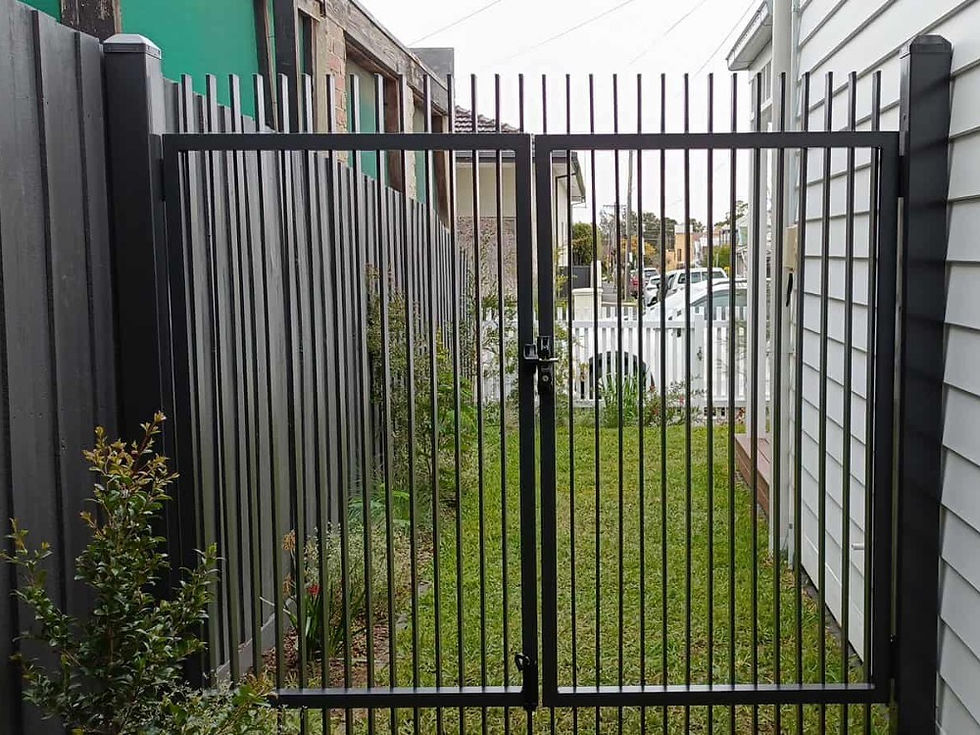
Where the post, fixing points and gate frame remain sound, adjustable hinges can often correct minor movement. Small adjustments may restore:
Bottom clearance.
An even gap beside the latch post.
Correct latch alignment.
Smooth opening and closing.
Make small changes rather than attempting a major correction in one adjustment. After each change, open the gate through its full travel and close it several times. Confirm that the latch engages naturally and that the gate does not bind anywhere along its swing.
Adjustable hinges are useful for fine alignment, but they cannot compensate indefinitely for a leaning post or distorted frame.
Correct the Gate Bracing if the Frame Is Dropping
If the post is upright but the unsupported corner of the gate has dropped, inspect the frame.
For timber gates, check the rails, joints and diagonal brace. Loose joints or inadequate bracing can allow a rectangular gate to progressively move out of square.
For welded aluminium or steel gates, permanent distortion, cracking or failed welds generally needs proper fabrication repair. Attaching a generic anti-sag kit to a damaged metal frame may not resolve the underlying structural issue.
The objective is to return the frame to a stable shape rather than simply lifting one corner temporarily.
Repair or Reset a Leaning Gate Post
If the hinge post itself is moving, adjusting the gate around it treats the symptom rather than the cause. Depending on the existing construction, a proper repair may involve:
Re-setting the existing post.
Replacing a deteriorated timber post.
Installing a stronger steel post.
Rebuilding the footing.
Improving support where the gate attaches beside a wall or fence.
The post size and footing should suit the gate it supports. Wider, taller and heavier gates place greater leverage on the hinge post and normally require more substantial support than a small pedestrian gate.
Restore Adequate Clearance Beneath the Gate
Once the gate is correctly aligned, open it through its entire swing and inspect the clearance underneath. Look for changes such as:
Concrete rising towards one side.
Pavers lifted by tree roots.
Garden edging extending into the opening.
Gravel accumulation.
Soil or mulch buildup.
Drainage works that have changed ground level.
Avoid immediately cutting material from the bottom of the gate. If a post has leaned or the frame has dropped, trimming the gate may permanently alter an otherwise repairable gate without solving the real problem.

How Can You Tell Which Part of the Side Gate Needs Repair?
The way the gate behaves can provide useful clues about what has moved. Check the symptoms before deciding whether the hinges, frame, post, latch or surrounding ground needs attention.
Gate hits the ground at the latch-side corner: check frame squareness, bracing and hinge condition.
Gap is wider at the top than at the bottom: inspect both the gate frame and supporting post.
Entire gate appears tilted with the hinge post: investigate the post and footing.
Gate swings normally but does not latch: check the latch and striker before assuming the gate needs structural repair.
Gate drops when lifted away from the latch: look for hinge play or loose fasteners.
Problem began after paving or landscaping: check ground levels through the entire opening arc.
Timber gate changes between wet and dry periods: inspect for moisture-related swelling or distortion.
Metal gate has cracked welds or permanent twisting: fabrication repair or replacement may be more suitable than adjustment.
Gate width can also influence long-term performance. An unusually wide single-leaf side gate creates greater leverage at the hinges and post, so its frame, hardware and support should be selected accordingly.

How Do You Prevent a Side Gate from Dropping Again?
Long-term reliability starts with matching the gate's structure, hinges and clearance to the actual opening. Preventing movement during design and installation is usually easier than repeatedly correcting alignment later.
Use a Gate Post Suited to the Gate
A lightweight pedestrian gate and a tall privacy gate should not automatically use identical post construction. Consider:
Gate width.
Height.
Frame material.
Cladding weight.
Wind exposure.
Frequency of use.
The heavier and wider the gate becomes, the more important post rigidity and footing stability become.
Match the Hinges to the Gate Weight
Do not choose hinges based only on appearance. Consider their:
Load capacity.
Adjustability.
Corrosion resistance.
Compatibility with the gate and post.
Self-closing requirements where relevant.
Correctly sized hinges help reduce excessive movement and make future alignment adjustments easier.
Build Enough Clearance Into the Installation
Ground clearance should suit the actual path beneath the gate rather than simply looking neat while the gate is closed. Installation should account for:
Sloping concrete.
Uneven paving.
Drainage falls.
Gravel or garden surfaces.
The complete gate-opening arc.
Adequate tolerance can prevent minor movement from immediately turning into scraping or jamming.
Keep Heavy Additions in Mind
Adding materials to an existing gate changes how the whole system performs. Timber boards, privacy screens, decorative panels and sheet cladding can increase both weight and wind loading. That extra load affects:
Hinges.
Frame rigidity.
Supporting posts.
Footings.
Long-term alignment.
Before substantially changing a gate's cladding, consider whether the existing structure was designed for the additional load.
Inspect Small Alignment Problems Early
A gate that has only started rubbing is generally easier to repair than one that has been operating out of alignment for months. Periodically inspect:
Hinge fasteners.
Latch engagement.
Post movement.
Corrosion.
Timber deterioration.
Ground buildup beneath the swing.
Early attention can prevent a minor alignment problem from developing into damaged hinges, distorted frames or failed posts.

When Should a Sagging Side Gate Be Repaired or Replaced?
Many side gates can be repaired if the core frame and supporting structure remain sound. Replacement becomes more practical where deterioration or structural distortion is extensive.
Repair is often worthwhile when:
The gate frame remains structurally sound.
The hinge post is stable.
Hinges mainly need adjustment or replacement.
Latch alignment is the main issue.
Minor timber components can be repaired.
Replacement may make more sense when:
The frame is badly twisted.
Several welds or joints have failed.
Timber has extensive rot or deterioration.
The gate is significantly too heavy for its original construction.
Changes to the opening mean the existing gate no longer fits properly.
You want to change from timber to a lower-maintenance aluminium or steel side gate.
If the gate forms part of a swimming pool or spa safety barrier, do not treat sagging or poor latching as a minor convenience issue. Applicable Victorian pool and spa barriers must be maintained in working order, including compliant self-closing and self-latching gate operation. Repairs or alterations should preserve the applicable barrier requirements.

Final Thoughts
A gate that drags or drops is usually telling you that something in the gate, hardware, post or surrounding opening has changed. The most reliable way to fix a sagging side gate is to identify that movement first, then repair the underlying cause rather than repeatedly adjusting the latch.
If your side gate is difficult to close, scraping the ground or no longer sitting square, contact LATITUDE Fencing & Gates. Our Melbourne team can assess the gate leaf, hinges, posts and surrounding opening together. If replacement is the better option, we can design and manufacture a custom aluminium, steel or timber side gate to suit your property's actual opening, privacy requirements and access needs.
FAQs
Can you fix a sagging side gate without replacing it?
Yes. Many sagging side gates can be repaired if the frame, post and main structure are still sound. Common repairs include tightening or replacing hinges, adjusting adjustable hinges, repairing bracing, realigning the latch or resetting a leaning post.
Why does my side gate keep dropping after I adjust the hinges?
If the gate keeps dropping, the hinges may not be the main problem. The supporting post could be leaning, the fixing points may be damaged, or the gate frame may have gone out of square.
Should I cut the bottom of a gate that is dragging on the ground?
Not immediately. First check whether the gate has sagged, the post has moved or the ground level has changed. Cutting the bottom may permanently alter the gate while leaving the real cause unresolved.
How much clearance should a side gate have from the ground?
There is no single clearance that suits every property. The required gap depends on the surface beneath the gate, drainage falls, paving levels and whether the ground slopes through the opening.
Can a wide side gate sag more easily?
Yes. A wider gate creates greater leverage on the hinges, supporting post and frame. Tall privacy gates and gates with heavy timber or sheet cladding can place even more load on these components.
When should I call a professional to repair a side gate?
Professional assessment is recommended when the hinge post is leaning, welds or structural joints have failed, the frame is badly distorted, timber has extensive rot, or the gate forms part of a swimming pool or spa safety barrier. A fencing specialist can assess the entire gate system rather than simply adjusting the latch.


Comments