
Front Fence Replacement vs Repair: What Makes Sense for Melbourne Homes?

A front fence does not need to be falling down before it starts showing its age. Across Melbourne, many homeowners find themselves dealing with gates that no longer close as smoothly as they once did. Meanwhile, deciding between front fence repair or replacement involves considering the condition of the posts and footings, fence material, age, maintenance history, gate operation, and your future plans for the property.
In some cases, repairing a small section can add years to a fence's useful life. In others, continuing to patch an ageing structure may delay an inevitable replacement. This guide explains how to tell the difference and make a practical long-term decision.
Start by Assessing the Overall Condition of Your Front Fence
To decide what work is required, assess the front fence as a complete system rather than focusing only on the damaged area. A broken paling or bent panel may attract attention first, but problems with posts, footings or adjoining sections can be more important to the fence's overall stability.
To start, you can walk along the full boundary and look for signs of deterioration, movement or misalignment. Common warning signs include:
Leaning, loose or unstable fence posts
Cracked, exposed or deteriorating footings
Rotting, splitting or severely weathered timber
Rust or corrosion on steel components
Bent or damaged aluminium panels
Loose rails, palings, battens or pickets
Movement between adjoining fence sections
Driveway or pedestrian gates that no longer align or close correctly
The key is determining whether the problem is isolated or widespread. For example, one damaged timber paling or aluminium panel may be straightforward to replace if everything around it remains secure. Similarly, minor gate hardware can often be repaired without affecting the rest of the fence.
However, several leaning posts combined with deteriorating panels and gate alignment problems suggest something more significant. When problems are appearing throughout the fence, ongoing repairs are less economical.

When Should You Favour Repair
Repair is often the simplest and most cost-effective approach when the fence remains structurally sound. Targeted repairs for a functional fence can restore its appearance and performance while extending its lifespan.
Damage Is Limited to One Area
Localised damage, such as a vehicle impact, a falling branch, or isolated weather damage, might affect only a few palings, battens, rails, or panels.
Replacing those individual components can restore the fence without disturbing sections that remain in good condition. The same applies to minor hardware issues such as loose brackets, hinges or latches, provided the surrounding structure is stable.
The Posts and Footings Are Still Stable
Front fence footings, posts and foundations are critical to the performance of any fence. If they remain straight, secure and properly aligned, repairing the components attached to them can be worthwhile.
Problems arise when cosmetic repairs are made to a fence supported by moving or deteriorating posts. New panels will not solve a foundation problem, and movement may quickly cause the repaired section to become misaligned again.
The Fence Is Relatively Young
A newer fence can sometimes suffer damage well before reaching the end of its expected lifespan. Localised corrosion, accidental impact or a faulty gate component does not necessarily justify removing the whole structure.
Where the main materials and foundations remain in good condition, repair allows homeowners to retain the value of the original installation.
The Existing Design Still Meets Your Needs
There is also little reason to replace a structurally sound fence if you are still satisfied with its privacy, security, appearance and access arrangements.
Targeted front fence repair Melbourne services can address specific problems while keeping the existing design intact. If the cause of damage is unclear, however, a professional assessment can determine whether the visible issue is genuinely isolated or connected to a deeper structural problem.

When Full Front Fence Replacement Is the Better Option
There comes a point when repairing individual components becomes less practical than starting again. A complete replacement requires a larger initial investment, but it can address structural issues to improve security, access, appearance and future automation.
Structural Problems Affect Multiple Areas
One deteriorated post can often be replaced. However, several unstable posts, failing footings and damaged panels are a different situation.
Widespread timber decay can weaken rails, palings and structural components simultaneously. With steel fencing, extensive corrosion may affect multiple connections and sections. Movement in several posts can also indicate problems with existing footings or ground conditions rather than isolated surface damage.
Repairing each symptom individually can become inefficient when the underlying structure is already deteriorating. A new fence allows the foundations, posts and panels to be designed as a complete system rather than relying on ageing components.
Repairs Keep Becoming Necessary
An occasional repair is normal maintenance, but regular repairs to different areas can indicate that an old fence is reaching the end of its useful life. Repeated call-outs, materials and repairs add up over time. You may eventually spend a significant amount while still owning an ageing fence that continues to develop new problems.
When considering front fence repair or replacement, compare more than the immediate quotation. Consider how much useful life the repair is realistically expected to add and whether other components are likely to require attention soon.
Your Current Fence No Longer Meets Your Needs
Sometimes a fence remains standing but no longer works well for the household. You may want greater privacy from a busy street, better security around the front yard or narrower gaps to create a safer environment for children and pets. Changes to vehicles, landscaping or the driveway may also mean that existing pedestrian and vehicle access is no longer convenient.
Replacing the fence provides an opportunity to redesign the boundary around how you currently use the property rather than continuing to maintain a design created for previous requirements.
You Want to Add an Automated Driveway Gate
Adding an automatic driveway gate can significantly change the requirements of the front boundary. An older fence may not have the correct opening width, structural support or layout for a modern sliding, swing, telescopic or bi-fold gate. Gate posts and foundations also need to accommodate the weight, movement and operating forces of the chosen system.
A full replacement allows the fence and driveway gate to be planned together. This can also simplify the integration of gate automation, intercom systems, smart CCTV, smart locks and app-based access control.
The Fence No Longer Suits the Property
A front fence has a strong visual relationship with the home because it forms part of the property's street-facing appearance. An outdated or mismatched fence can detract from renovated architecture and landscaping. Replacement gives homeowners greater flexibility to choose a design suited to the property.
The aim should not simply be to install something new. A well-designed replacement should complement the home's proportions, colours, landscaping and overall architectural character.

Front Fence Repair or Replacement: Key Factors Melbourne Homeowners Should Compare
There is no single rule that applies to every property. The most practical decision depends on how the existing fence performs today and what you expect from it over the coming years.
Factor | Repair May Make Sense | Replacement May Make Sense |
Extent of damage | One or two isolated areas | Damage across multiple sections |
Posts and footings | Stable and properly aligned | Moving, leaning or deteriorated |
Fence age | Relatively new | Nearing the end of useful life |
Maintenance | Occasional minor repairs | Frequent recurring problems |
Appearance | Existing style still suits home | Fence looks dated or inconsistent |
Security/privacy | Current design remains adequate | Property needs improved protection |
Gate requirements | Existing gate works properly | New or automated gate required |
Long-term plans | Short-term maintenance is enough | Long-term property upgrade planned |
Price is naturally an important consideration, but the lowest immediate cost is not necessarily the best value.
For example, repairing several ageing components may cost less today than undertaking a full fence replacement Melbourne project. However, if other sections are likely to deteriorate shortly afterwards, the repair may only provide a temporary solution.
Consider the expected remaining lifespan after repairs, likely future maintenance and whether the current fence still meets your requirements. Replacement can make more financial sense when it eliminates repeated repairs while delivering a fence better suited to the property's long-term needs.
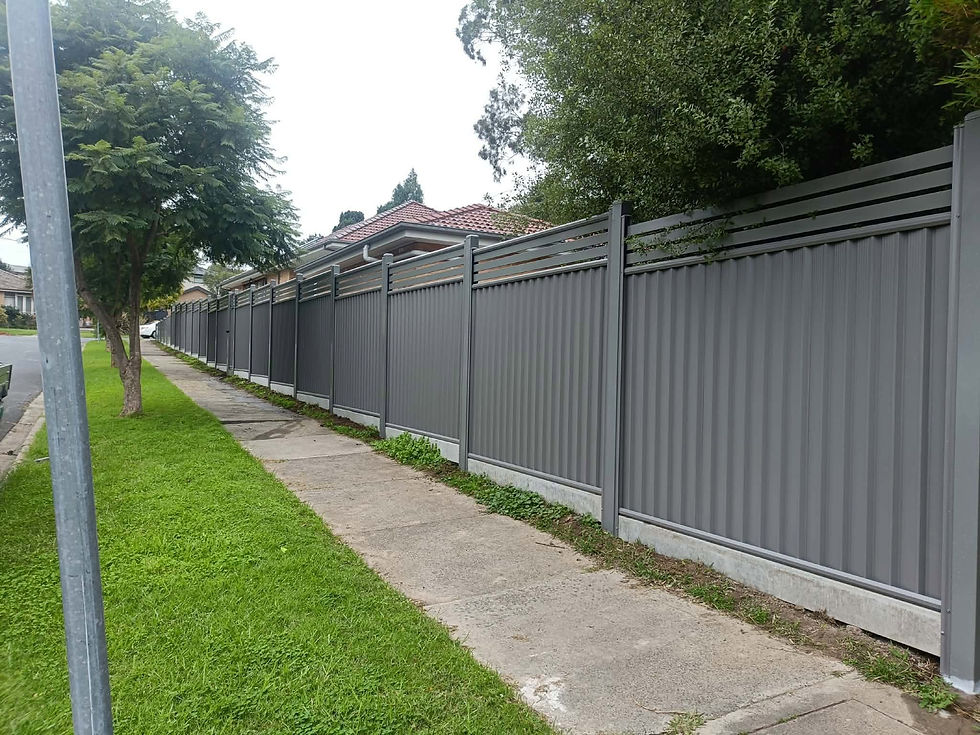
Why Melbourne Property and Site Conditions Matter
The condition of a front fence Melbourne homeowners see above ground does not always reveal what is happening underneath it. Fence deterioration can be influenced by soil movement, poor drainage, vegetation, weather exposure and previous excavation or construction around the boundary.
Ground conditions can cause posts to move gradually, resulting in leaning sections, uneven fence lines or gates that stop aligning correctly. Water collecting around timber posts may accelerate deterioration, while prolonged moisture around steel components can contribute to corrosion.
Site layout also matters. Sloping blocks, uneven boundaries, retaining walls and changes in ground level can make repairing an existing section more complicated than it first appears.
If the underlying issue is below ground, simply replacing panels or straightening a visible section may temporarily improve its appearance without addressing the cause. The same movement may eventually return.
A professional site assessment can help determine whether existing posts and footings remain suitable or whether new foundations should be included when replacing an old fence. This is particularly important when a replacement will also support driveway gates or other heavier components.

Planning a Front Fence Replacement for Better Long-Term Value
If replacement is the preferred option, it is worth considering what could be improved rather than automatically recreating the old fence. Good planning allows the fence, foundations and access points to work together while accommodating future changes.
Before finalising the front fence design, you can consider:
Privacy and street visibility requirements
Vehicle and pedestrian access
Driveway gate type and available opening space
Future gate automation
Intercom, CCTV or smart access integration
Material durability and ongoing maintenance
Compatibility with the home's architecture
Ground conditions and drainage
Future landscaping or driveway changes
At LATITUDE Fencing & Gates, the process starts with an obligation-free consultation to understand the property and your requirements. Where required, we can then develop a design or sketch before preparing a quotation. Once the quotation is accepted, we can arrange an installation date, with after-completion support available for workmanship issues.
Thinking about the project as one integrated system can help avoid future limitations. Posts, footings, fencing, pedestrian access and driveway gates should all support the way the property needs to function now and in the years ahead.
In Conclusion
The right choice between front fence repair or replacement depends on more than how much damage you can see. A structurally sound fence with isolated problems may have many useful years remaining, while widespread deterioration, unstable foundations or recurring repairs can make replacement the smarter long-term investment.
If replacement is required, it is also an opportunity to improve privacy, security, street appeal and access while planning your fencing and driveway gate as one coordinated system.
LATITUDE Fencing & Gates designs, manufactures and installs customised fencing and gate solutions for Melbourne properties, including timber, aluminium, steel tubular, PVC, Colorbond and wrought iron fencing, as well as manual and automated driveway gates.
Not sure whether your existing fence is worth repairing? Contact us today for an obligation-free consultation. We can assess your existing fence, discuss your plans and recommend a practical solution designed around your property and long-term requirements.

FAQs
Is it cheaper to repair or replace a front fence?
Minor localised repairs are generally cheaper initially. However, replacement can provide better long-term value when deterioration is widespread, the fence is ageing, or repairs have become frequent.
Can individual sections of a front fence be replaced?
Yes. Individual panels, palings, battens, rails and other components can often be replaced when the surrounding posts, footings and fence sections remain structurally sound.
Should I replace my fence before installing an automatic driveway gate?
Not necessarily. The existing fence, gate posts, opening dimensions and foundations should first be assessed to determine whether they are suitable for the proposed automatic gate.
How do I know if fence posts need replacing?
Posts may need replacement if they lean, move when pressure is applied, have substantial timber decay or corrosion, or are supported by cracked or deteriorating footings.
Can I change fence materials when replacing my front fence?
Yes. Replacement gives you the opportunity to consider aluminium, timber, steel tubular fencing, PVC, Colorbond, wrought iron and other customised options based on appearance, maintenance and performance.
Should I get my front fence inspected before deciding?
Yes. A professional site assessment can help identify whether the visible damage is isolated and repairable or part of broader structural deterioration that makes replacement more practical.


Comments