
Planning Front Fences Around Mature Trees in Melbourne’s Eastern Suburbs

Key Takeaway
Mature trees should be assessed before fence posts, pier and gate locations are finalised.
Start by identifying protected trees and council controls, calculate an indicative root-protection area, then coordinate the fence, gate, foundations and underground services around those constraints.
Custom-sized aluminium, steel or timber panels can make it easier to adjust footing positions without compromising the overall design.
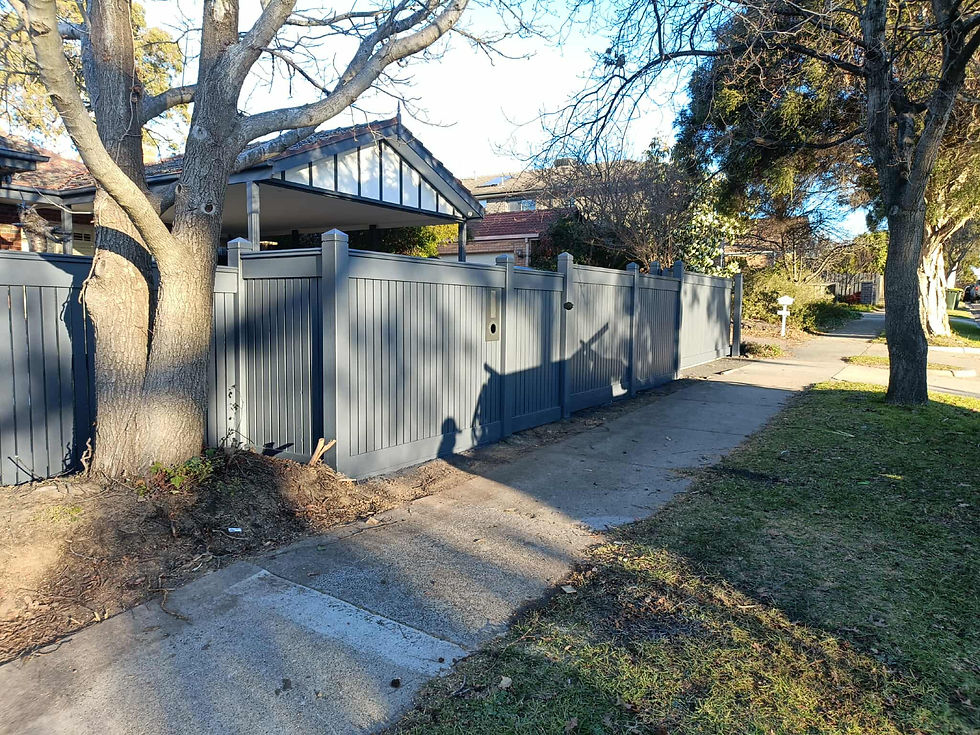
Across Melbourne’s leafy eastern suburbs, mature trees are often one of the most valuable features of a residential frontage. In areas such as Boroondara, Whitehorse, Monash and Manningham, large established trees may sit close to boundaries, driveways, pedestrian paths and proposed fencing.
This means planning a front fence around mature trees involves more than choosing a style that suits the house. Post holes, masonry foundations, driveway-gate structures and underground electrical conduits may all affect tree roots.
Why Mature Trees Need to Be Considered Before You Design the Fence
A tree behind the proposed fence line can influence how the fence needs to be constructed. The most important constraints are often below ground rather than visible from the street.
A Tree’s Important Root System Extends Well Beyond the Trunk
Keeping a fence post a short distance from the trunk does not necessarily mean the tree is protected. Mature trees can have important roots extending across a substantial portion of the surrounding soil.
Arborists commonly use a Tree Protection Zone, or TPZ, during development planning to identify the area around a tree that should be protected from disturbance.
Under the methodology used in Australian Standard AS 4970, an indicative TPZ is calculated by multiplying the tree's trunk diameter at approximately 1.4 metres above ground by 12.
For example, a tree with a trunk diameter of 500 mm may have an indicative TPZ radius of approximately 6 metres.
The calculation is useful during preliminary design, but the actual constraints should be assessed in the context of the particular tree and site.

Fence Construction Can Damage Trees Without Removing Them
Installing a fence can affect trees even when no pruning or removal is planned. Potential impacts include:
Post-hole excavation: Digging or augering can sever structural and absorbing roots.
Continuous concrete foundations: Strip footings can create extensive disturbance across the root area.
Trenching: Cabling for gate motors, intercoms, lighting and access control can cut through roots.
Machinery movement: Repeated traffic can compact soil and reduce air and water movement.
Ground-level changes: Adding or removing soil can affect root function.
Material storage: Heavy materials stored beneath the canopy can compact or contaminate soil.
Boroondara specifically identifies excavation, trenching, soil compaction, machinery and utility installation as activities that can affect protected trees. (Protect trees during construction - City of Boroondara)
A perfectly straight sequence of identical fence bays is not always the best solution. Moving one pier, adjusting panel widths, changing the location of a pedestrian gate or setting part of the fence back may allow important roots to remain undisturbed.
In short, designing around the tree from the beginning is usually more practical than completing the fence design first and trying to solve root conflicts when excavation starts.

Check Your Council and Tree Controls Before Excavation Begins
Tree controls can differ between eastern Melbourne municipalities, planning overlays and individual properties. Homeowners should therefore check their own site's controls rather than relying on a general Melbourne-wide rule.
Boroondara: Canopy and Significant Trees Can Trigger Extra Controls
Established vegetation is an important part of streetscapes throughout Camberwell, Hawthorn, Kew, Balwyn and Surrey Hills.
Boroondara protects certain canopy and significant trees. Council states that a tree works permit is required for works within 2 metres of the trunk of a canopy tree and for works within the Tree Protection Zone of a significant tree. Relevant works can include construction, digging, trenching, excavation and compaction.
Boroondara also has controls relating to boundary canopy trees through its planning scheme and Tree Protection Local Law.
This makes it important to identify the status of an existing tree before deciding where fence posts, piers or gate infrastructure will go.
Whitehorse: Pay Particular Attention to the Notional Root Zone
Tree-sensitive design is particularly important across established areas such as Blackburn, Box Hill, Mont Albert, Mitcham and parts of Surrey Hills.
Whitehorse states that under relevant controls, a planning permit can be required for a front fence constructed within the calculated Notional Root Zone (NRZ) of a protected tree. The council also notes particular tree and building controls within Significant Landscape Overlay areas. (Tree Controls, Removal, Lopping and Pruning - Whitehorse City Council)
This is a good example of why measuring only the distance between a fence and the visible tree trunk can be misleading.
Monash and Manningham Properties Still Need Site-Specific Checks
Homeowners in Monash and Manningham should also check the controls applying to their individual property. Before finalising a fence design, investigate:
the planning zone;
applicable planning overlays;
significant or protected-tree controls;
relevant local laws;
whether the tree is privately or council owned; and
existing planning or building permit requirements.
There is no rule stating that every tree within a particular distance of every Victorian front boundary automatically requires the same permit. Controls need to be checked against the relevant planning scheme and site.

How to Work Out Whether Your Fence Intersects a Tree Protection Zone
An indicative calculation can help identify tree conflicts during early planning. It should not replace professional arboricultural advice where construction comes close to an established tree. A practical starting process is:
Measure the trunk diameter.Measure the trunk at approximately 1.4 metres above ground. This is commonly referred to as DBH, or diameter at breast height.
Multiply the diameter by 12.A 400 mm trunk produces an indicative TPZ radius of about 4.8 metres. A 600 mm trunk produces approximately 7.2 metres.
Plot the entire fencing project.Do not plot only the visible fence panels. Include posts, piers, driveway gates, motor foundations, drainage and electrical or intercom conduits.
Consider the Structural Root Zone.The SRZ relates particularly to roots required for structural stability. Work approaching this area should be assessed carefully by an appropriately qualified professional.
Have an arborist confirm the constraints.Species, health, existing structures, soil conditions and previous disturbance may all affect the final construction approach.
Example: A mature tree with a 500 mm trunk could have an indicative TPZ extending roughly 6 metres from the trunk. On a typical suburban frontage, that may overlap multiple fence posts, a pedestrian gate or even part of the driveway entrance.
How to Plan a Front Fence Around Mature Trees
Once potential root conflicts are understood, footing design and construction methodology become important. A tree-conscious approach aims to minimise unnecessary soil disturbance while still providing a structurally suitable fence.
Prefer Isolated Footings Over Continuous Foundations Where Appropriate
Individual post or pier foundations can sometimes provide more flexibility around established trees than continuous concrete strip footings. If significant roots are identified at one proposed post position, the post may be moved and the adjoining panels resized.
This flexibility can be particularly useful with custom aluminium, steel and timber fencing systems.
Structural requirements still come first, however. Footing sizes, post spacing and alternative construction methods should be confirmed by the appropriate installer, engineer and arborist where necessary.

Investigate Before You Auger
Mechanical augers are efficient on uncomplicated sites, but using one blindly close to an established tree can damage large roots before the installer even knows they are there.
Depending on the project and professional advice, lower-impact investigation may involve:
careful hand excavation;
non-destructive root investigation;
appropriate hydro-excavation or potholing;
arborist-supervised excavation; or
moving the proposed post when an important root is found.
The objective is not simply to squeeze a footing between visible roots. It is to understand which roots are significant and determine a construction method that protects the tree while maintaining fence stability.
Consider Suspended Fence Sections Around Root Flares
Surface roots and large root flares can also create difficulties at ground level. Rather than burying the area beneath concrete or forcing a masonry plinth through it, the design may allow for raised lower rails, local gaps below panels or fencing that spans between appropriately positioned posts.
Construction element | Higher-impact approach | Tree-conscious alternative |
Foundations | Continuous strip footing | Strategically positioned individual footings |
Post excavation | Blind mechanical augering | Root investigation before final positioning |
Fence base | Continuous masonry plinth | Raised or locally suspended sections |
Underground services | Direct trench through root area | Rerouted or carefully excavated conduit |
Construction access | Machinery beneath canopy | Defined tree-protection area |
Boroondara recommends establishing a TPZ during construction and highlights excavation, trenching, compaction and machinery as potential sources of tree damage.
Fence and Gate Layouts That Work Better Around Existing Trees
Trees should influence the entire frontage layout, not simply the position of one fence post. This is particularly important where the project combines fencing, pedestrian access and an automated driveway gate.
Adjust Panel Widths Instead of Moving the Tree
Custom fabrication makes it easier to respond to irregular post positions without making the finished frontage look improvised. Suitable options can include:
aluminium vertical battens;
aluminium horizontal slats;
steel tubular fencing;
timber battens; and
traditional timber pickets.
Instead of spacing every post identically, individual panel widths can be adjusted slightly so footings avoid sensitive locations while the overall fence maintains a consistent visual rhythm.
This is one of the practical advantages of designing a front fence around mature trees as a customised system rather than relying only on fixed-size prefabricated panels.

Use the Tree as Part of the Frontage Composition
The tree may help define the location of a pedestrian gate, garden bed, letterbox or change between fence sections. Fence openings can also be positioned so the trunk and established landscaping remain visible from the street.
In Melbourne's leafy eastern suburbs, semi-open fencing often works particularly well because it maintains a connection between the garden, canopy and surrounding streetscape.
Be Careful Where an Automated Driveway Gate Meets a Tree
Automated gates introduce considerably more infrastructure than a simple fence panel. A gate installation may involve:
substantial gate posts;
sliding tracks or cantilever foundations;
motor pads;
electrical conduits;
intercom cabling;
photocells and safety equipment; and
access-control pedestals.
Sliding gates also require run-back space parallel to the boundary. A tree positioned beside the driveway may therefore interfere with the gate itself or its supporting infrastructure.
Depending on the property, alternatives might include a swing gate, reversing the sliding direction, using a telescopic sliding gate or repositioning pedestrian access. For this reason, designing the fence and automated gate as one coordinated frontage is preferable to planning them as separate projects.
Choosing a Fence Style That Still Suits Leafy Eastern Melbourne Streets
Once the practical tree constraints have been addressed, the next step is selecting a fence that complements the garden and architecture rather than competing with them.
Some particularly suitable options include:
Vertical aluminium battens: Clean and contemporary, with spacing that maintains visibility through established landscaping. Powder coating also minimises ongoing painting around plants.
Horizontal aluminium slats: Well suited to renovated and mid-century properties, with spacing that can balance privacy and openness.
Timber pickets: A natural match for Victorian, Edwardian and Californian bungalow homes throughout areas such as Camberwell, Kew and Surrey Hills.
Timber battens or slats: The warm material can visually connect the house, front garden and mature vegetation.
Steel tubular or open picket fencing: Maintains garden sightlines and avoids visually enclosing a prominent tree.
Masonry piers with lightweight infill: Creates architectural structure without requiring the entire frontage to be solid, although pier foundations require careful planning around roots.
A useful design principle is to reduce visual competition with the tree. If the canopy is already the strongest feature in the frontage, restrained colours, simple lines and moderately open fencing can create a more balanced result than a large solid wall.

A Practical Planning Process Before Installing the Fence
Good tree-sensitive fencing usually comes from making decisions in the right order. Confirming tree constraints after fabrication or excavation has started can result in unnecessary changes.
Follow this sequence:
Survey the frontage and record mature trees, driveways, services, paths and boundaries.
Check council controls for applicable overlays, protected trees and planning provisions.
Calculate an indicative TPZ to identify early conflicts.
Consult a qualified arborist where proposed work enters a protected or important root area. Boroondara specifically recommends qualified arborist advice for construction around protected trees.
Design the fence and gate around the known constraints.
Confirm applicable permits before excavation or construction begins.
Coordinate footings and underground services with the installer.
Protect the tree during construction, including keeping machinery, spoil, concrete and stored materials away from designated protection areas.
Where the project involves a dividing fence shared with an adjoining owner, Victorian fencing-law requirements may also need consideration. A formal Fencing Notice relates to dividing-fence works and gives the adjoining owner 30 days to respond. It should not be assumed that every standalone front fence requires one.
Plan a Tree-Friendly Frontage With LATITUDE Fencing & Gates
A well-designed front fence around mature trees should respect both the architecture of your property and the established landscape. By considering tree protections, root zones, footing positions and gate infrastructure early, homeowners can avoid many of the conflicts that arise once excavation begins.
LATITUDE Fencing & Gates designs, manufactures and installs customised fencing and automated gate solutions across Melbourne. From aluminium battens and slatted fencing to timber fencing, steel systems, pedestrian gates and automatic driveway gates, we can develop the frontage as one coordinated project.
Planning a new fence or driveway gate around established trees? Contact us for an obligation-free consultation and let our team help you create a practical, attractive solution suited to your property.
FAQs
Can I build a front fence close to a mature tree?
Potentially, yes. However, the distance from the trunk is only one consideration. The tree's protection status, root zone, proposed excavation, footing locations and applicable council controls should all be checked before construction.
How close can a fence post be to a tree?
There is no universal safe distance that applies to every mature tree. An indicative TPZ can provide an early planning guide, but an arborist should assess the site where excavation is proposed within an important root area.
Do I need a permit to build a fence near a tree in Boroondara?
You may. Boroondara states that a tree works permit is required for works within 2 metres of the trunk of a protected canopy tree or within the TPZ of a significant tree. Separate planning or building requirements may also apply to the fence itself.
Does Whitehorse regulate front fences near protected trees?
Yes. Whitehorse states that relevant planning controls can require a permit for a proposed front fence within the calculated Notional Root Zone of a tree protected under the applicable provisions. Exceptions can apply, so the specific property and proposed works should be checked.
What type of fence foundation is best around tree roots?
There is no foundation system that is automatically suitable for every tree. However, strategically placed isolated footings can provide more flexibility to avoid identified roots than a continuous strip footing. The final solution should reflect structural requirements and arborist advice.


Comments