
Designing a Front Fence Around Existing Trees and Gardens

Updated: Aug 26
Many homeowners invest years nurturing mature trees, making it important to preserve these valuable features when installing new fencing. However, designing a front fence around trees can present unique challenges. Tree roots, garden layouts, irrigation systems, and access requirements all need careful consideration to avoid damage during construction.
A thoughtful fencing design can complement natural features and enhance the property's overall appearance. By integrating fencing with existing gardens and trees, homeowners can achieve a balance between privacy, security, functionality, and street appeal.
Why Existing Trees and Gardens Should Influence Your Fence Design
Trees and gardens are often among the most valuable visual assets of a residential property. Mature trees provide shade and character, while established gardens contribute colour, texture, and curb appeal. When planning a new front fence, these elements should be treated as important design features.
Thoughtful fence placement helps protect the investment already made in landscaping. Removing mature trees or damaging root systems can be expensive to rectify and may reduce the property's visual appeal. In many cases, preserving existing greenery adds more value than achieving a perfectly straight fence line.
Moreover, excavation near root systems can stress trees and shrubs, leading to long-term decline or instability. By designing the fence around existing landscape features, homeowners can minimise disturbance while maintaining structural integrity.
A successful landscape fencing design considers how fencing, gardens, and architectural elements work together. When trees and gardens influence the fence design from the outset, the result is often a more attractive, functional, and environmentally responsible solution.

Assessing Your Site Before Designing a Front Fence Around Trees
Designing a front fence begins with a thorough assessment of the existing landscape and site conditions. Mature trees, established gardens, access points, and local regulations can all influence the final fence layout. A careful site assessment helps protect valuable landscaping assets while ensuring the fence remains functional, compliant, and visually appealing.
Tree Location and Root Zones
The position of existing trees should be one of the first factors considered during the planning stage. While the trunk location is easy to identify, the root system often extends much further underground than many homeowners realise.
Understanding the critical root protection area helps minimise the risk of damaging roots during excavation and fence installation. It is also important to consider future growth, as trees will continue to grow and may require additional space around the fence.
Garden Beds and Existing Landscaping Features
Established garden beds, feature plants, and other landscape elements can significantly influence fence placement. Preserving mature shrubs, ornamental plants, and decorative landscaping features helps maintain the property's character and value. Existing irrigation systems, pathways, retaining edges, and garden structures should also be identified before construction begins to avoid accidental damage and costly repairs.
Property Boundaries and Access Requirements
Accurate boundary identification is essential for any fencing project. Fence alignment should clearly define the property line while maintaining practical access throughout the front yard. Homeowners should consider how pedestrian gates, pathways, driveways, and vehicle access points will integrate with the proposed fence design. Careful planning ensures the fence enhances both functionality and overall presentation.
Council Regulations
Local council requirements should always be reviewed before finalising a fence design. Height restrictions, visibility requirements near driveways and intersections, and planning controls may affect the location and style of the fence.
Understanding these regulations early in the process can help avoid delays, design changes, and potential compliance issues during construction.
Design Strategies for Installing a Front Fence Around Trees
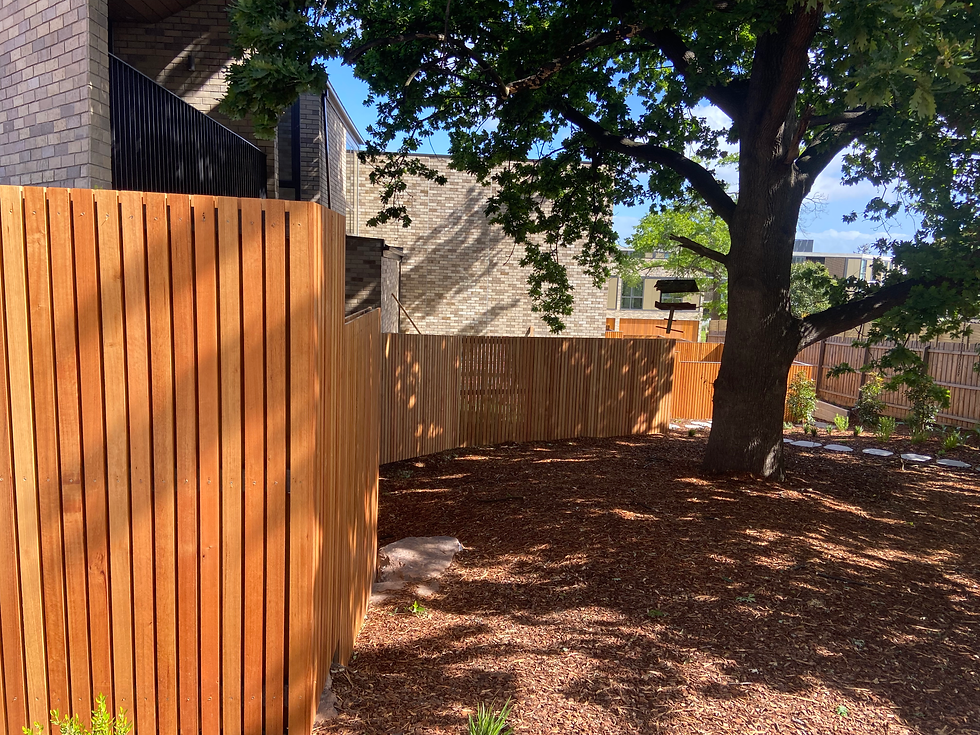
Integrating fencing with mature trees often requires creative design solutions, in which the fence should adapt to the landscape wherever possible.
Curved Fence Lines
Curved fence lines can soften the appearance of a front boundary while naturally accommodating trees and garden beds. Instead of a rigid straight line, gentle curves allow the fence to flow around landscape features, creating a more organic and visually appealing design.
Curved sections often enhance garden-focused properties by complementing natural shapes and reducing the appearance of hard boundaries.
Fence Offsets and Setbacks
In some situations, moving individual fence sections slightly forward or backward can help avoid major root zones. Small adjustments in alignment are often barely noticeable from the street but can significantly reduce the risk of damaging valuable trees.
Strategic setbacks also create opportunities for feature planting areas, further enhancing the property's presentation.
Integrated Tree Openings
For trees located directly along the proposed fence line, custom openings may be incorporated into the design. These carefully planned cut-outs allow the fence to pass around the trunk without restricting growth.
When using this approach, sufficient clearance should be provided to accommodate future trunk expansion. Custom fabrication is often required to ensure the finished result remains attractive and structurally sound.
Feature Tree Framing
Mature trees can become focal points rather than obstacles. Fence designs can intentionally frame significant trees, drawing attention to their size, shape, and beauty.
Feature tree framing works well with decorative fencing styles, helping create a distinctive and memorable street presence. The tree becomes part of the overall architectural composition of the front yard.
Combining Fences with Garden Borders
Garden beds and fencing can work together as a unified design element. Integrating planting borders alongside fence lines creates a smooth transition between hardscape and softscape features.
Low shrubs, ornamental grasses, flowering plants, and groundcovers can soften the fence's appearance while enhancing visual flow throughout the landscape. This approach often makes the entire frontage feel more cohesive and professionally designed.
Best Fence Materials for Landscaped Front Yards
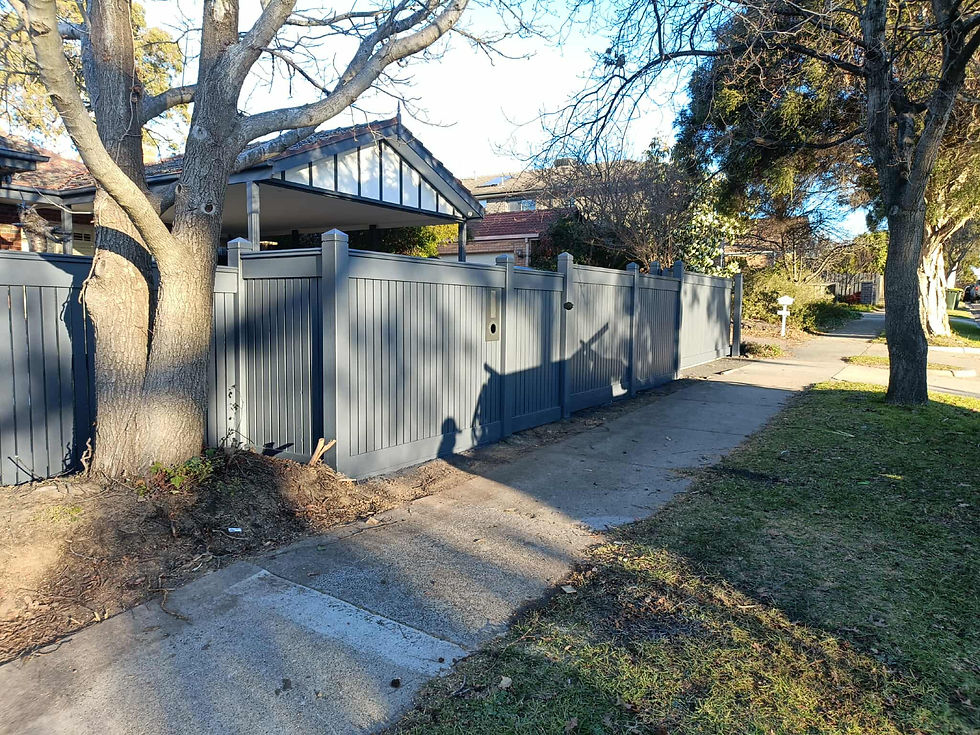
Selecting suitable materials is important when designing around trees and gardens. Different materials offer varying aesthetic qualities, maintenance requirements, and levels of compatibility.
Material | Benefits Around Trees & Gardens | Maintenance |
Timber Fencing | Natural appearance that complements greenery | Moderate |
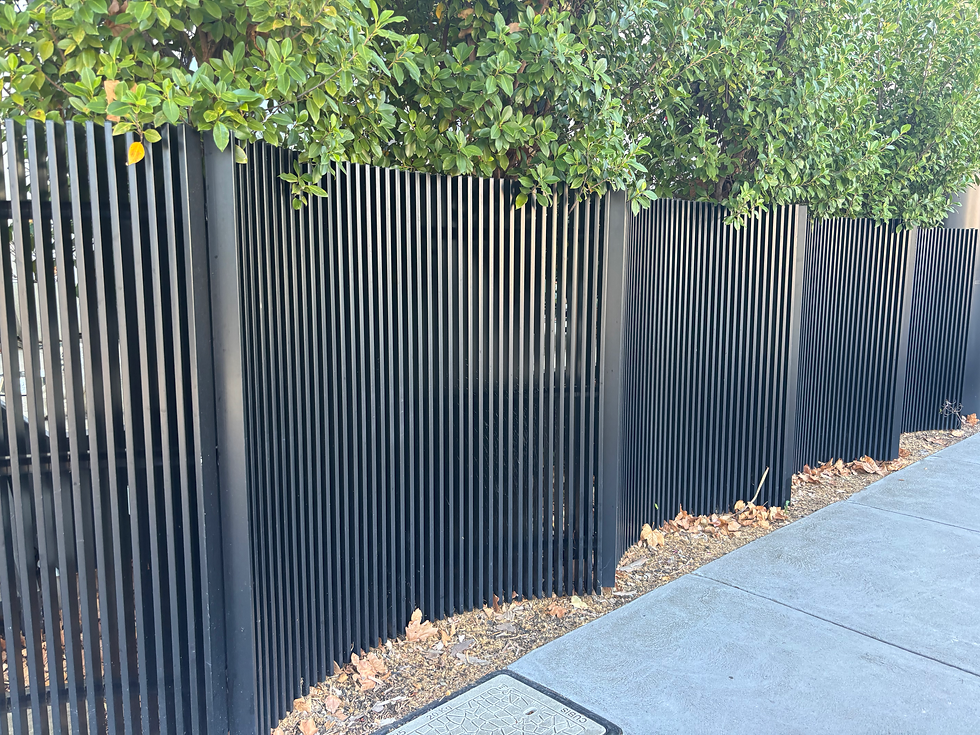
Aluminium Slat Fencing | Modern look with airflow and visibility | Low |
PVC Fencing | Resistant to moisture and pests | Very Low |
Steel Tubular Fencing | Preserves openness and views | Low |
Wrought Iron Fencing | Elegant and decorative | Moderate |
Timber fencing remains a popular residential fencing for garden-rich properties because its natural texture blends with plants and trees. It works well in traditional and cottage-style landscapes.
Aluminium slat fencing suits contemporary homes, offering clean lines while maintaining airflow and visibility around planting areas. Its durability and low maintenance requirements make it ideal for busy homeowners.
PVC fencing performs exceptionally well in moisture-prone garden environments and requires minimal upkeep over time. It can suit both modern and traditional landscape styles depending on the profile selected.
Steel tubular fencing preserves openness, allowing mature gardens and feature trees to remain highly visible from the street. This style works well when maintaining views is a priority.
Wrought iron fencing adds elegance and decorative appeal, making it suitable for heritage homes and formal garden settings.
When selecting materials, homeowners should consider how the fence will complement existing landscaping themes, architectural style, and long-term maintenance expectations.
Common Mistakes to Avoid When Building a Front Fence Around Trees
Even well-intentioned projects can encounter problems if landscaping considerations are overlooked.
Digging fence post holes too close to major root systems.
Damaging roots during excavation or machinery access.
Choosing fence designs that restrict future tree growth.
Ignoring drainage patterns altered by existing landscaping.
Blocking access needed for future garden maintenance.
Selecting materials that visually clash with surrounding greenery.
Creating overly rigid fence layouts that fight against natural landscape features.
Prioritising perfect symmetry at the expense of tree health.
Failing to account for future canopy and root expansion.
Underestimating the importance of professional site assessment.
Avoiding these mistakes can save homeowners significant repair costs while helping preserve the long-term health of valuable trees and gardens.

Combining Front Fences, Gates and Garden Features for Better Street Appeal
A successful front yard design considers every element as part of a larger composition, including front fences, gates, pathways, garden beds, and landscape features.
Pedestrian gates can align with garden pathways, guiding visitors naturally toward the home's entrance. Feature planting around gate areas can soften hard surfaces and create visual interest.
Additional features such as integrated letterboxes, decorative lighting, and planting beds can further enhance the frontage's appearance. These elements contribute to both functionality and aesthetics while reinforcing the overall design theme.
Aluminium, timber, and steel fencing can all be combined effectively with established greenery when selected thoughtfully. The key is ensuring the fence complements rather than competes with the landscape.
At LATITUDE Fencing & Gates, we specialise in creating customised front fencing solutions that work seamlessly with mature gardens, established trees, and unique landscape features. Every design is tailored to the property's specific characteristics while achieving the homeowner's goals for security, privacy, and street appeal.
Consider Professional Fence Design When Trees Are Involved
Working around mature trees often requires more planning than standard fencing projects. Root systems are rarely visible from the surface, making it difficult to assess potential impacts without experience.
Professional fence designers can accurately evaluate site conditions, identify potential risks, and recommend solutions to protect both the fence and the surrounding landscape. Custom fabrication helps incorporate curves, offsets, or tree openings.
Careful measurements and thoughtful planning help minimise excavation near sensitive root zones while ensuring the finished fence remains structurally sound and visually appealing.
Most importantly, professional installation helps protect the landscaping investment that has often taken years to establish. By working with experienced fencing specialists, homeowners can achieve a result that enhances both the property boundary and the landscape itself.
Achieving a Beautiful Front Fence Without Sacrificing Your Landscape
Installing a new front fence does not have to come at the expense of mature trees and established gardens. With careful planning and professional installation, homeowners can preserve valuable landscape features. In addition, designing a front fence around trees requires a balance between aesthetics, functionality, and long-term tree health.
If you're planning a front fencing project, contact us today. Our experienced team can design and install a customised fencing solution that integrates with your landscape, protects your valuable gardens, and enhances your property's presentation for years to come.
Frequently Asked Questions
Can a front fence be installed without damaging tree roots?
Yes. With proper planning, strategic post placement, and appropriate installation methods, fencing can often be installed while protecting critical root zones.
How close can a fence be built to a tree trunk?
The ideal distance depends on the tree species, trunk size, root spread, and future growth expectations. A professional assessment is recommended.
What is the best fence material for landscaped front yards?
Timber, aluminium, PVC, steel, and wrought iron can all work well. The best choice depends on your property's design style, maintenance preferences, and landscaping features.
Can existing garden beds be incorporated into a fence design?
Absolutely. Custom front fence layouts can be designed to complement and preserve existing garden beds while improving the overall appearance of the front yard.
Will tree growth affect my fence in the future?
It can if growth allowances are not incorporated during the design stage. Proper planning should account for future expansion of the trunk and roots.


Comments