
How to Add Privacy to a Camberwell Front Fence Without Hiding the Façade

Takeaways
Identify the exact areas that need screening first. Focus on sightlines from pedestrians, traffic, neighbours and exposed living areas rather than making the entire frontage unnecessarily high or opaque.
Visually permeable fencing works particularly well in Camberwell. Vertical aluminium battens, traditional pickets, horizontal slats and semi-private PVC can provide privacy while complementing period and renovated homes.
Combine solid and open elements for better balance. A masonry or brick base with open aluminium, timber or steel infill can screen ground-level activity without hiding important architectural features.
Use landscaping as part of the privacy strategy. Hedges, layered planting and targeted screening around windows or seating areas can improve privacy while maintaining a softer, more attractive streetscape.
Check planning and heritage requirements before fabrication. Camberwell properties can be affected by different planning zones, overlays and building requirements, so fence height and design should be confirmed for the individual property.
For many Camberwell homeowners, front fence privacy is about finding the right balance. You may want to reduce views, but a tall, completely solid boundary can hide the very features of your home.
This is particularly important for Victorian, Edwardian and Californian Bungalow properties, as well as renovated period homes with verandahs, gables, brickwork and landscaped front gardens. A well-designed privacy front fence Camberwell homeowners can rely on does not necessarily need to block the property from view. Instead, selective screening, carefully considered spacing and landscaping can provide privacy while keeping the façade connected to the street.
Local planning controls should also be considered early. The City of Boroondara advises that constructing or replacing a front fence may require a planning permit, building permit, or both depending on the property and proposed works.
Start by Identifying What You Actually Need to Screen
Different sightlines usually require different solutions, and identifying them early can prevent the frontage from becoming enclosed.
Views from pedestrians and the footpath: If people walking past can see a front living room or verandah, screening at lower eye level may be enough. Closely spaced vertical battens, pickets or planting can interrupt direct views while leaving the upper part of the house visible.
Traffic and busy streets: Homes facing busier roads may benefit from stronger screening around front windows, verandahs or outdoor seating areas. Rather than making every fence panel solid, privacy can be concentrated where traffic creates the greatest exposure.
Neighbouring properties: Privacy issues do not always come from directly in front of the house. Diagonal views from adjoining driveways, windows or gardens may be better addressed with an angled screen, a carefully positioned solid panel or taller planting.
Front gardens and outdoor areas: If children play in the front garden or the space is used for seating and entertaining, greater screening may be desirable around those particular areas while the pedestrian entrance and other sections remain more open.

Best Choices for a Privacy Front Fence Camberwell Homeowners Want
Privacy and openness do not have to be opposites. A visually permeable fence uses controlled gaps, panel depth and orientation to limit direct sightlines without creating a continuous wall. This can be particularly effective for maintaining the appearance of a period or renovated home.
Vertical Aluminium Battens
Vertical aluminium battens are a versatile solution for contemporary homes and modern additions to older Camberwell properties. Their width, depth and spacing can be customised according to the amount of screening required.
One advantage of deeper battens is that the fence can look relatively open when viewed straight on but substantially more private when viewed diagonally. This makes them useful for properties where passing pedestrians or vehicles approach the house from an angle.

Traditional Pickets With Controlled Spacing
Traditional picket fencing remains a natural choice for many Victorian and Edwardian homes. Privacy can be increased by carefully reducing the spaces between pickets rather than replacing the traditional appearance with a solid fence.
The profile, spacing, height and proportions of the pickets can all influence how open the property feels from the street. The aim is to interrupt direct views without losing the rhythm and character associated with traditional fencing.

Horizontal Slats
Horizontal aluminium or timber slats can create stronger screening while still allowing light and airflow through the boundary.
Gap dimensions are important. Very narrow openings create greater privacy but can make a large frontage appear visually heavy. Slightly wider or strategically varied spacing can provide a softer appearance while still reducing direct views into important parts of the property.

Semi-Private PVC Fencing
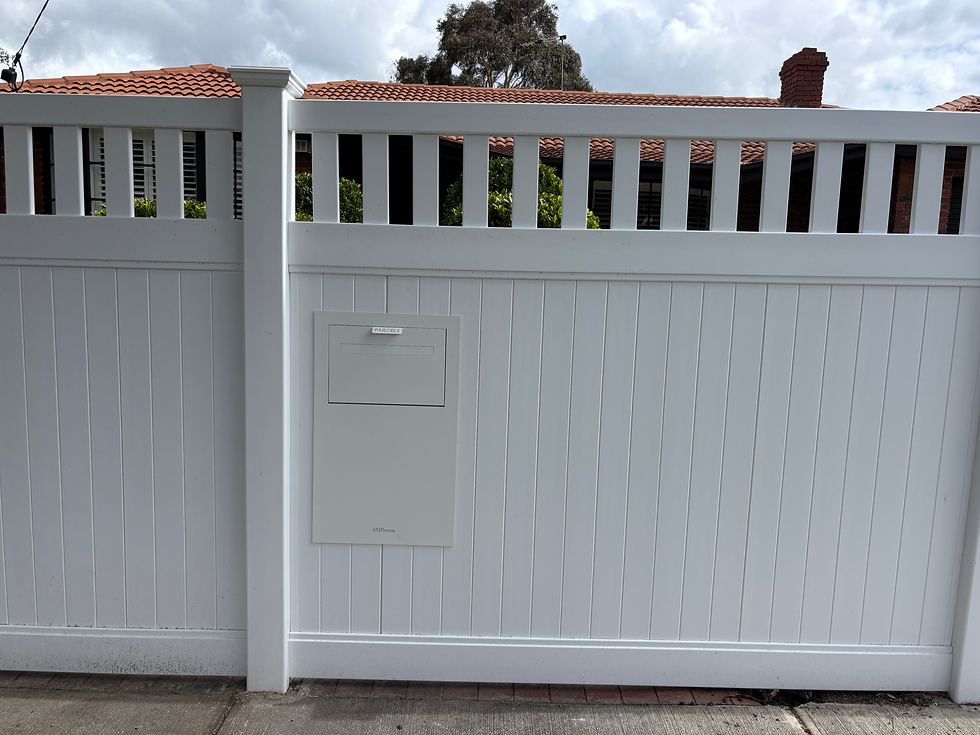
Semi-private PVC fencing can also work where homeowners prefer a clean, consistent finish and reduced maintenance requirements.
Instead of choosing completely solid PVC panels, semi-private configurations can provide controlled openings that soften the boundary. Colour, panel proportion and landscaping should be considered alongside the architecture so the fence feels connected to the property.
Combine a Solid Base With an Open Upper Fence
Another effective way to balance privacy and façade visibility is to divide the fence into layers. A more solid lower portion can screen activity close to ground level, while an open upper section maintains views towards the house and garden.
Masonry or Rendered Base
A low masonry, brick or rendered base can reduce views towards ground-level areas without enclosing the entire frontage. Depending on the property layout, this can help screen ground-level windows, outdoor furniture, bins and utility areas, vehicles, pets, and activity within the front garden.
Above the base, aluminium battens, pickets or another visually permeable material can provide additional security and definition while keeping the façade visible.
Brick Piers With Aluminium or Timber Infill
Brick and masonry piers can provide useful visual structure across a wider frontage. Where appropriate, their material or colour can reference brickwork already present in the dwelling.
Between the piers, homeowners can choose aluminium battens, traditional pickets, timber slats or custom steel sections depending on the architecture and desired privacy level.
Repeating the same infill design in driveway and pedestrian gates can help the whole frontage appear deliberately designed rather than assembled from unrelated elements.
Match Fence Proportions to the House
Fence design should respond to the scale and proportions of the dwelling. Pier positions might align with verandah posts, while panel widths can respond to windows, pathways or other architectural elements.
Avoid assuming one particular fence height will be suitable for every property. Victorian residential standards regulate front-fence height, and different schedules or overlays can affect what applies to a particular site. Current state guidance distinguishes between roads in a Transport Zone and other streets when addressing front-fence heights.

Use Landscaping to Create Privacy Behind the Fence
Plants can add an extra layer of privacy without making the fence itself feel too solid or imposing. For a privacy front fence Camberwell homeowners want to keep visually connected to the street, landscaping can soften the frontage while providing targeted screening.
Combine the fence with a hedge: An open or semi-open fence paired with a hedge can gradually create effective privacy. The fence defines the boundary and provides security, while the hedge reduces direct views into the property.
Use greenery to soften the fence: Planting can reduce the visual weight of aluminium, timber, PVC or masonry fencing and help the frontage blend more naturally with established Camberwell gardens.
Create layered planting: Instead of one dense hedge, use different planting heights. Low plants can soften the base of the fence, medium shrubs can interrupt pedestrian sightlines, and taller plants can provide stronger screening where needed.
Keep upper sections of the façade visible: Landscaping can provide privacy at eye level while still allowing verandahs, gables, windows and other architectural features to remain visible from the street.
Screen specific living areas: Position taller plants near exposed windows, verandahs or outdoor seating areas rather than screening the entire boundary. This provides privacy where it matters while keeping other sections of the frontage more open.
Plan for mature plant size: Consider how wide and tall plants will become over time. Vegetation should not interfere with pedestrian gates, sliding gate tracks, driveway gates, intercoms, letterboxes or vehicle visibility.

Protect the Façade by Designing Around Important Sightlines
A front fence is seen not only from inside the property but also by visitors and people approaching from the street. Good privacy design considers both perspectives. Before finalising the fence, identify the parts of the home that contribute most strongly to its appearance.
Keep the main entrance clear: Visitors should still be able to identify the pedestrian gate, pathway and front door. An entrance that disappears behind a solid boundary can make the frontage unnecessarily defensive.
Frame architectural features: Gables, verandah posts, bay windows, decorative brickwork, chimneys and landscaped pathways can all become reference points when deciding where fence panels, piers and openings should sit.
Check the view from across the road: A fence may feel perfectly reasonable when viewed from the garden but appear much more dominant from the opposite footpath. Assessing the concept from several positions can reveal these issues before construction.
Coordinate gates with the fence: Driveway and pedestrian gates should be considered as part of the same design. Matching spacing, materials, colours and proportions creates a more cohesive frontage.
LATITUDE can manufacture sliding, swing, telescopic and bi-fold driveway gates as well as pedestrian gates, allowing the complete frontage to follow one coordinated design language.

Check Camberwell Planning and Heritage Controls Before Finalising the Design
Privacy is only one part of front-fence planning. Zones, overlays, building requirements and heritage considerations can influence what is appropriate or permitted for an individual Camberwell property.
Requirements should therefore be checked for the actual address rather than assumed from another property nearby.
Check the Property's Planning Controls
The City of Boroondara recommends checking whether planning or building approval is required before constructing or replacing a front fence. Requirements can depend on matters including the proposed fence, property controls and site conditions.
Doing this before manufacturing begins can prevent a fence being designed around dimensions or materials that later need to change.
Heritage Properties Need Additional Design Consideration
Period architecture is common throughout Camberwell, but not every older property is subject to the same heritage controls. Where a Heritage Overlay applies, the relationship between the dwelling, fence and surrounding streetscape may require additional consideration.
As a broader design context, City of Stonnington heritage guidance favours low, visually open front fences that allow significant heritage properties to remain visible from the street. This is not a City of Boroondara rule, but it illustrates an important heritage-design principle: privacy can often be achieved more sensitively through partial transparency, landscaping and targeted screening than through an unnecessarily high solid barrier.
Consider Building Regulations and Siting Requirements
Boroondara also identifies fence height and setbacks among matters covered by Victorian siting requirements. Where a proposal does not meet applicable siting requirements, Report and Consent may be required.
Because requirements can vary between sites, check the relevant controls before committing to fabrication, gate automation or major landscaping.

Create Privacy Without Losing the Character of Your Camberwell Home
The best front fence does more than separate private and public space. It should make the areas that need privacy feel protected while still allowing the architecture, entrance and garden to contribute to the home's street presence.
For many properties, this means combining visually permeable fencing with selective solid sections, well-positioned landscaping and gates designed as part of the overall frontage. A carefully planned privacy front fence Camberwell homeowners can enjoy should respond to the home's architecture, actual sightlines, everyday access requirements and relevant planning controls rather than simply aiming for maximum height.
At LATITUDE Fencing & Gates, we design, manufacture and install customised front fences, pedestrian gates and automatic driveway gates throughout Melbourne, creating a frontage that balances privacy, security and architectural character.
Planning a new front fence in Camberwell? Contact us today for an obligation-free consultation and let us design a fence and gate solution tailored to your home.
FAQs
How can I make my front fence more private without making it solid?
Consider closer batten or picket spacing, deeper vertical battens, selective solid panels, a masonry base or landscaping behind an open fence. Screening the most exposed sightlines is often more effective than blocking the entire frontage.
What fence style works well with a Camberwell period home?
It depends on the architecture and existing streetscape. Timber pickets, aluminium picket-style fencing, vertical battens and masonry-and-infill combinations can all be adapted to complement period homes.
Can I build a tall privacy fence in Camberwell?
It depends on the planning controls, overlays, street classification, fence design and individual property. Do not assume a particular height is permitted simply because a nearby property has a similar fence. Check the applicable City of Boroondara and Victorian requirements first.
Is aluminium fencing suitable for privacy?
Yes. Vertical aluminium battens and horizontal slats can be manufactured with different dimensions and spacing to control visibility. Aluminium also provides a durable, relatively low-maintenance option for coordinated fences and gates.
Can LATITUDE design the fence and driveway gate together?
Yes. LATITUDE Fencing & Gates can design, manufacture and install customised fencing, driveway gates and pedestrian gates, along with gate automation and smart access solutions. Designing these elements together allows materials, spacing, colours and proportions to remain consistent across the entire frontage.


Comments