
What Questions to Ask a Front Fence Contractor Before Signing a Quote

Key Takeaways
Compare the full scope, not just the price. Check whether demolition, excavation, disposal, gates, footings, finishing, delivery and GST are included before comparing quotes.
Ask what could increase the final cost. Understand whether the quote is fixed and how unexpected site conditions, electrical work or design changes will be approved and charged.
Confirm the timeline and responsibilities upfront. Ask when work can realistically start, how long installation should take, what may cause delays and who handles utility checks and site clean-up.
Check the exact material and hardware specifications. Material type, dimensions, finishes, posts, hinges, latches and corrosion protection can significantly affect durability and long-term performance.
Clarify council, permit and boundary requirements. Establish who checks fence height, planning controls, sightlines and permit needs, and whether a survey is recommended if the boundary is uncertain.
Review warranty, insurance and after-completion support. Confirm workmanship and product warranties, appropriate insurance coverage, and who you contact if an issue appears after installation.
Choose the contractor who provides the clearest and most complete answers. A detailed, transparent quote can offer better value and fewer surprises than simply choosing the lowest headline price.
Choosing the right fencing contractor involves much more than comparing the final price on two or three quotes. At first glance, different proposals may appear to cover the same job, yet the inclusions, material specifications, installation methods, permit responsibilities and warranty conditions can vary considerably.
Knowing the right questions for front fence contractor discussions helps you understand what you are actually paying for before committing to the project. In particular, you should clarify the total project cost, payment terms, installation timeline, permits, materials, workmanship standards, insurance and warranty support.
Getting these details clear before signing can help prevent disagreements later about excavation, demolition, material substitutions, permit fees, electrical work or unexpected finishing costs.
1. What Is the Total Cost and Is the Quote Fixed?
Price is understandably one of the first things homeowners compare, but the headline figure does not tell the whole story. A detailed front fence installation quote should clearly define the agreed scope and explain circumstances that could change the final cost.
Is the Quote Fixed or Can the Price Change?
Ask your contractor directly: “Is this a fixed quote, or are there circumstances where the final price can increase?”
Some projects can be quoted as a largely fixed scope, while others may contain allowances or items that cannot be confirmed until excavation or demolition begins.
Potential variations may include:
unexpected rock or concrete below ground;
concealed old fence or gate footings;
restricted machinery or site access;
retaining-wall complications;
additional structural posts;
unexpected electrical work for gate automation; or
design changes requested after fabrication has started.
The objective is not to demand that every possible unknown be absorbed into the original price. Instead, establish what could create an additional cost and how variations will be communicated and approved.

What Exactly Is Included in the Quote?
When you compare fence quotes, check the scope line by line rather than looking only at the total. Ask whether the quotation includes:
fencing materials;
posts and concrete footings;
pedestrian gates;
driveway gates;
removal of the existing fence;
excavation;
rubbish disposal;
fabrication and finishing;
powder coating;
delivery;
GST; and
final site clean-up.
A cheaper quote can quickly become less competitive if several necessary parts of the project have been excluded.
At LATITUDE Fencing & Gates, the quotation process begins with understanding the property and required design so the proposed scope can reflect the actual installation rather than simply providing a generic per-metre price.
Are Permit or Council Fees Included?
Ask whether planning applications, building permits, engineering, surveying or council-related costs are included. Requirements for front fencing can vary between properties, so these costs should never be assumed to form part of the contractor's price unless they are specifically listed.
2. What Is the Payment Schedule Before and After Installation?
You should also understand when payments become due and what stage of work each payment relates to. A clear payment structure helps both parties understand their responsibilities before fabrication or installation begins.
Important questions to know this matter include:
How much deposit is required? Ask what deposit is needed to confirm the job, order materials or book fabrication and installation.
Are progress payments required? Larger projects involving masonry, custom gates or automation may have multiple payment stages.
When is the final balance due? Make sure the quotation or agreement identifies the milestone that triggers the final payment.
How are variations charged? Establish whether additional work must be discussed and approved before being carried out.
What payment methods are accepted? Confirm the available options so there are no administrative surprises later.
Be cautious about making a large payment when there is no clearly defined scope, written agreement or corresponding project milestone. The payment schedule should make sense for the scale and complexity of the work.

3. What Questions for Front Fence Contractor Timelines Should You Ask?
Custom front fencing often involves several stages before anyone arrives on site to begin installation. Measurements may need to be confirmed, materials ordered and gates fabricated before the installation date can be locked in.
When Can Installation Realistically Start?
Accepting a quote does not necessarily mean installation can begin immediately, particularly for custom-designed front fences and gates. Ask: “If I accept the quote, when can the project realistically begin?”
The answer may depend on:
final site measurements;
custom fabrication;
powder coating;
material availability;
permit or approval requirements; and
availability of gate motors, intercoms or access-control components.
How Long Will the Installation Take?
A contractor should be able to provide a reasonable timeframe based on the proposed work.
A straightforward fence installation may be relatively quick, whereas a complete frontage incorporating masonry piers, aluminium infill panels, pedestrian access, an automated driveway gate and electrical components will involve more trades and stages.
Moreover, ask whether the quoted timeframe includes demolition and preparation or only the new installation.
What Could Delay the Project?
Weather, fabrication issues, material availability, permit processing and unexpected site conditions can all affect scheduling.
More important than receiving a guarantee that nothing will ever change is knowing how the contractor communicates changes. Ask when you will be notified if a scheduled installation date needs to move and who will provide project updates.

4. Who Handles Site Preparation, Utility Checks and Clean-Up?
The finished fence may be the most visible part of the project, but preparation work can have a significant impact on both cost and installation quality. Before work begins, make sure you understand who is responsible for the existing fence, excavation, underground services and final clean-up.
Who Checks for Underground Services?
Ask: “Who is responsible for identifying underground pipes, cables and other services before digging begins?”
Front fence posts, gate posts, electrical conduits and foundations can require excavation close to driveways, gardens and existing property services. Responsibility for utility checks should therefore be clarified before construction starts rather than when excavation is already underway.
Is Existing Fence Removal Included?
If an old fence is still standing, ask specifically whether its removal forms part of the quoted front fence installation cost. Check whether the contractor will:
dismantle existing panels;
remove posts;
remove old footings where required;
dispose of unwanted materials; and
remove redundant hinges, gate tracks or hardware.
Without this clarification, what appears to be a low fencing quote may simply exclude a significant amount of preliminary work.
Who Cleans the Site Afterwards?
Installation naturally creates waste. Ask whether your contractor removes excess soil, broken concrete, packaging, metal offcuts and timber waste.
You should also clarify what happens to landscaping disturbed during installation. Lawn reinstatement, garden repairs or replacement plants may not automatically be included unless stated in the scope.

5. What Materials and Construction Quality Are Included?
Material descriptions should be specific enough for you to understand what is being supplied. Terms such as “timber fence” or “aluminium fence” are too broad on their own because there can be substantial differences in profiles, sizes, finishes and construction quality.
What Grade and Specification of Material Will Be Used?
For timber fencing, ask about:
timber species;
whether timber is treated;
post construction;
picket or slat dimensions; and
required coatings or finishes.
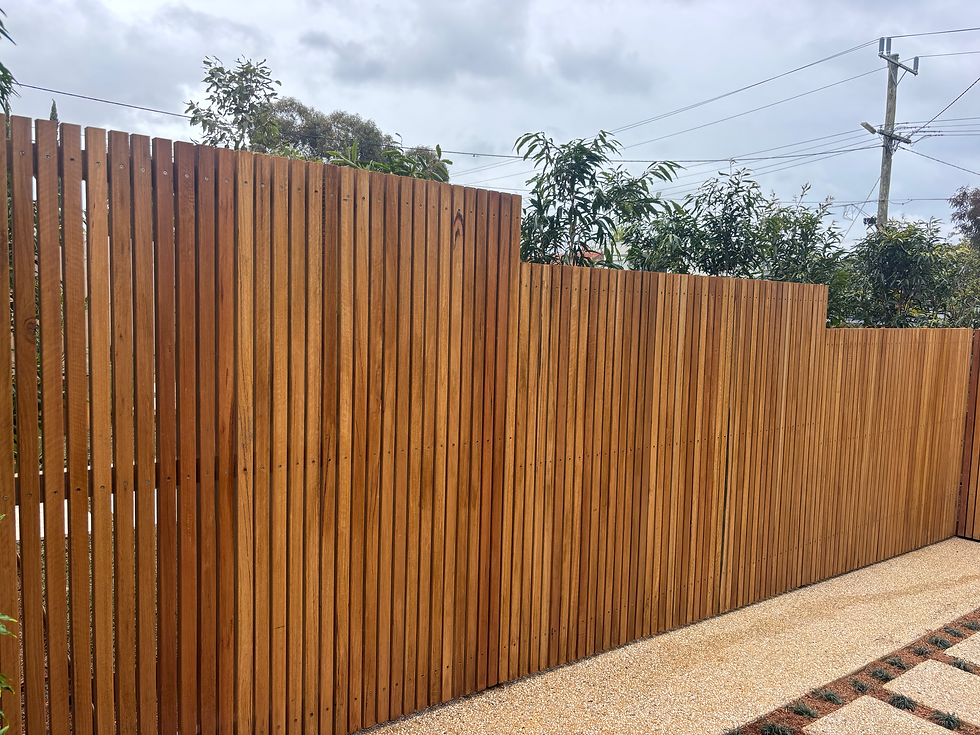
LATITUDE offers timber options including Merbau, Cypress, Blackbutt, Silvertop Ash and Treated Pine, allowing the design and material selection to be matched to the property's requirements.
For aluminium fencing, check:
section and profile sizes;
slat or batten dimensions;
spacing;
post sizes; and
powder-coat finish.
For steel fencing or gates, ask about:
tube dimensions;
corrosion protection;
welded construction;
post specifications; and
coating or finishing systems.
These details make it easier to compare proposals fairly rather than assuming two differently specified fences are equivalent.
What Hardware Is Being Used?
The fence panel itself is only one part of the installation. For fences and gates, hardware may include hinges, latches, brackets, screws, bolts, gate stops and welded connections. For driveway gates, the supporting posts and hardware are particularly important because they must manage ongoing movement and loading.
Ask whether appropriate corrosion-resistant fixings and hardware have been specified for the application.

6. Will the Fence Meet Council, Height and Boundary Requirements?
A front fence is not designed in isolation from the property around it. Fence height, road conditions, visibility, planning controls and property boundaries can all influence what may be suitable.
Your contractor should be able to discuss these considerations, but you should also establish exactly who is responsible for investigating and managing approvals.
Has the Proposed Fence Height Been Checked?
Ask: “Have the proposed fence height and design been checked against the requirements that may apply to my property?”
Relevant considerations can include:
road classification;
zoning;
heritage controls;
neighbourhood-character requirements;
corner-property sightlines; and
the height and transparency of the fence.
Rules can vary between sites, so avoid assuming that a fence you have seen at another Melbourne property can automatically be reproduced at yours.
Who Handles Permit Requirements?
Establish whether the contractor will:
provide general guidance;
identify whether approval may be required;
prepare drawings;
coordinate supporting documentation;
lodge applications; or
require you to organise approvals independently.
Whatever arrangement applies should be clear before the quote is accepted.
Has the Property Boundary Been Confirmed?
An existing fence does not necessarily prove the exact legal boundary. If there is uncertainty, ask whether a licensed survey should be completed before installing the new fence. This can be particularly important where substantial masonry piers, gate posts or other permanent structures are planned.
7. What Warranty, Insurance and After-Completion Support Do You Provide?
Warranty conditions deserve the same attention as materials and price. Before selecting a contractor, understand both the workmanship warranty and any separate manufacturer's warranties that may apply to components or finishes.
What Does the Workmanship Warranty Cover?
Ask: “What does your workmanship warranty cover, and how long does it apply?”
Depending on the contractor's terms, workmanship issues could relate to matters such as:
post installation;
panel alignment;
gate alignment;
hinges and latches;
fabrication; or
installation defects.
A workmanship warranty is different from a product manufacturer's warranty. If your frontage includes gate automation, smart locks, intercoms or other equipment, those products may have their own warranty conditions.
LATITUDE provides a two-year guarantee against defects in workmanship on fencing and gates constructed through our services.
Are Surface Finishes Covered Separately?
Powder coating, paint systems, timber coatings and other finishes may carry separate conditions. Ask what warranty applies and what maintenance is expected. Normal weathering or cosmetic ageing should not automatically be assumed to constitute a warranty defect.
Is the Contractor Properly Insured?
Ask for confirmation that the contractor holds appropriate public liability insurance and any other insurance relevant to the work being undertaken.
Insurance is important because fencing work can involve excavation, heavy fabricated sections, machinery and work close to buildings, vehicles and landscaping.

8. Final Front Fence Contractor Checklist Before You Sign
Before accepting any fencing quote Melbourne homeowners should take a few minutes to review the whole proposal. You should be able to answer the following questions confidently before committing:
Total price: Is the quote fixed, and what circumstances could create additional costs?
Payment: What deposit is required, and when is the remaining balance payable?
Scope: Are excavation, demolition, rubbish disposal, gates, footings and finishing included?
Timeline: When can the project begin, and approximately how long should installation take?
Utilities: Who is responsible for checking underground services?
Materials: Are the material types, profiles, dimensions, finishes and hardware clearly specified?
Council requirements: Have relevant height, visibility and planning considerations been discussed?
Permits: Who is responsible for identifying and arranging approvals where required?
Boundary: Does the property boundary need to be surveyed?
Installation: Who will complete and supervise the work?
Insurance: Does the contractor hold suitable insurance?
Warranty: What workmanship and product warranties apply?
Support: Who should you contact if the fence or gate requires attention afterwards?
A strong quotation should make it easier - not harder - to understand what you are buying.

Choose a Contractor Based on Clarity, Not Just Price
The best contractor is not automatically the one offering the lowest headline price. A well-prepared proposal should clearly explain materials, inclusions, payment stages, installation responsibilities, timelines, approvals and warranty support.
Using these questions for front fence contractor comparisons gives you a more reliable way to judge whether competing quotes actually cover the same project and whether the contractor has properly considered your site.
At LATITUDE Fencing & Gates, we provide customised fencing and gate solutions for Melbourne properties, from timber, aluminium, steel, PVC and Colorbond fencing to pedestrian gates, automated driveway gates and smart access systems. Our process can include an obligation-free consultation, site assessment, design where required, a detailed quotation, installation and after-completion workmanship support.
Planning a new front fence or replacing an existing one? Contact us today to arrange an obligation-free consultation and discuss a fencing and gate solution designed around your property.


Comments