
How Commercial Front Fencing Helps Control Site Access

Managing who enters and exits has become a major priority for commercial properties across Melbourne, including warehouses, office buildings, industrial facilities, and multi-tenant sites. All face growing challenges related to workplace safety and asset protection. As a result, site access fencing has become far more than a simple boundary marker.
In modern commercial properties requiring a coordinated approach, front fencing now works alongside automated gates, intercom systems, CCTV, and access control technology to create secure and efficient entry points. A well-designed fencing system helps businesses reduce security risks and present a professional image.
Investing in the right commercial fencing solution can significantly improve both the security and functionality of any business premises.
Why Controlling Site Access Matters for Commercial Properties
Commercial properties experience a constant flow of people and vehicles throughout the day. Proper access control measures in place ensure that businesses can become vulnerable to a range of security and operational issues.
Without access control measures in place, uncontrolled access can lead to:
Unauthorised entry and trespassing
Theft, vandalism, and property damage
Safety risks for employees and visitors
Increased liability and insurance concerns
Traffic congestion and vehicle management issues
Exposure of confidential operations and valuable equipment
These risks are not limited to high-security facilities. Even office buildings and retail premises can experience disruptions when access points are poorly managed.
Warehouses and industrial sites often store valuable inventory and equipment that attract opportunistic theft. Meanwhile, multi-tenant properties must balance accessibility with security for different occupants, and corporate offices need to protect employees and sensitive business information.
As businesses continue to prioritise safety and risk management, many are investing in stronger perimeter protection and controlled entry systems. A well-planned front fence helps establish clear boundaries while providing a practical framework for managing people, vehicles, and daily operations.

The Role of Site Access Fencing in Commercial Security
Commercial front fencing serves as the first line of defence against unauthorised access. While surveillance systems and alarms play important roles, the physical perimeter often determines how effectively a property can be secured.
A professionally designed fencing system creates a strong physical barrier that discourages intruders and helps prevent opportunistic access. It also clearly defines property boundaries, making it easier for visitors and contractors to understand where they are permitted to go.
Effective fencing also assists with site management by directing vehicle and pedestrian movement toward designated entry points. This controlled flow allows businesses to monitor access more efficiently and reduces the likelihood of security breaches.
Modern fencing systems also complement other security measures. Fences can support CCTV cameras, smart lighting systems, and intercom equipment while providing a visible deterrent that encourages compliance with access procedures.
Importantly, security should not come at the expense of functionality. The most successful site access fencing solutions strike a balance between protection, operational efficiency, and professional presentation. The goal is creating an environment that feels secure without appearing overly restrictive.
Key Features of Effective Site Access Fencing Systems
Creating an effective access control system requires much more than installing a fence around a property. The project must combine thoughtful design, secure materials, and intelligent technology to deliver both security and convenience.
Secure Fence Design
The design of the fence itself plays a major role in overall security performance. Fence height, spacing between panels, and material selection all influence how difficult it is for unauthorised individuals to gain access.
For many commercial properties, taller fences with limited footholds offer better protection while maintaining visibility across the site. Material selection should also align with the property's operational requirements and desired appearance.
Controlled Entry and Exit Points
One of the most important principles of access control is limiting the number of entry points. Every additional gate or access opening creates another area that requires monitoring and management. By carefully planning designated access locations, businesses can better control who enters and exits the site and significantly reduce potential vulnerabilities.
Clearly defined entry and exit points also improve traffic flow. Employees, visitors, and contractors can be directed to specific locations, making it easier to verify identities, monitor activity, and maintain orderly site operations.
Automated Gates
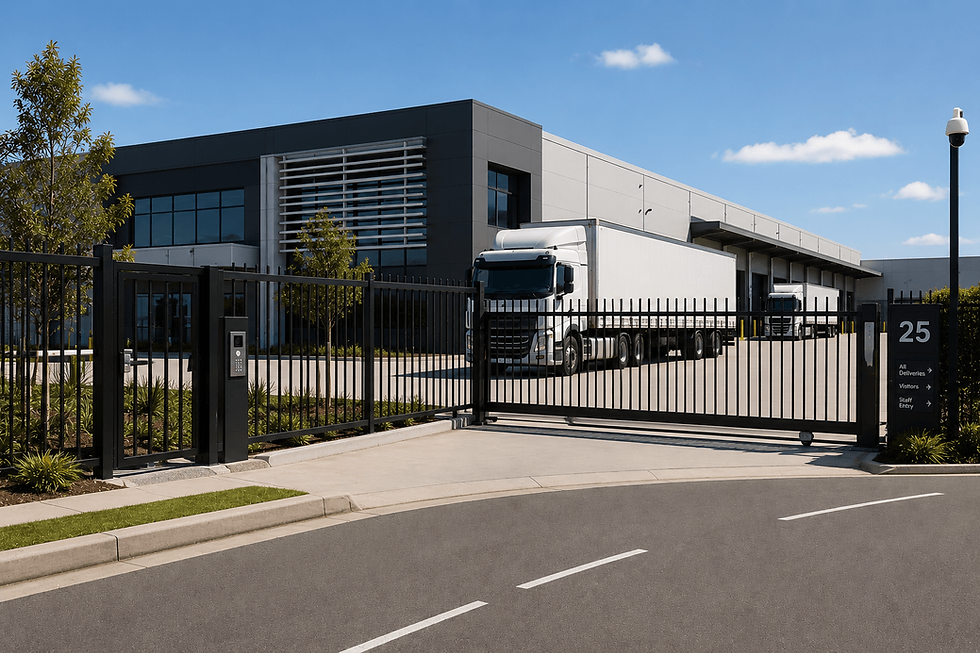
Automated gate systems have become an essential component of modern commercial security. Rather than relying on manual gate operation, businesses can automate vehicle access while maintaining a secure perimeter at all times. Sliding gates, swing gates, and custom commercial gate systems can all be tailored to suit different site layouts and traffic requirements.
Automation improves convenience by reducing delays for authorised users and allowing businesses to manage access more efficiently, particularly during busy periods or after-hours operations.
Pedestrian Access Management
Pedestrians should be managed separately from vehicles whenever possible. Dedicated pedestrian gates improve safety by reducing interactions between people and moving vehicles.
Controlled pedestrian access also allows businesses to better monitor visitors, contractors, and employees entering the premises.
Integrated Access Control Technology
Modern access control technology has transformed commercial fencing systems into intelligent security solutions. Intercom systems, RFID and card readers, keypad entry systems, smart locks, and mobile app access all provide businesses with greater control over who can enter their premises.
Many systems can also integrate with CCTV cameras and security management software, allowing authorised personnel to remotely verify visitors, monitor activity, and manage access permissions in real time. These technologies improve security while making day-to-day site management far more efficient.
Emergency Access Considerations
Security measures should never compromise emergency response capabilities. Effective access control systems include provisions that allow emergency services and authorised personnel to gain entry quickly when required.
Emergency override systems, fail-safe gate operation, and remote access capabilities all contribute to safer and more resilient commercial sites.
Ultimately, the most effective site access fencing systems combine robust physical barriers with intelligent technology. This integrated approach delivers stronger security, improved operational efficiency, and a safer, more manageable commercial environment.
Choosing the Right Site Access Fencing Materials
Selecting the appropriate fencing material is essential for achieving the right balance between security, maintenance, and visual appeal.
Material | Security Level | Maintenance | Appearance | Best Application |
Aluminium Slat | High | Low | Modern | Offices and business parks |
Steel Tubular | Very High | Low | Professional | Warehouses and industrial sites |
Colorbond Steel | High | Low | Solid privacy | Service yards and utilities |
Wrought Iron | High | Moderate | Premium | Corporate facilities |
Timber | Moderate | Higher | Natural | Select commercial properties |
Every commercial property has different requirements. Aluminium slat fencing offers a contemporary appearance and minimal maintenance, making it ideal for office developments and business parks.
Steel tubular fencing remains one of the most popular options for industrial and warehouse environments due to its strength and durability. Colorbond fencing provides additional privacy for service areas and utility compounds, while wrought iron delivers a premium appearance suited to prestigious corporate properties.
Timber fencing can also work well in certain commercial settings where a softer, more natural aesthetic is preferred.
When selecting materials, businesses should consider:
Security requirements
Long-term durability
Ongoing maintenance costs
Environmental exposure
Desired presentation and branding
The right material should support both security objectives and the overall appearance of the property.

How Site Access Fencing Improves Workplace Safety and Compliance
Commercial properties have a legal and ethical responsibility to provide safe environments for employees, contractors, and visitors. Fencing plays an important role in achieving these objectives.
A well-designed commercial access control fence helps separate vehicles and pedestrians, significantly reducing the risk of accidents in busy environments. This is particularly important in warehouses and industrial sites where forklifts, delivery trucks, and machinery are constantly moving.
Controlled access also helps restrict entry to hazardous areas, preventing unauthorised individuals from entering potentially dangerous zones. Effective fencing systems can also improve:
Contractor management
Visitor registration procedures
Compliance with workplace safety policies
Incident prevention and reporting
By reducing opportunities for unauthorised access and improving site organisation, businesses can minimise liability exposure and strengthen their broader risk management strategies.
Integrating Smart Access Control with Commercial Front Fencing
Technology is rapidly changing how businesses manage site security. Modern access control systems now provide significantly more flexibility, visibility, and convenience than traditional lock-and-key solutions. Many businesses are integrating smart technologies such as:
Smart intercom systems
Video verification
Cloud-based access management
Remote gate operation
Temporary visitor credentials
Integrated CCTV monitoring
Event logging and reporting
These technologies allow authorised personnel to manage access from virtually anywhere. Managers can remotely open gates, review visitor activity, issue temporary credentials, and monitor site events in real time.
Cloud-based systems also simplify administration by centralising access permissions and providing detailed reporting capabilities.
Video verification further improves security by allowing staff to visually confirm visitor identities before granting access. This is particularly beneficial for sites with limited reception staffing or after-hours operations.
As commercial properties become increasingly connected, intelligent access systems are helping businesses achieve higher levels of security while streamlining day-to-day operations.

Why Professional Design and Installation Deliver Better Results
Commercial fencing projects require careful planning to ensure security systems function effectively and meet operational requirements.
Professional design begins with a thorough assessment of the property, including traffic flow patterns, vehicle movements, pedestrian requirements, and security objectives. This information helps determine the most suitable fence design, gate configuration, and automation systems.
Experienced installers also ensure:
Correct gate sizing and positioning
Appropriate automation selection
Seamless integration between fencing and access control systems
Compliance with relevant safety standards
Long-term reliability and performance
Poorly designed systems can create operational bottlenecks, increase maintenance costs, and reduce overall security effectiveness.
Working with experienced fencing specialists ensures that every component of the system is tailored to the property's unique requirements, delivering a solution that remains effective for many years.
In Conclusion
Effective site access fencing does far more than establish a property boundary. It creates a secure, controlled, and professional environment that protects people, assets, and business operations.
By combining quality fencing materials, automated gates, and intelligent access control technologies, businesses can significantly improve security while enhancing operational efficiency and workplace safety.
Whether you manage a warehouse, office, industrial facility, or multi-tenant property, investing in a tailored access control solution can deliver long-term benefits for both security and day-to-day operations.
At LATITUDE Fencing & Gates, we specialise in designing, manufacturing, and installing customised commercial fencing and gate solutions across Melbourne. From secure perimeter fencing to advanced automation and access control systems, our experienced team can help create the right solution for your property.
Contact us today for an obligation-free consultation and discover how we can help secure and streamline your commercial site access.
Frequently Asked Questions
What is site access fencing?
Site access fencing is a commercial fencing system designed to control and monitor vehicle and pedestrian entry to a property while improving security and safety.
What type of fence is best for controlling site access?
Steel tubular fencing and aluminium fencing are among the most popular options because they provide excellent security, durability, and compatibility with access control systems.
Can access control systems be added to existing fencing?
Yes. Many existing commercial fences can be upgraded with automated gates, intercoms, card readers, and other smart access technologies.
Does site access fencing help reduce security risks?
Yes. Properly designed fencing significantly reduces opportunities for unauthorised access, theft, vandalism, and other security incidents.
How often should commercial fencing be maintained?
Regular inspections and routine maintenance help ensure gates, automation systems, and access control equipment continue operating safely and reliably.


Comments