
Front Fence Security Strategies for Warehouses and Industrial Sites

Warehouses and industrial facilities often house valuable inventory, heavy machinery, vehicles, and employees within the same environment. Securing the property's perimeter has become more important than ever due to the increasing security challenges, from theft and vandalism to unauthorised access.
Warehouse front fencing serves as the first line of defence against external threats. At the same time, it also creates a professional and organised appearance for customers, suppliers, and visitors. A well-designed commercial fence works with gates, access control systems, lighting, and surveillance to protect both people and assets.
Choosing the right fencing solution involves materials, site layout, operational requirements, and future expansion. Investing in a security system helps businesses reduce risks and improve daily operations.
The Primary Objectives of Warehouse Front Fencing
Warehouse fencing does far more than separate the private property of modern industrial facilities from public spaces. Fencing supports security, safety, operational efficiency, and business presentation simultaneously. The front boundary is often the busiest area of a warehouse, handling deliveries, employee access, customer visits, and contractor movements.
An effective fencing system should provide multiple layers of protection while allowing the site to function efficiently. Key objectives include:
Prevent unauthorised pedestrian and vehicle access.
Protect valuable stock, equipment, machinery, and fleet vehicles.
Improve the safety of employees, contractors, and visitors.
Clearly define property boundaries.
Reduce liability and minimise security risks.
Support workplace compliance and organised site management.
Present a professional image that reflects the business.
Each of these objectives contributes to a safer and more productive workplace. For example, clearly separating delivery vehicles from pedestrian entry points reduces the risk of accidents, while secure boundaries discourage opportunistic theft before it becomes a problem.
Well-designed industrial security fencing also improves operational efficiency by directing traffic to designated entry points, thereby enabling effective management of identification, inspections, and automated access. In other words, modern commercial fencing supports smoother workflows while maintaining a high level of security.
The most successful warehouse fencing projects balance protection with accessibility, ensuring staff, suppliers, and authorised visitors can move efficiently without compromising site security.
Choosing the Best Fencing Materials for Industrial Sites
Selecting the right fencing material depends on the level of security required, the property's appearance, maintenance expectations, and daily operations. Different warehouse environments often benefit from different solutions. It is important to match materials to the site's operational needs.
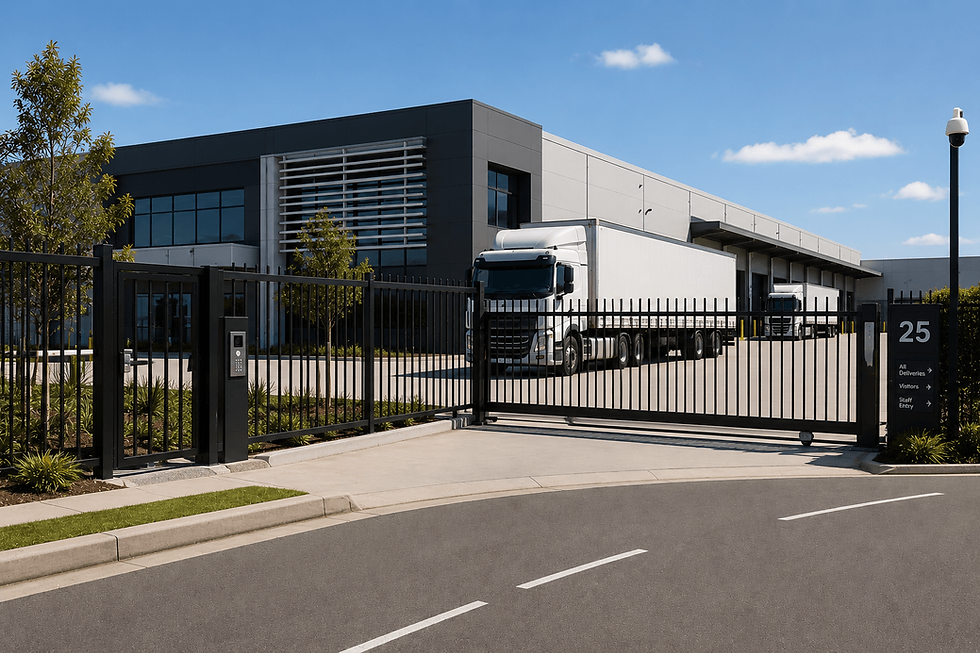
Steel tubular fencing remains one of the most popular choices for warehouses and industrial estates. Its exceptional strength, durability, and impact resistance are highly effective for securing commercial properties. Vertical steel members also provide excellent visibility, allowing security personnel and CCTV systems to monitor activity both inside and outside the site. Its minimal maintenance requirements and a long service life also deliver outstanding value for busy industrial environments.
Aluminium slat fencing offers a more contemporary appearance while still providing high levels of security. Because aluminium does not rust, it performs well in coastal areas or locations exposed to harsh weather. It is an excellent option for corporate warehouses, logistics centres, and commercial developments seeking a modern architectural finish.
Where greater privacy is required, Colorbond fencing becomes a go-to solution. Solid panels help conceal service yards, waste management areas, loading docks, and storage compounds from public view. Meanwhile, Colorbond remains highly resistant to corrosion and weather exposure.
Premium industrial developments may choose modular walls to combine security with architectural appeal. These systems create a more refined frontage while offering excellent acoustic performance and privacy. They are, therefore, suitable for high-profile commercial facilities located near residential or mixed-use developments.
Wrought iron fencing remains a premium option for businesses seeking maximum visual impact without sacrificing strength. Although it generally requires more maintenance than aluminium or steel, it offers a prestigious appearance suitable for corporate headquarters, manufacturing facilities, and landmark commercial properties.
Regardless of material selection, warehouse fencing should balance visibility, airflow, durability, maintenance requirements, and the facility's overall operational demands to achieve long-term performance.
Designing Warehouse Front Fencing for Maximum Security
Beyond strong materials, the overall fence design plays a significant role in deterring unauthorised access while supporting safe and efficient daily operations.
Fence Height and Anti-Climb Features
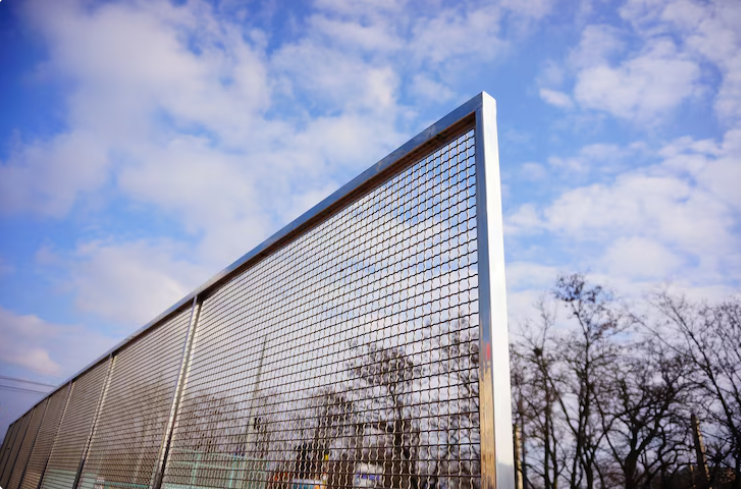
Fence height is one of the first considerations when designing industrial security systems. Taller fences naturally provide greater resistance against intrusion, particularly when combined with vertical designs to minimise climbing opportunities.
Many commercial fencing systems use closely spaced vertical members without horizontal rails on the outside. This helps reduce footholds that could assist intruders. Depending on the site's risk profile, additional anti-climb measures may also be incorporated, including specialised toppings or deterrent features. This increases perimeter security while remaining appropriate for the facility.
On the other hand, the appropriate height should always reflect the level of risk, local regulations, and operational requirements.
Maintaining Visibility
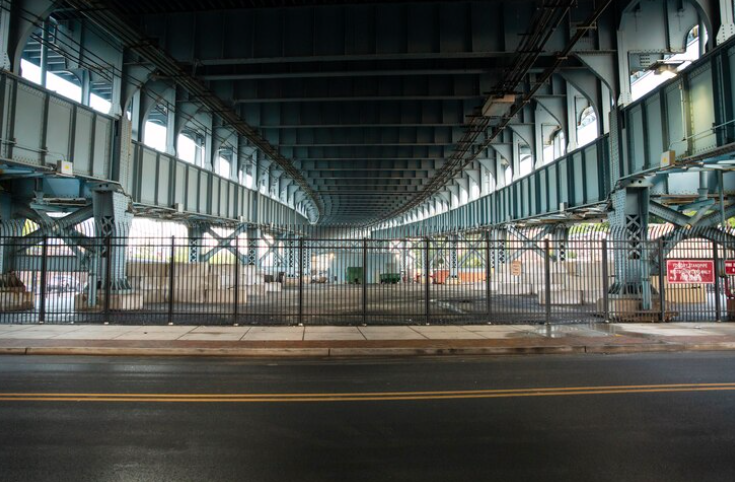
Privacy can be beneficial in selected areas, but most warehouse front boundaries benefit from maintaining clear visibility. Open fencing designs allow staff, security personnel, and CCTV cameras to monitor activity around the perimeter more effectively.
Clear sightlines also improve lighting coverage during nighttime operations, reducing blind spots where unauthorised activity could occur unnoticed. This passive surveillance serves as an additional deterrent and helps security teams respond quickly to incidents.
Maintaining visibility also creates a more welcoming environment for legitimate visitors with clear views of entrances, reception areas, and vehicle access points.
Integrating Security into the Overall Site Layout
The most effective warehouse fencing works as part of a complete site design rather than as an isolated structure. Vehicle entrances should be positioned to accommodate trucks, delivery vehicles, and employee traffic. In addition, separate pedestrian gates improve safety by reducing interactions between people and heavy vehicles, and clearly defined pathways help organise site movements.
Emergency access should also be considered to ensure that first responders can quickly enter the property if required. Thoughtful gate positioning, internal traffic flow, and perimeter design all contribute to a safer, more efficient warehouse operation.
Integrating Gates and Access Control Systems
A warehouse gate should never be viewed as a standalone product. Instead, it should function as an integrated component within the site's broader security strategy, working alongside fencing, surveillance systems, and operational procedures. Automated driveway gates provide controlled access, maintaining efficient traffic flow throughout the day.
Sliding gates remain one of the most popular choices for warehouses because they require minimal clearance and operate reliably in high-traffic environments. On the other hand, swing gates can be suitable for sites with sufficient internal space, and bi-fold gates offer faster operation where space is limited. Telescopic sliding gates provide an excellent solution for facilities with restricted frontage by allowing multiple gate panels to stack during operation.
Modern access control technology further strengthens warehouse security. For instance, smart intercom systems allow visitors to communicate directly with office staff before entry is granted, while keypads and smart locks simplify access management for employees.
Additionally, integrating CCTV with automated gates provides valuable visual verification before the gates are opened, improving both security and record-keeping. Mobile app control also enables authorised managers to operate gates remotely when required, providing flexibility for deliveries outside normal business hours.
For larger organisations, remote access management allows administrators to grant or revoke permissions quickly without replacing physical keys. Voice assistant integration may also be appropriate in selected environments where smart building technologies are already being utilised.
By combining automated gates with intelligent access control, warehouse operators improve security while reducing delays for staff, suppliers, and delivery vehicles. The result is a safer site that supports efficient business operations without creating unnecessary bottlenecks.
Common Warehouse Front Fencing Mistakes to Avoid
Many warehouse security issues result from poor planning rather than poor products. Avoiding these common mistakes can significantly reduce future costs and improve long-term performance.
Selecting fencing based only on price – Consider total lifecycle value, durability, maintenance requirements, and expected service life rather than initial purchase cost.
Installing gates that are too narrow – Design gate openings to accommodate current delivery vehicles while allowing capacity for larger vehicles and future business growth.
Ignoring access control during initial construction – Planning automation and security systems from the beginning is generally more efficient than retrofitting them later.
Blocking visibility with excessive solid fencing – Balance privacy with natural surveillance to improve CCTV performance and overall site security.
Choosing unsuitable materials – Select fencing materials that suit the site's environmental conditions, operational demands, and required maintenance levels.
Delaying future automation planning – Even if automation is not installed immediately, designing the fencing system to accommodate future upgrades can minimise disruption and reduce long-term costs.
Careful planning at the design stage allows businesses to build a fencing system that can adapt as operational requirements evolve. Considering future expansion, automation, and changing security needs early often proves far more cost-effective than undertaking major modifications after installation.
Why Professional Installation Matters
Even the highest-quality fencing materials cannot perform properly if they are installed incorrectly. Professional installation begins with a thorough site assessment to identify ground conditions, drainage, traffic flow, and operational requirements before construction starts.
Accurate structural foundations, correctly aligned fence panels, and precise gate installation all contribute to long-term durability and reliable operation. Where automation is included, experienced installers ensure motors, access control equipment, and safety systems work together seamlessly while complying with relevant Australian standards.
Professional workmanship also helps reduce future maintenance, minimise operational disruptions, and maximise the lifespan of the entire fencing system. Ongoing after-installation support provides added confidence that any workmanship-related issues can be resolved promptly, helping businesses protect their investment for years to come.

Secure Your Warehouse with the Right Fencing Solution
The right warehouse front fencing should be a professionally designed system that protects valuable assets and improves workplace safety. It also creates a professional first impression for customers, suppliers, and visitors.
At LATITUDE Fencing & Gates, we specialise in designing, manufacturing, and installing customised commercial fencing, automated gates, and smart access control solutions throughout Melbourne. From the initial obligation-free consultation through to professional installation and after-completion support, our experienced team delivers tailored solutions built around your operational needs.
Contact us today to discuss your warehouse security requirements and receive a customised commercial fencing solution designed for long-term performance and peace of mind.
Frequently Asked Questions
What is the best type of warehouse front fencing?
The best solution depends on your security requirements, operational needs, and desired appearance. Steel tubular fencing is one of the most popular choices due to its strength, visibility, and durability.
How high should industrial security fencing be?
The ideal height varies depending on the site's risk level, operational requirements, and local regulations. Higher fences generally provide greater security, particularly when combined with anti-climb design features.
Are automated sliding gates suitable for warehouses?
Yes. Sliding gates are widely used in warehouse environments because they provide reliable operation, require minimal clearance, and efficiently manage frequent vehicle movements.
Can access control systems be added later?
Yes, although integrating automation during the initial fencing installation is usually more cost-effective and reduces the need for future modifications.
Which fencing material requires the least maintenance?
Aluminium and Colorbond fencing are among the lowest-maintenance options, offering excellent durability and corrosion resistance with minimal ongoing upkeep.


Comments