
Common Driveway Gate Planning Mistakes and How to Avoid Them

A driveway gate is a long-term part of your property; once installed, it affects how residents access the home and how secure and convenient the entrance feels every day. Good driveway gate planning considers the entire entrance conditions before the gate is designed or manufactured. Decisions made early can affect security and the overall appearance of the property.
Unfortunately, many problems only become obvious after installation. Fixing these issues can involve modifying the gate frame or rebuilding part of the entrance. Therefore, understanding the most common mistakes before work begins can help homeowners create a safer, more reliable and easier-to-use driveway entrance.
Mistake One: Choosing a Gate Before Assessing the Site
It is easy to become attached to a particular gate style after seeing it in a catalogue, an online gallery, or a neighbouring property. However, a design that works well at one home may be unsuitable for another.
A proper site assessment should be conducted before finalising the gate type, size, or opening direction. The assessment needs to look beyond the visible space between the boundaries and consider how the complete gate system will fit into the property.
In specific, sliding gates require enough uninterrupted space beside the driveway for the entire gate leaf to move behind the fence. That space must remain free from retaining walls, garden beds, bins, trees and other structures.
Swing gates need a clear movement arc. Their operation can be affected by sloping ground, vehicles parked close to the entrance or limited driveway depth. The direction of movement must also be considered carefully so that the gate remains practical and does not create an obstruction.
Where space is limited, telescopic sliding gates or bi-fold swing gates may provide an alternative. However, these systems require additional hardware, structural support and careful alignment.
In short, the right approach is to measure and assess the property first, then select a gate configuration that suits the available space.

Mistake Two: Measuring the Gate but Ignoring the Clear Opening
The overall size of the gate is not always the same as the usable space available to vehicles. Posts, hinges, guide rollers, gate stops, motor housings and structural supports can all reduce the clear opening when the gate is fully open.
An entrance may look wide enough during early planning but feel restrictive once all components are installed. Even a small reduction in usable width can make a significant difference when a vehicle enters from an angle.
A tight opening can make drivers pass uncomfortably close to gate posts and fence panels. Over time, this increases the risk of damage to vehicles, automation equipment and the gate itself.
Measurements should therefore be taken from the road approach, not only between the two property boundaries. Nearby parked cars, narrow streets, nature strips and the angle of the driveway can all influence how much room a driver needs.
During professional driveway gate planning, vehicle movements are considered in the entrance design. The aim is to provide sufficient clearance for practical everyday use.
A slightly wider opening may require more planning at the beginning, but it can make the entrance far easier and safer to use over the life of the gate.
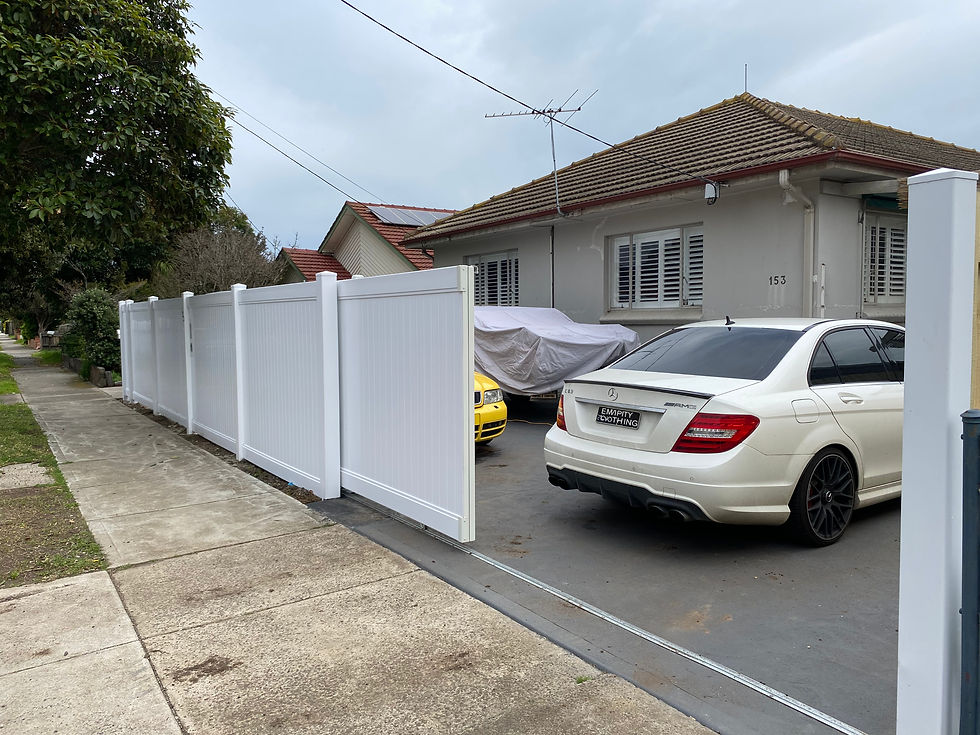
Mistake Three: Selecting the Wrong Gate Type for the Driveway
Choosing between sliding, swing, telescopic, and bi-fold gates should be based on the property's layout and how the driveway is used. Appearance is important, but it should not be the only deciding factor.
Each gate type has different spatial, structural and operational requirements.
Sliding Driveway Gates
A sliding gate moves horizontally along the fence line. It can be a practical choice for properties with limited driveway depth because the gate does not swing across the parking or vehicle movement area.
However, the gate leaf requires sufficient clearance to fully retract from the opening. For example, a wide driveway may require a long gate leaf as well as additional space for the frame, guide system and motor.
Landscaping, retaining walls, pedestrian entrances and changes in the fence line can interfere with the travel path. Sliding gates may also use a ground track or cantilever system, each of which has different foundation and clearance requirements.

Swing Driveway Gates
Swing gates can consist of one large leaf or two smaller leaves. They often suit residential properties with adequate driveway depth and a relatively level entrance.
The opening arc must remain clear of parked vehicles, walls, garden beds and other obstacles. If the driveway rises sharply from the street, the bottom of the gate may scrape the surface as it opens.
Wind exposure also matters. A large, solid swing gate can place considerable pressure on hinges, posts and gate motors during windy conditions. The frame and automation system must be designed to handle these loads.

Telescopic Sliding Gates
A telescopic gate divides the opening into two or more sliding panels that overlap as they open. This reduces the amount of side room required compared with a conventional single sliding gate.
Telescopic systems can be useful on wide entrances where the fence line beside the driveway is restricted. However, they require more rollers, guides, cables or synchronisation hardware. Accurate fabrication and installation are essential for smooth operation.

Bi-Fold Swing Gates
Bi-fold gates use hinged sections that fold together as they open. They can reduce the depth required for a standard swing gate and may suit properties with limited space behind the entrance.
The additional hinges and folding mechanisms must be properly supported and aligned. The design also needs suitable motor positions and adequate clearance around the folding sections.

Common consequences of selecting an unsuitable gate type include vehicles having to reverse before the gate can close, gate leaves opening into parking spaces and sliding panels colliding with landscaping.
Other problems may include swing gates scraping sloping driveways, insufficient room for motors and stops, or large gate panels experiencing excessive wind pressure.
The best gate type balances available space, structural conditions, everyday convenience, automation needs, and the home's architectural appearance.
Mistake Four: Treating Automation as an Afterthought
Some homeowners initially install a manual gate and add automation later. While this can be possible, future automation should still be considered during the original design.
An automatic driveway gate needs more than a motor. The entrance may require electrical power, underground conduits, motor mounting areas, safety devices, control equipment and communication cabling.
If these requirements are ignored during fabrication, later upgrades can become more complicated and expensive. The gate frame may not be sufficiently strong, or there may be nowhere practical to position the operator.
The motor must be selected based on the actual gate, including its weight, length, movement resistance, wind exposure, and usage frequency.
An undersized motor may move slowly, stop during operation or wear out prematurely. It can also place unnecessary stress on mechanical components if it repeatedly struggles to move the gate.
Preparing for automation during the initial design can reduce installation costs and protect the gate structure. Even if the motor is not installed immediately, suitable mounting plates, reinforced frames and underground conduits can make a future upgrade much easier.

Mistake Five: Overlooking Safety, Pedestrian Access and Daily Use
A driveway gate is a shared area by cars, pedestrians, children, pets, visitors and delivery drivers. Safety should therefore be considered throughout the design process.
Limited visibility around pillars, walls or thick landscaping can make it difficult to see someone standing near the gate. Poorly positioned equipment may also create trapping, crushing or collision risks.
Safety photocells and sensors can help detect vehicles or people in the gate’s movement area. The automation system should also be configured with appropriate operating force and closing behaviour for the gate and site conditions.
In addition, pedestrian movement needs separate consideration. Requiring every visitor or family member to walk through the vehicle entrance may be inconvenient and can expose them to the moving gate.
A dedicated side gate or pedestrian gate allows people to enter safely while the main driveway gate remains closed. It can also improve security by keeping vehicle access separate from everyday foot traffic.
Access-control devices should be positioned where they are easy and safe to use. For example, an intercom should be reachable from a vehicle without requiring the driver to open the door or lean excessively through the window.
A keypad should not be installed so close to a moving gate that a person must stand within the opening arc or sliding path. Lighting should also make the entrance, controls, and pedestrian path clearly visible at night.
Intercom systems, smart locks, keypads, remotes and app controls can improve convenience for automatic gates, but they work best when designed as part of the complete entrance.

Mistake Six: Ignoring Drainage, Landscaping and Future Changes
The gate does not operate independently from the rest of the property. Drainage, landscaping and future upgrades can all affect its long-term performance.
Poor drainage may allow water, mud, leaves and debris to collect around sliding tracks, guide rollers, posts or motor housings. Constant exposure to moisture can also affect electrical components and contribute to corrosion.
Ground levels should direct water away from motors and foundations. Track systems need to remain accessible for cleaning, while underground conduits should be installed and sealed appropriately.
Landscaping should also be planned around the gate path and safety equipment. Hedges may look clear when newly planted but can encroach on the movement zone over time. Tree roots can disturb foundations or tracks, while overhanging branches may interfere with gate operation.
Many gate installation mistakes happen because the entrance is designed only around current conditions. A gate that works for today’s vehicle and access routine may become inconvenient as the household changes.
Installing spare conduits, leaving suitable equipment space and choosing an adaptable gate design can make future upgrades much more straightforward. These small allowances may avoid the need to remove paving, cut concrete or replace an otherwise functional gate.

Why Professional Driveway Gate Planning and Installation Matter
Professional driveway gate planning brings the fencing, gate structure, automation system, and access controls together into a single coordinated entrance.
An experienced fencing and gate specialist can inspect the driveway, assess the available movement space and recommend a suitable sliding, swing, telescopic or bi-fold configuration. A custom design or sketch can then be prepared before a detailed construction estimate is provided.
Professional installers also understand the structural requirements of materials such as aluminium, steel and timber. They can ensure the gate frame, posts, hinges, rollers and motor supports are suitable for the size and operating conditions of the entrance.
Avoiding common planning problems can improve safety, reliability, vehicle access and long-term value while reducing the likelihood of expensive modifications later.
LATITUDE Fencing & Gates designs, manufactures and installs custom driveway gates for Melbourne homes. Our process includes an obligation-free consultation, tailored design, detailed quotation, professional installation and after-completion workmanship support.
Contact us today to arrange an obligation-free consultation and start planning a driveway gate that works properly with your property, vehicles and everyday access needs.

Frequently Asked Questions
How early should driveway gate planning begin?
Planning should begin before the driveway entrance, fence posts, electrical conduits or landscaping are finalised. Early coordination provides more flexibility when selecting the gate style and automation system.
Is a sliding gate better than a swing gate?
Neither design is universally better. Sliding gates generally require side space, while swing gates require sufficient driveway depth and a suitable ground level. The property layout should determine the best option.
Can an existing manual gate be automated later?
Some manual gates can be automated, but the frame, hinges, rollers, posts and foundations must be suitable. It is usually easier and more cost-effective to make the gate automation-ready during the original design.
What is the most common gate installation mistake?
Common mistakes include insufficient clear opening width, selecting the wrong gate movement, ignoring driveway slope and failing to allow space for automation equipment.
Should a driveway gate include separate pedestrian access?
A separate pedestrian gate is often recommended for safer, more convenient access, particularly for families, visitors, and properties with frequent foot traffic.


Comments