
Front Fence Planning for Multi-Tenant Commercial Properties

Updated: Aug 26
Fencing a commercial property with multiple occupants is very different from fencing a single business premises. A multi-tenant site may be used by several businesses and property managers, all with different access needs. The front fence needs to support security, guide people to the right entry points, manage vehicle flow, and present the property professionally from the street.
Multi tenant fencing should be planned early, not treated as a final add-on. A warehouse tenant may need truck access and strong asset protection, while an office tenant may care more about customer entry and street appeal. With the right design, a shared commercial frontage can feel organised, secure, and easy to use for everyone.
Key goals of front fence planning for multi-tenant commercial properties
Successful front fence planning starts with understanding what the property needs to achieve every day. Security is important, but for a shared commercial site, the best fence design should improve the property's overall operations.
A well-planned front fence can help control vehicle and pedestrian entry and separate public areas from tenant-only zones. It can also support after-hours access, protect shared boundaries, and make the property look more professional from the street. These benefits are especially important where different tenants operate on different schedules.
Before choosing materials or gate hardware, property owners should consider the practical goals for the frontage. These may include:
Controlling vehicle and pedestrian entry
Separating public, staff, tenant, and service areas
Improving security across shared boundaries
Supporting approved after-hours access
Maintaining a professional street presentation
Reducing confusion for visitors and delivery drivers
Allowing future tenant changes without major redesign
Integrating gates, intercoms, CCTV, and access control
The right fence should be based on how the site operates, not just on how the frontage looks. A clean aluminium fence may suit one property, while a stronger steel or mixed-material design may suit another. The key is to create a solution that supports the current tenants while remaining flexible enough for future changes.
Choosing the right layout for shared commercial access
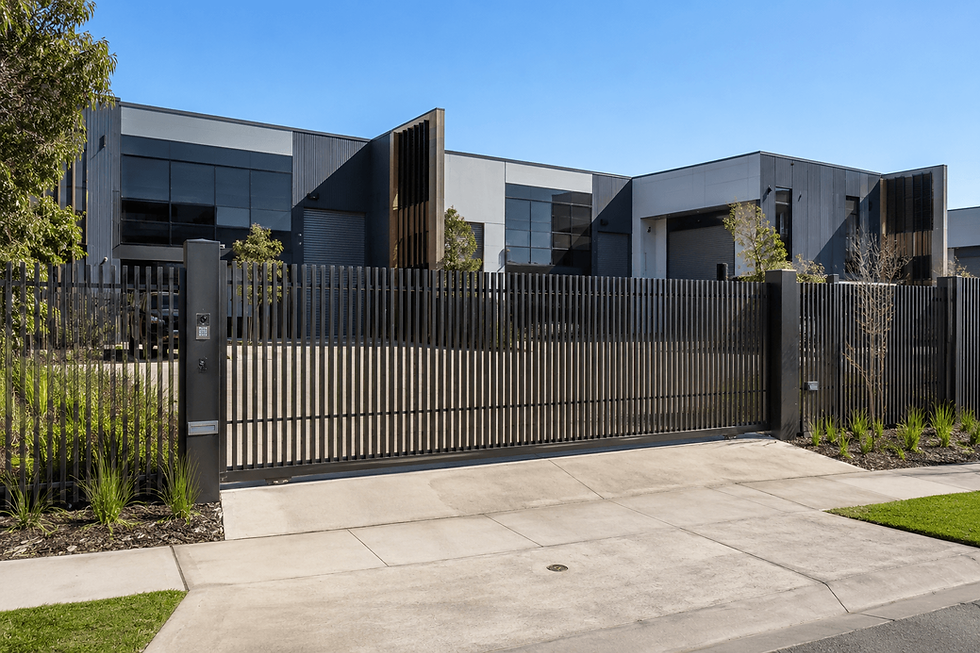
Layout is one of the most important decisions when planning a front fence for a multi-tenant commercial property. The fence should guide people naturally towards the right entry points. If the layout is confusing, vehicles may queue in awkward positions, and tenants may experience daily access issues.
Some properties may only need one shared automated driveway gate for all tenants. Others may require separate vehicle gates, pedestrian gates, loading access, or internal fencing zones. For example, a business park may work best with a central controlled entrance, while a mixed warehouse and office property may need different entry points for customers and staff.
The best shared access commercial fencing layout should also consider driveway width, turning circles, visitor parking, tenant parking, loading zones, waste collection areas, and emergency vehicle access.
From the street, the design should feel simple and logical. For its users, visitors should know where to enter; tenants should have reliable access; and property managers should be able to control entry without making daily operations harder than necessary.
Designing secure and practical access for multiple tenants
A front fence for a shared commercial property works best when access is designed as a complete system. The driveway gates, pedestrian gates, intercoms, locks, cameras, and access control devices should all support the same goal: keeping the property secure while making approved access easy.
Shared driveway gates
Shared driveway gates are often the main control point for multi-tenant commercial properties. They control vehicle entry, protect parking and loading areas, and create a stronger boundary between the public street and the private site.
Sliding gates are suitable for commercial frontages where there is enough side space for the gate to travel. Swing gates may suit certain lower-traffic properties, especially where the frontage layout and driveway depth allow safe operation. For wider entrances, sloping sites, heavy-use driveways, or more complex commercial needs, custom commercial gate solutions may be required.
For busy commercial sites, planning should include the gate opening width, motor location, safety beams, exit loops, access control posts, and service access for maintenance.

Pedestrian access points
Pedestrian gates should be positioned where people naturally approach the property. If the pedestrian entry is hidden or too far from visitor parking, people may try to enter through the driveway gate instead. This can create safety and security risks.
For customer-facing properties, the pedestrian gate should feel secure without looking intimidating. A clean, visible entry point helps visitors understand where to go and gives the property a more professional appearance. Depending on the site, the pedestrian gate may include an intercom, keypad, smart lock, card reader, or app-based access.
Tenant-specific access control
One of the biggest challenges for multi-tenant commercial properties is that not every user should have the same access permissions. One tenant may need 24/7 access, while another may only operate during standard business hours.
Access control can be configured to support these different needs. This may include remotes, fobs, PIN codes, smart locks, intercom permissions, app-based access, or managed entry schedules. A property manager can give approved users access without giving everyone the same level of control.
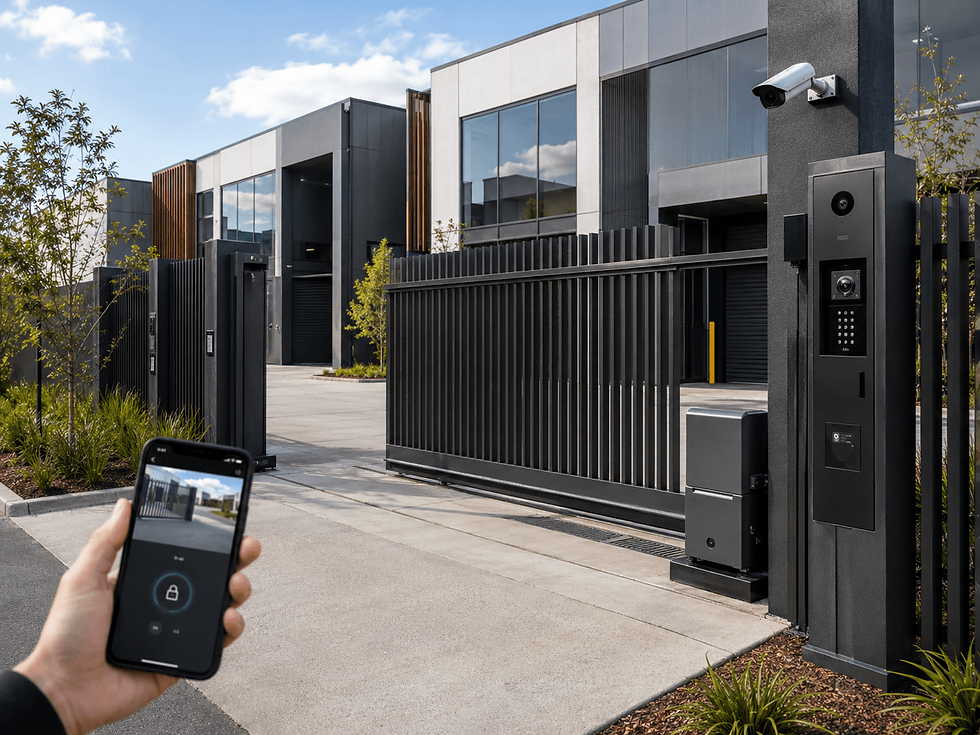
Additionally, intercom systems, CCTV, app control, smart locks, and controlled gate entry can all work together to create a more organised access system.
Visitor and delivery management
Visitor and delivery access requires careful planning because not everyone entering the property will have remote, fob, code, or app access. If visitors cannot easily contact the right tenant, they may block the driveway or enter through the wrong access point.
Intercom placement should be easy to reach from both a vehicle and a pedestrian position. For delivery vehicles, there should be enough waiting space so drivers do not block traffic while contacting a tenant.
The layout should also consider regular couriers, large trucks, service vehicles, and after-hours deliveries.
Best fence styles and materials for multi-tenant commercial frontages
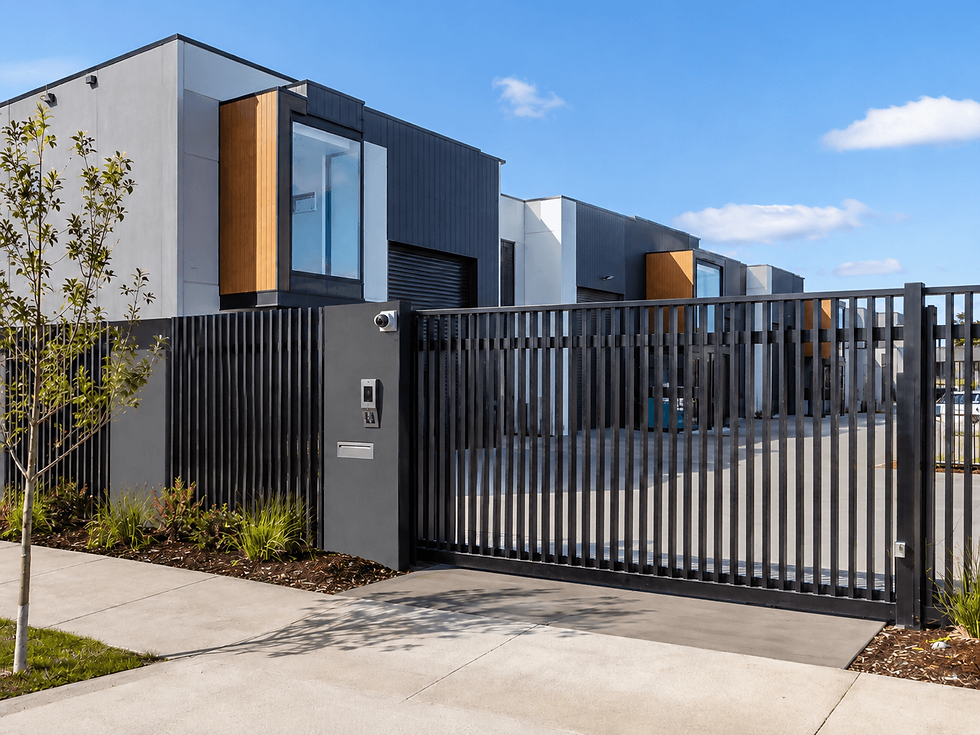
The best fence style depends on the property’s architecture, tenant mix, and security requirements. A multi-tenant commercial frontage should look consistent and professional, even if the businesses behind the fence operate differently.
This is where multi tenant fencing needs a balanced design approach. The fence should be strong enough to protect the site, but not so harsh that the property looks closed off. For many commercial properties, semi-private designs work well because they provide boundary control while still allowing natural surveillance.
Aluminium vertical batten fencing is a popular option for modern commercial properties because it looks clean, architectural, and professional. Aluminium slatted fencing can also work well for partial privacy. Steel tubular fencing may suit sites that need a stronger security presence.
Colorbond fencing or modular wall sections can be useful where privacy, acoustic screening, or visual separation is required. These options may work well for side boundaries or sections that need to screen loading activity from the street. Custom commercial gates can then be designed to match the overall frontage.
The final material choice should consider maintenance, appearance, strength, privacy, and long-term value. A cheaper fence may reduce the upfront cost, but poor materials or weak installation can lead to more repairs and a less professional appearance over time.
Integrating gates, intercoms, CCTV, and smart automation
A front fence is most effective when gates and access control are planned together from the beginning. Adding automation after the fence is built can lead to extra wiring and awkward equipment placement. For commercial properties, early planning usually yields cleaner and more reliable results.
Automatic driveway gates can be combined with pedestrian gate locks, intercom systems, smart CCTV, app control, and other access control devices. These systems are especially useful when several tenants share a single entrance but require different access permissions.
Planning should include power supply, underground conduits, motor locations, intercom posts, safety beams, exit loops, and maintenance access. These details have a major impact on how well the system performs.
For example, an intercom post should be positioned where drivers can reach it safely without blocking the road. Safety beams need to be positioned to accurately detect vehicles and pedestrians. Gate motors need enough space for installation, servicing, and long-term operation. CCTV should be positioned to capture useful footage of entries, exits, and shared access points.
When fencing, gates, and automation are designed as one system, the property becomes easier to manage. Tenants can access the site more smoothly, property managers have better control, and visitors are guided through the correct entry points.
Common mistakes to avoid with shared commercial front fences
Multi-tenant properties have more moving parts than single-occupant sites, so small design mistakes can become ongoing frustrations for tenants and property managers. Try to avoid these common mistakes:
Only designing for the current tenant mix: Tenant needs can change over time. The fence should allow some flexibility if a new business moves in.
Placing gates too close to the street: Vehicles may queue on the road while waiting for access, creating safety and traffic issues.
Forgetting pedestrian access: Staff, visitors, and customers need a safe and obvious pedestrian entry point.
Using one access method for everyone: Different tenants may need different access permissions, especially for after-hours entry.
Ignoring delivery vehicles: Trucks, couriers, and trades need practical access arrangements that do not block the frontage.
Choosing materials based only on cost: Low-quality materials may reduce security, increase maintenance, and affect the property’s presentation.
Treating automation as an afterthought: Gates, wiring, safety devices, intercoms, and access control should be planned early.
Why professional design and installation matter
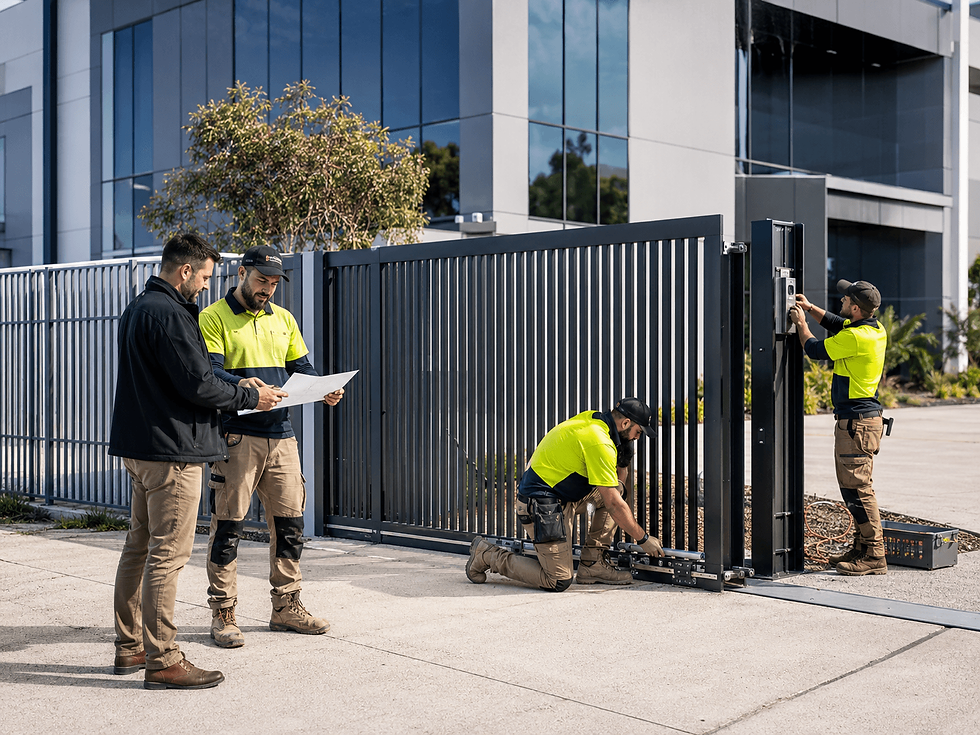
Multi-tenant commercial properties need fencing that is structurally reliable, visually consistent, and practical for daily use. A professional design process begins with understanding the site, not just measuring the boundary, considering traffic flow, access requirements, ground conditions, tenant needs, gate operation, and maintenance access.
Correct installation also plays a major role in long-term performance. Strong posts, accurate gate alignment, suitable materials, proper motor installation, and well-positioned access control equipment all help the system work reliably. When automation is included, experienced installers ensure that the gates, intercoms, CCTV, locks, and safety systems work together smoothly.
LATITUDE Fencing & Gates is a trusted fencing and gate contractor in Melbourne, specialising in tailored commercial fencing and gate solutions. Our process begins with an obligation-free consultation, followed by a design or sketch where required, a detailed quote, professional installation, and after-completion support for workmanship-related concerns.
In Conclusion
A front fence for a shared commercial site should be planned around the whole property, not just the front boundary. The right solution should balance security, street appeal, automation, and long-term flexibility.
Well-designed multi tenant fencing helps create a safer, more organised, and more professional commercial frontage. It supports different occupants while giving property managers better control over shared access points.
If you are planning a new front fence, upgrading an existing commercial frontage, or preparing a property for multiple tenants, speak with LATITUDE Fencing & Gates early in the process. Contact us today for an obligation-free consultation, custom design options, and professional commercial fencing and gate installation across Melbourne.
FAQs
What is multi tenant fencing?
Multi tenant fencing is fencing designed for commercial properties occupied by more than one business or user group. It helps manage shared boundaries, vehicle access, pedestrian entry, security, and presentation across the entire property.
What is shared access fencing?
Shared access fencing refers to fencing and gate layouts that allow multiple tenants to use common entry points while maintaining controlled access. This may include automated driveway gates, pedestrian gates, intercoms, CCTV, smart locks, or access control systems.
Which fence style is best for multi-tenant commercial properties?
The best style depends on the property layout, security level, architecture, and tenant requirements. Aluminium slat fencing, aluminium batten fencing, steel tubular fencing, Colorbond, modular walls, and custom commercial gates can all be suitable depending on the site.
Can each tenant have different access permissions?
Yes. With the right access control system, different tenants, staff members, contractors, and visitors can be given different permissions. This can help property managers control who enters the site and when.
Should gate automation be planned before the fence is installed?
Yes. Automation should be planned early so that power, conduits, motors, intercoms, safety devices, and access control equipment can be positioned correctly.


Comments